
Chattanooga
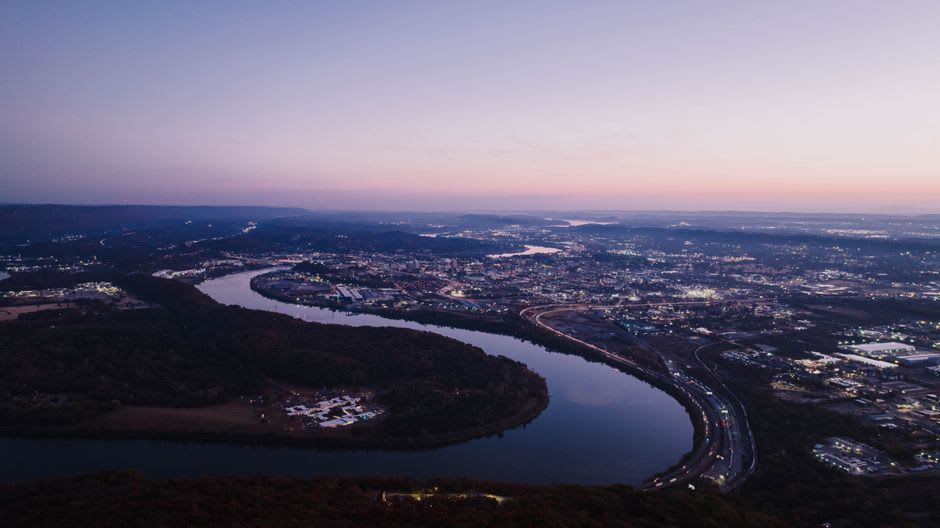
"From the top of Lookout Mountain, Chattanooga lies folded into its river like a secret the hills have agreed to keep."
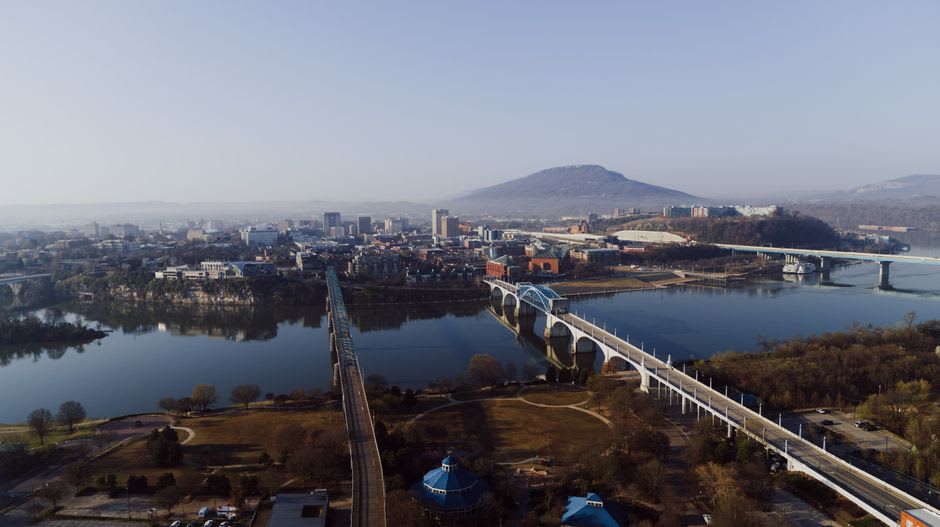
We came into Chattanooga along the river at dusk, and the first thing that struck us was how completely the mountains hold the city. Chattanooga sits in a bowl, the Tennessee River looping through the middle and blue ridges standing guard on every side, so that wherever you stand there is a wall of hills at the end of the street. Lia and I checked into a place near the water and walked straight out onto the Walnut Street Bridge, one of the longest pedestrian bridges in the world, an old iron span now given over entirely to people. Below us the river ran dark and slow; ahead the lights of the North Shore came on one by one. It felt, immediately, like a city that had decided to be walked.
The bridges and the riverfront
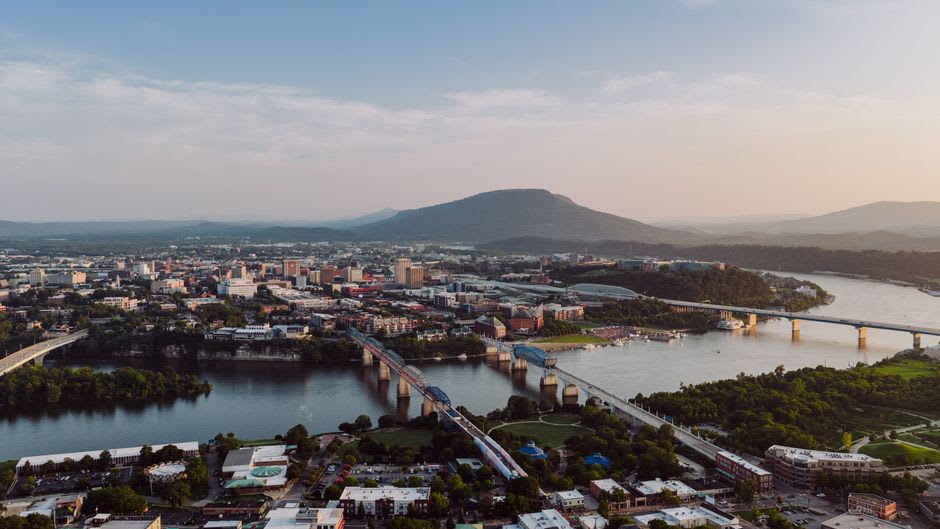
Chattanooga’s riverfront is its triumph, and the morning was made for wandering it. We crossed back over the Walnut Street Bridge in daylight, its wooden planks springing slightly underfoot, then followed the Riverwalk downstream past the Tennessee Aquarium’s glass peaks and the terraced steps that spill down to the water. What moved me was how thoroughly the city has turned its face back toward the river it once turned away from — a working industrial waterway remade into a promenade of art, cafés, and joggers. Lia bought a coffee and we sat on the steps watching a rowing team slice upstream, herons picking along the far bank, the whole scene unhurried in a way American cities rarely allow themselves to be.
Lookout Mountain and the view
No visit here is complete without climbing Lookout Mountain, the long ridge that rises steeply just southwest of downtown. We rode the Incline Railway, a gloriously steep funicular that hauls its little carriage up a grade so sharp it feels almost vertical near the top, passengers gripping their seats and laughing nervously. At the summit the view opens impossibly wide — the river coiling through the city, the Appalachian foothills rolling away blue into three states. We walked out to Point Park on the crest, where Civil War cannons still point over the valley, and stood a long time simply looking. Lia said it was the kind of view that resets you, and I knew what she meant; some places make a city legible all at once.
Rock City and the ridge trails
Higher along the ridge we spent an afternoon at Rock City, a garden of colossal ancient rock formations threaded by a path that squeezes between towering slabs and out onto a cliff-edge overlook. The trail runs through slot-like gaps barely wider than your shoulders, past balancing boulders and a swaying suspension bridge, before delivering you to Lover’s Leap where, on a clear day, the marketing claims you can see seven states — a claim we could neither verify nor be bothered to dispute, because the panorama was glorious regardless. Lia and I ate a late lunch on the mountain, the air noticeably cooler up on the ridge, and agreed that Chattanooga had given us far more than the overnight stop we had planned for.
Getting There
Chattanooga has a small airport a few miles east of downtown, but most travellers arrive by road — the city sits at the crossing of two major interstates, roughly two hours from both Atlanta and Nashville, which makes it an easy and scenic drive through the southern Appalachians. There is no passenger rail, so a car is genuinely useful for reaching Lookout Mountain and the ridge attractions, though the compact downtown and riverfront are a pleasure on foot. We used the free electric shuttle that runs the length of the main downtown street, and rented bikes from the city’s bike-share to follow the Riverwalk, which is by far the best way to take in the water.