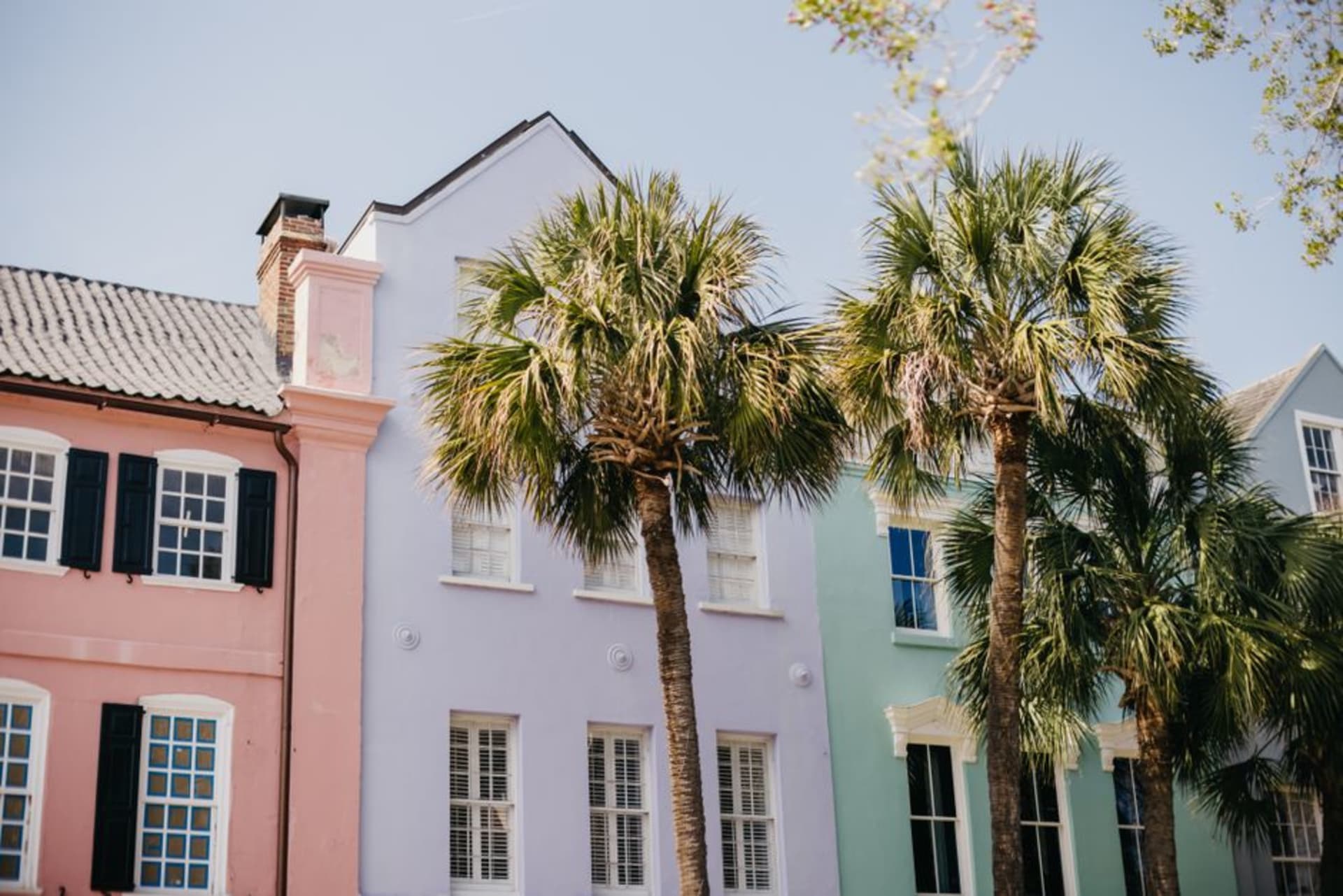
Charleston
"The whole city smelled of salt marsh and jasmine, and we slowed down to match it."
Charleston undid our hurry within an hour. We had planned a brisk walking loop, checklist in hand, and instead found ourselves stalled on a corner of Church Street watching a horse-drawn carriage clop past a house painted the exact pink of the inside of a shell. Lia said the light here was different, softer, and she was right; the whole peninsula seemed dipped in a warm haze that blurred the edges of everything. We tore up the plan and decided instead to simply wander until the city told us where to stop.
Rainbow Row and the cobblestones
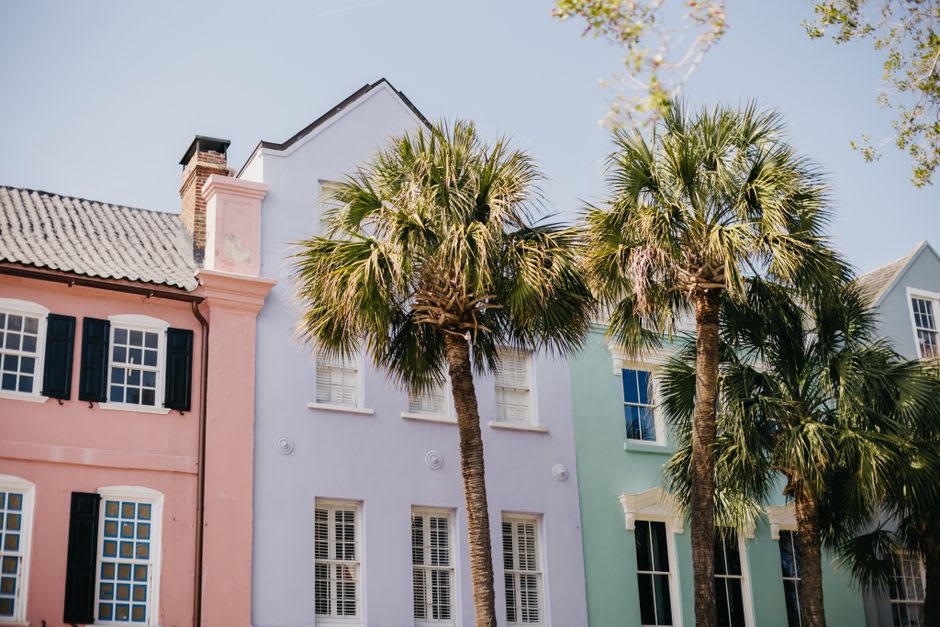
We started along Rainbow Row, that famous stretch of thirteen Georgian houses in sherbet colors, and though it’s the most photographed block in the city it somehow escaped feeling like a postcard. An old man watering ferns on his piazza told us the colors once helped drunken sailors find their way home, then admitted with a grin he wasn’t sure that was true. From there we drifted down toward the Battery, where mansions face the harbor behind wrought-iron gates, and walked the cobblestones of Chalmers Street, so uneven that Lia gave up on her sandals and went barefoot.
The market and a plate of shrimp
By midday the heat sent us into the Historic City Market, a long open hall where sweetgrass basket weavers work with their hands moving faster than we could follow. One woman let Lia try, and the coil of grass promptly collapsed, and everyone within earshot laughed kindly. For lunch we found a small counter that served shrimp and grits the way it should be: creamy, smoky, faintly sweet, the shrimp caught that morning off the very coast we’d been staring at. I ate slowly, which in Charleston seems to be the only acceptable pace, while a ceiling fan turned overhead.
Sunset over the marsh
For our last evening we drove out toward the marshes as the tide went low, and the smell of pluff mud rolled in thick and green. We parked near the water and watched egrets stalk the shallows while the sun sank and set the whole marsh grass on fire with gold. A shrimp boat came in slow across the channel, gulls wheeling behind it, and Lia reached for my hand without a word. It’s a landscape that asks nothing of you except that you stop and look, and I understood then why people who leave Charleston keep coming back.
Getting There
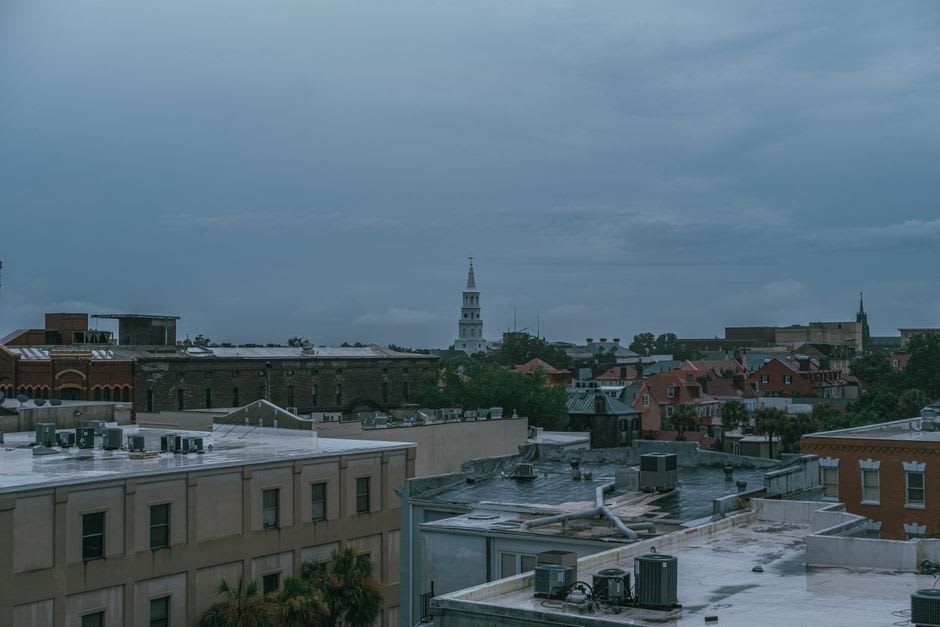
Charleston’s small airport sits about twenty minutes north of the historic peninsula, and we rented a car mostly for the marshes and the plantations outside town; the old city itself is best on foot. Distances downtown are gentle, and half the pleasure is losing yourself in the side streets between the big sights. Spring, when the gardens bloom and the humidity hasn’t yet turned punishing, is the ideal window; we came in early summer and simply learned to walk in the shade and rest through the hottest hours, as the locals plainly do.