Catalina Island
"The ferry pulled away and the mainland's noise went with it — an hour of open water and Los Angeles simply ceased to exist."
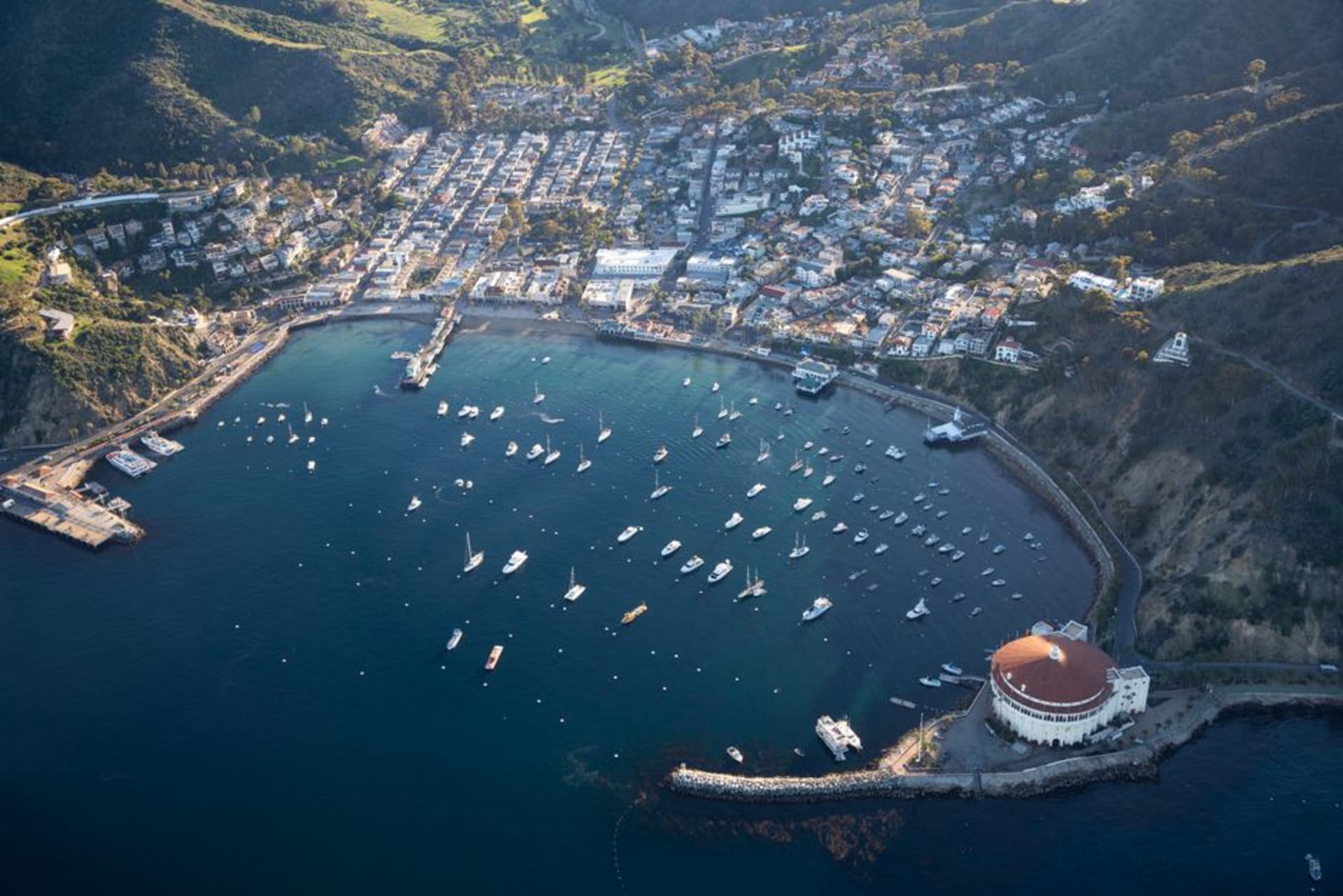
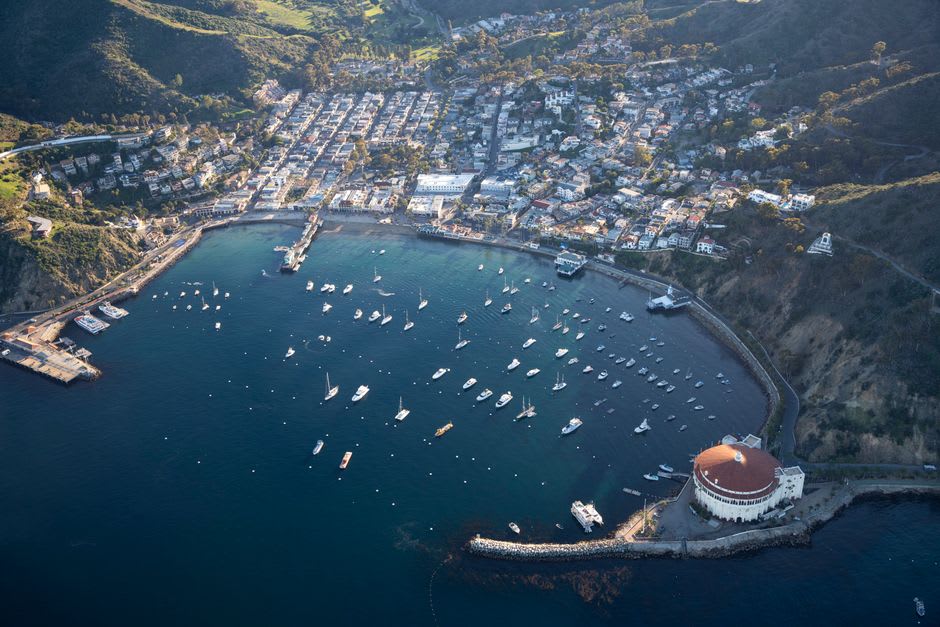
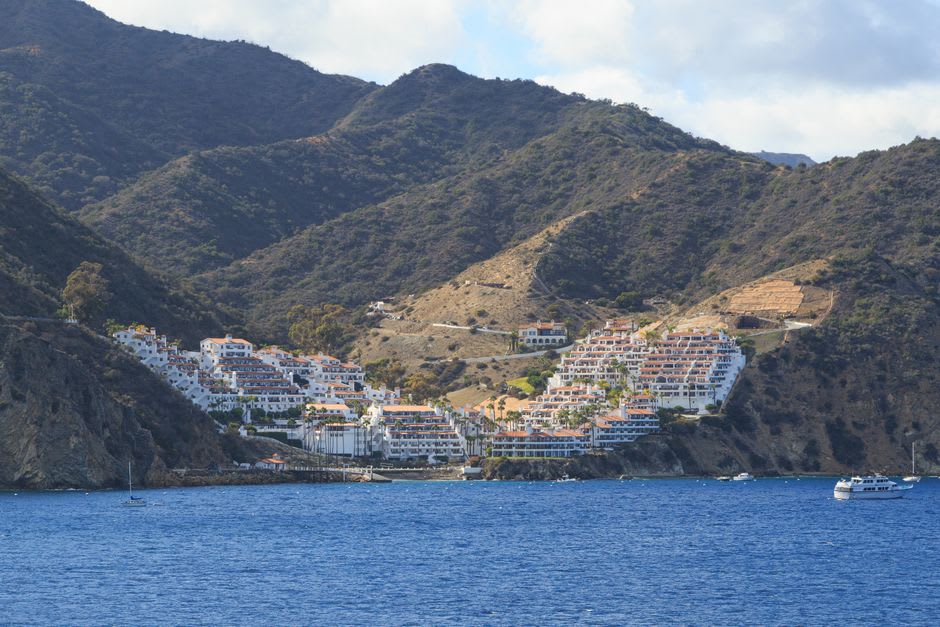
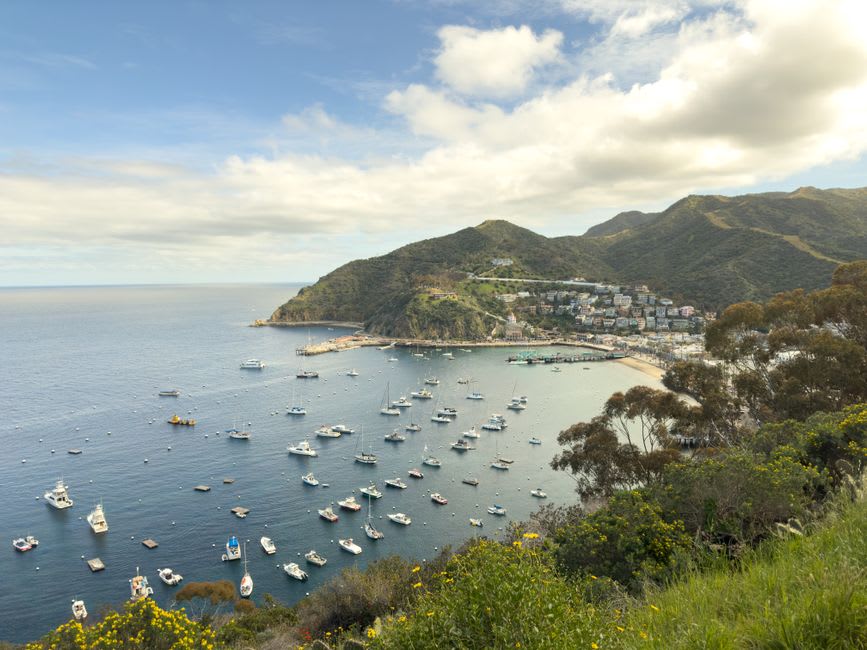
The ferry from the mainland takes about an hour, and somewhere in the middle of it Los Angeles falls off the back of the boat and stops mattering. We stood at the rail with the spray coming up and watched Catalina harden out of the haze — brown hills, a scatter of white buildings around a crescent bay, the round bulk of the old Casino at the point. By the time we docked in Avalon, the whole frequency of the day had changed. There are almost no cars here; the town gets by on golf carts and feet. After a week in the roar of LA, the quiet landed on us like a held breath finally let out.
Avalon and the Casino
Avalon is barely a mile of town wrapped around its harbor, and it wears its 1920s heart openly — pastel façades, a hand-painted tile fountain, palms leaning over a seafront promenade. The Casino, at the north end, never held a single card game; the name is the old Italian sense of “gathering place.” It is a circular Art Deco masterpiece, a ballroom stacked over a still-working movie theatre, its walls painted with underwater murals of mermaids and galleons. We took the tour mostly for the ballroom — a vast circular floor under a domed ceiling where big bands played to thousands. Standing in the middle of it, empty and echoing, Lia did a slow half-turn with her arms out and I let her, because the room asks for it.
The Water and the Kelp
We came for the water, really, and the water did not disappoint. Off Lover’s Cove and the dive park below the Casino, the sea is startlingly clear — kelp rising in slow amber columns from the rocks, and through it the bright orange flash of the garibaldi, California’s state fish, unbothered and territorial. We snorkeled until our lips went blue, ducking down into the kelp forest where the light came through green and shifting like a cathedral made of water. A sea lion cruised past at a distance, gave us an incurious look, and carried on. On the mainland the surf churns everything to murk; here, in the island’s lee, you can see thirty feet down to the swaying holdfasts on the rocks.
The Wild Interior
Most visitors never leave Avalon, which means the rest of the island — nearly all of it — belongs to almost no one. We took a backcountry tour up into the hills, where the road turns to dust and the land goes gold and empty. And there, improbably, were the bison: descendants of a small herd left behind by a 1920s film crew and never collected, now grazing the ridgelines against a backdrop of blue Pacific. It is a genuinely strange sight, American plains animals silhouetted on a California island, and it made me laugh out loud. Beyond them the interior rolled away in ridge after empty ridge, hawks working the thermals, the sea visible on both sides at once.
Getting There
Ferries run to Avalon from Long Beach, San Pedro, and Dana Point, taking about an hour; a smaller number serve the quieter village of Two Harbors. There is no need — and little permission — for a car, so travel light and use the golf-cart rentals or your feet. Summer is warm and busy; spring and autumn bring clear water, thinner crowds, and green hills. Book the ferry ahead on summer weekends, and give yourself an overnight if you can, because the island only truly quiets once the day-trippers sail home.