Carmel-by-the-Sea
"No addresses, no streetlights — just the sound of finding your own way."
Carmel disarmed me, and I don’t disarm easily. Lia had wanted to come for the beach; I’d braced myself for something twee, a village pretending too hard to be charming. Instead we stepped out of the car onto Ocean Avenue and found a place that has quietly refused the modern world — no streetlights, no house numbers, mail collected by hand from the post office. A woman in a gallery doorway told us people navigate by cottage names and memory. Lia laughed at that, delighted, and I felt something in my chest loosen. Some places earn their whimsy. Carmel, improbably, does.
The Cottages That Look Like Dreams
The cottages here are the real thing — many built in the 1920s by Hugh Comstock, a man with no architectural training who made storybook houses for his wife’s dolls and accidentally invented a whole aesthetic. We wandered the residential lanes for an hour, ducking down hidden passageways between the shops, finding tiny courtyards and secret gardens that opened without warning. Lia kept stopping to photograph doorways. One cottage had a rounded roof like something out of a French fairy tale, moss on the shingles, a crooked chimney. I’ve spent years being suspicious of prettiness, and Carmel wore me down completely, one improbable little house at a time.
Down to the White Sand and the Cypress
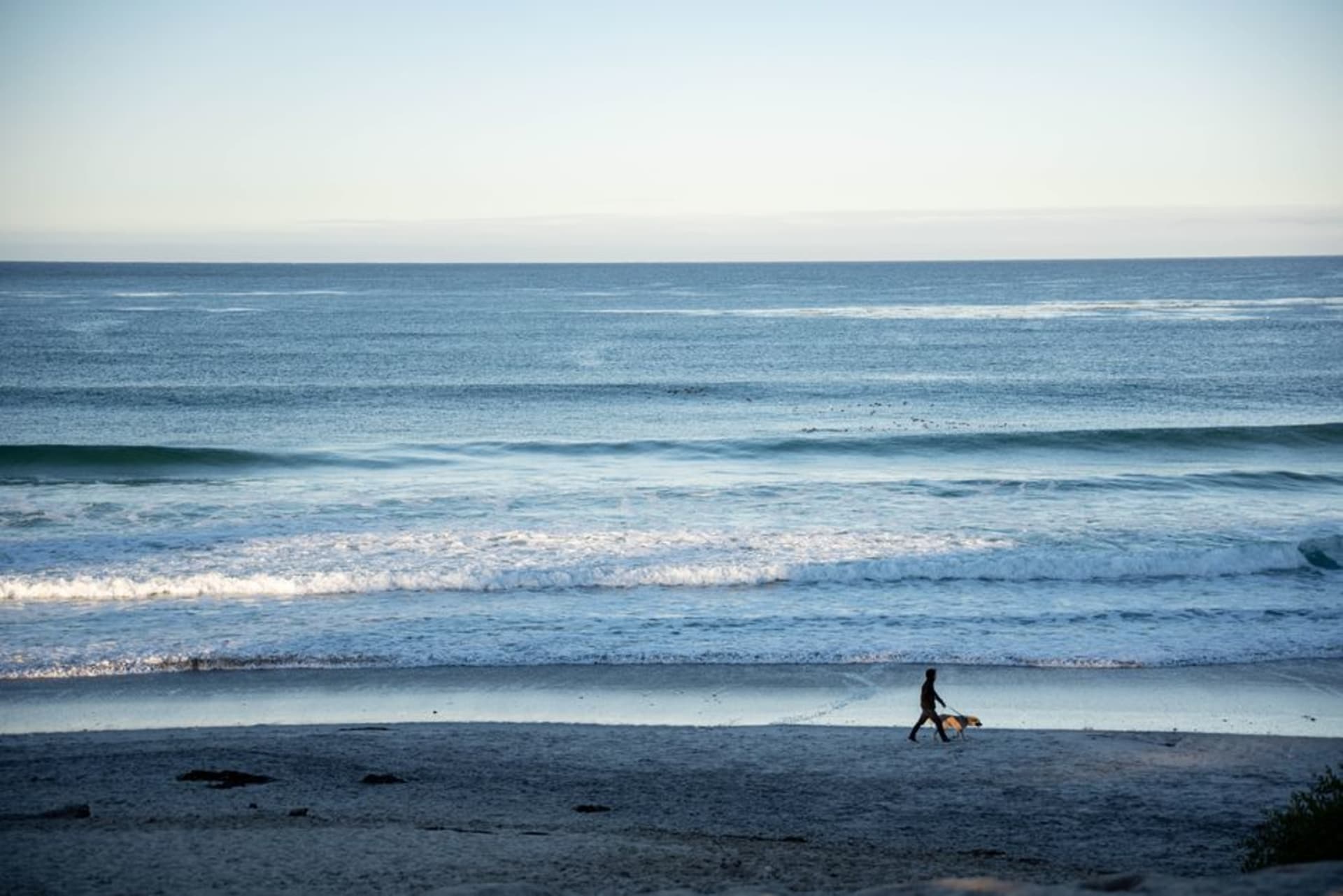
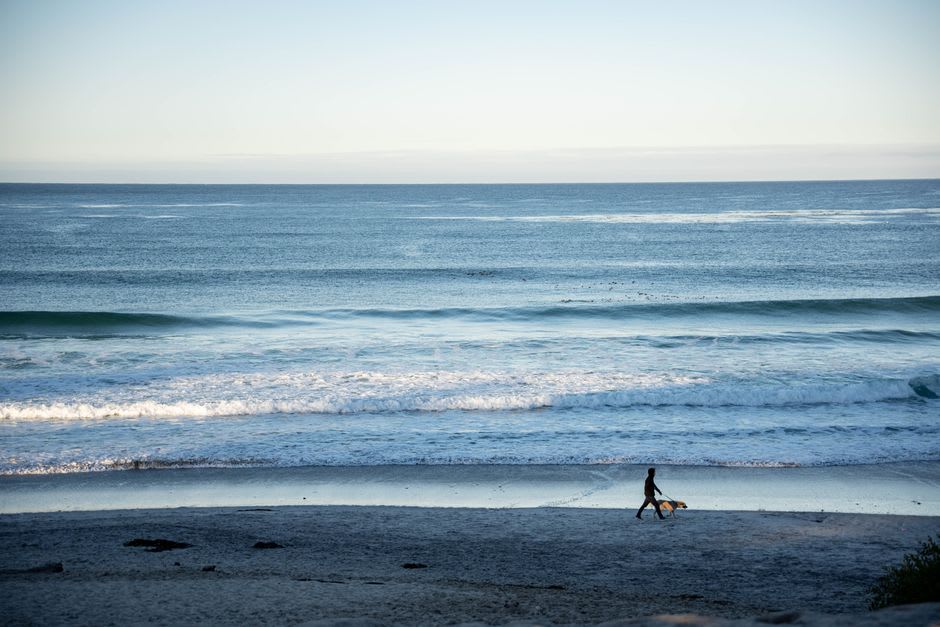
Ocean Avenue runs straight down to the water, and the beach at the bottom is a shock of white — soft, deep sand that squeaks underfoot, framed by gnarled Monterey cypress on the bluffs. We took our shoes off despite the cold and walked the length of it as the afternoon light went gold. Dogs run free here, off-leash and joyful, and one wet retriever adopted us for a while. Lia sat on the sand and watched the surfers in their black wetsuits while I skipped stones badly. The Pacific was doing its endless work against the rocks, and neither of us said much. Some beaches make you want to talk; this one asks for quiet.
The Mission and the Old Stone Quiet
At the edge of the village stands the Carmel Mission, founded in 1770, its basilica of soft stone glowing amber in the late sun. We walked the courtyard gardens slowly, past the fountain and the old bells. Junípero Serra is buried here, and the place carries the weight of a complicated history — I don’t romanticize the missions, and I stood a while thinking about what they cost the Ohlone people who lived on this coast first. But the building itself is genuinely beautiful, hushed and cool, thick-walled against the heat. Lia lit a candle in the dim chapel, not out of faith but out of something she couldn’t name, and we sat in the pew until the light changed.
Getting There
Carmel-by-the-Sea sits just south of Monterey on the Central California coast, about two and a half hours from San Francisco. The easiest route is Highway 101 to Highway 68, or the slower, grander Highway 1 down the coast. Most visitors fly into San Jose or San Francisco and drive; the tiny Monterey Regional Airport is a fifteen-minute taxi away if you want to skip the long road. Park once and walk — the village is compact, and half its pleasure is getting a little lost among the lanes with no numbers to guide you. Bring layers; the sea breeze here is cool even on bright days.