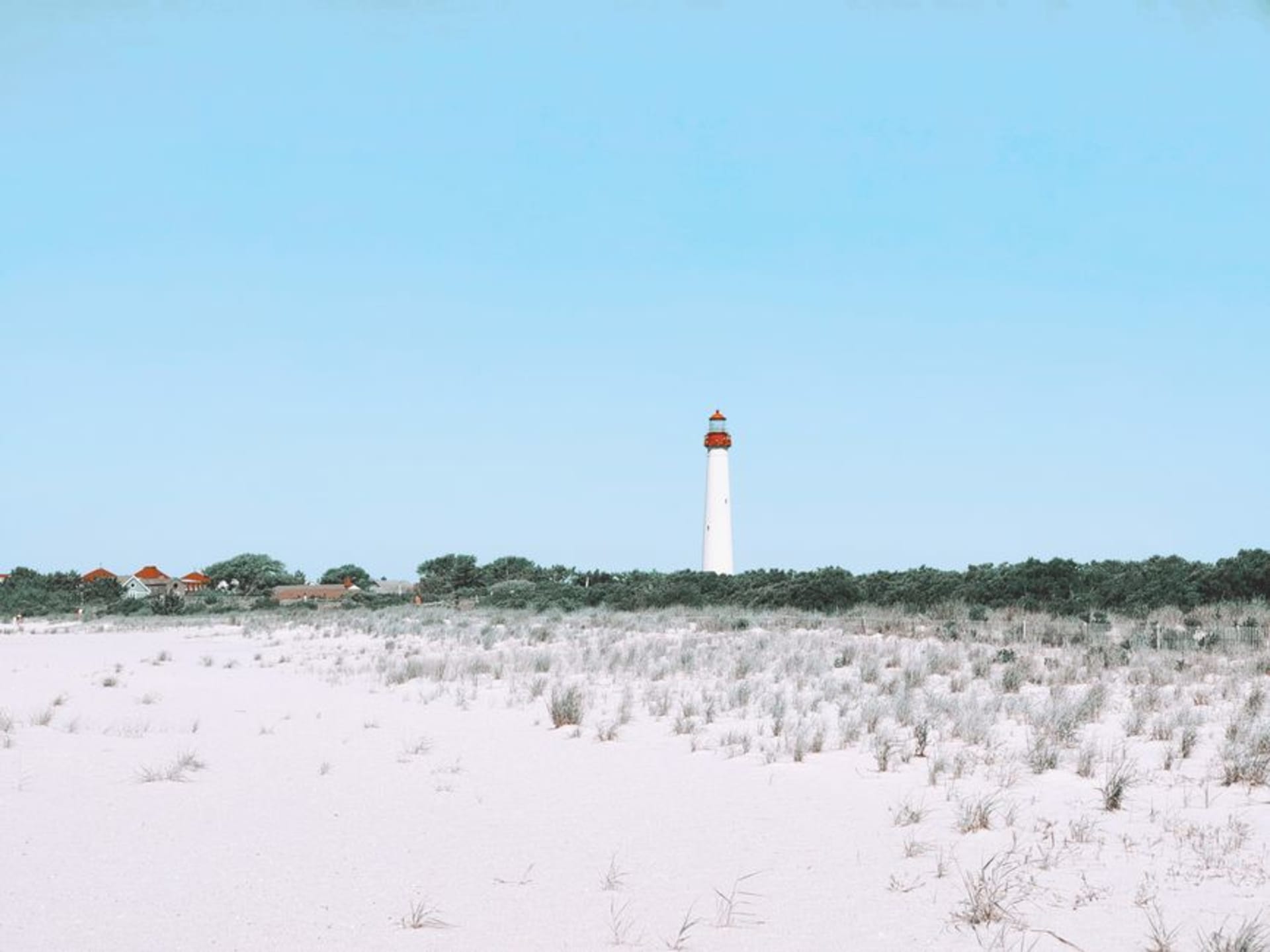
Cape May
"A whole town frozen in the nineteenth century, and none of it feels like a museum."
I did not expect to fall for a Jersey Shore town. I’d carried some lazy assumption about the place — boardwalks, fried dough, noise — and Cape May quietly dismantled all of it within an hour of arriving. Lia and I walked from our guesthouse toward the water past house after house of ornate Victorian woodwork, all of it painted in colors that should have clashed and somehow didn’t: butter yellow beside dusty rose beside a pale seafoam green. The whole town, it turns out, is a National Historic Landmark, hundreds of preserved gingerbread houses, and people actually live in them. Someone was watering geraniums on a wraparound porch. It felt impossibly gentle.
The Painted Houses
We spent a morning just looking at houses, which sounds dull and was not. Cape May burned nearly to the ground in 1878 and rebuilt itself all at once in the high Victorian style, which is why the town has such an uncanny unity — it’s all of a single moment, gables and turrets and spindled porches stacked together street after street. Lia, who notices detail the way I notice food, kept pointing out the “gingerbread,” the fretwork trim scrolling under every eave. We toured the Emlen Physick Estate, a grand old house furnished as it would have been, and I stood in the parlor imagining the slow ceremony of a nineteenth-century afternoon. Then we bought ice cream and walked it off along the promenade.
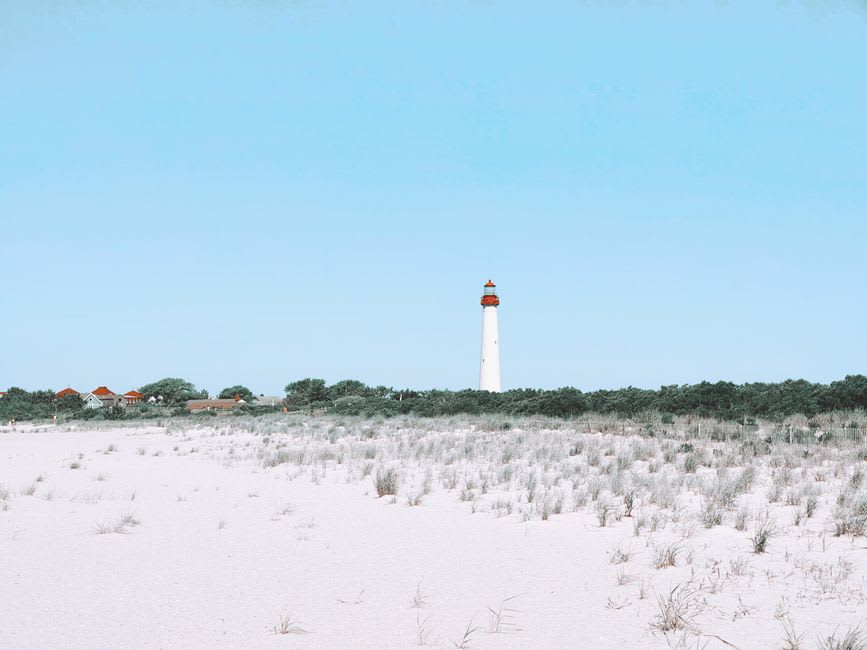
Sunset at the Point
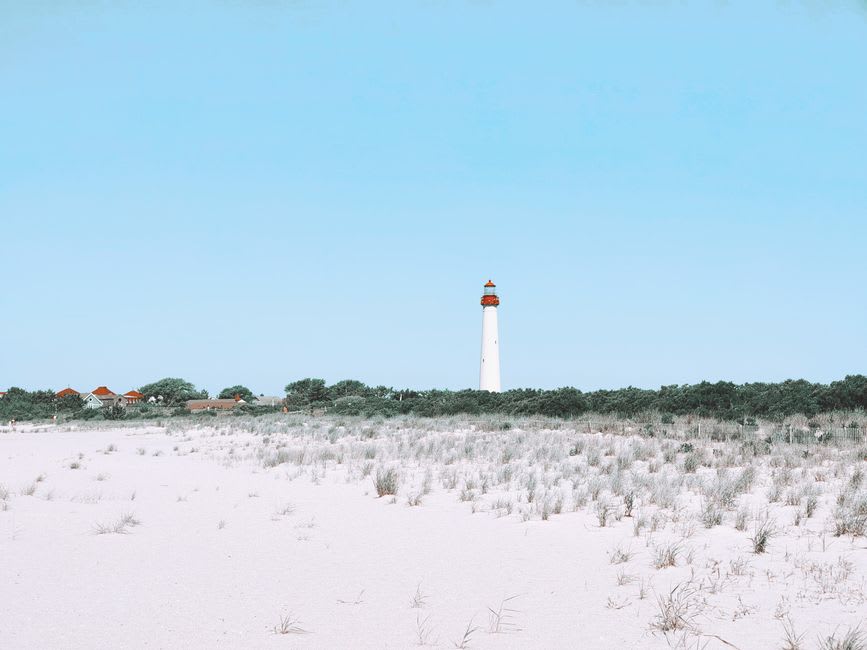
Cape May sits at the very bottom of New Jersey, where the Atlantic meets Delaware Bay, and because of that geography the beach faces west — a rarity on the East Coast. So the sun sets into the water here, which never happens where I grew up on the Atlantic side of France. We walked out to Cape May Point one evening and climbed the lighthouse, all one hundred and ninety-nine steps of it, and came out breathless onto the gallery to watch the whole spit of land glow orange. Below us the old red-and-white tower’s shadow stretched long across the dunes. Lia said it was the best two dollars she’d ever spent. I think she meant the whole day.
Diamonds and Birds
Down at the very tip, at Sunset Beach, everyone walks the sand with their heads down, hunting “Cape May diamonds” — little polished quartz pebbles the tide grinds smooth over years and washes ashore. Lia collected a pocketful and made me carry the heavy ones. Just offshore lie the concrete ribs of a sunken experimental ship from the First World War, half-visible in the surf, which lends the beach a strange, wistful quality. Cape May is also one of the great birding spots on the continent — the peninsula funnels migrating hawks and songbirds down to this point every autumn — and even we, who know nothing, stood watching raptors wheel overhead and felt lucky to have wandered into it.

Getting There
Cape May sits at the southernmost tip of New Jersey, about a two-and-a-half-hour drive from New York City and roughly ninety minutes southeast of Philadelphia, which has the nearest major airport. A fun alternative from the south: the Cape May–Lewes Ferry crosses Delaware Bay in around ninety minutes, and you can bring a car aboard. Once you’re in town, though, park it and forget it — Cape May is small, flat, and made for walking or renting a bicycle. Come outside the peak summer weeks if you can, when the porches are quiet and the light is all yours.