Bryce Canyon
"The hoodoos look like an army frozen mid-prayer, waiting for something only the canyon knows."
I have been to places that feel ancient. Bryce Canyon feels like something else — it feels like interrupted time, like a process still mid-sentence. The hoodoos are not ruins. They are not finished.
First Light at Sunrise Point
We drove up to Sunrise Point in the dark, and I mean true dark — Utah plateau dark, the kind where the stars press down close enough to feel personal. The thermometer on the dashboard read minus four Celsius, mid-May, and Lia had pulled her hood so tight that only her nose was visible. We did not complain. We had read enough accounts to know that Bryce Canyon at dawn was not something to sleep through.
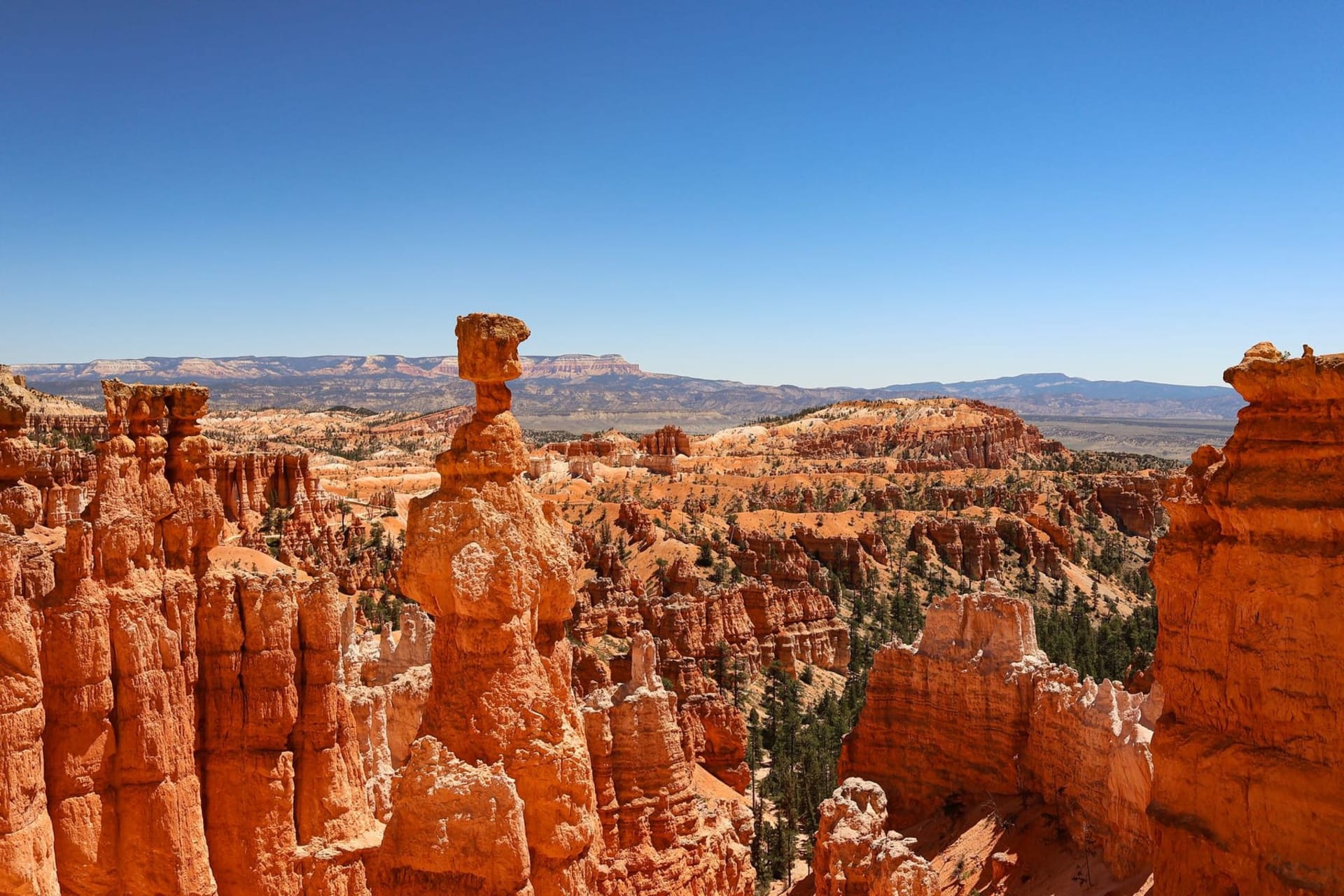
What I had not understood from photographs is the sound of it at that hour — almost none. The wind had died. A single raven clicked somewhere far below the rim. And then the eastern sky went from indigo to a thin, burning copper, and the hoodoos caught that light before anything else did. They turned red before the plateau around them showed any color at all, the iron oxide in the limestone igniting from the top down, spire by spire, until five thousand of them were glowing simultaneously like a city made of embers.
I said nothing for several minutes. Neither did Lia.
Walking Among Them
The descent into the amphitheater changes the relationship entirely. From the rim they look theatrical, arranged for viewing from above. On the Navajo Loop Trail, which drops 170 meters through a series of tight switchbacks into the canyon floor, you become small among them. The hoodoos loom. Their caps — harder limestone that erodes slower than the stone beneath — create shapes that really do suggest intention: monks, sentinels, figures mid-gesture.
What surprised me was the color variation up close. From Sunset Point the canyon reads as uniformly red, but descending the Wall Street section of the trail — a narrow corridor between sheer fins of eroded rock — I saw pale cream and dusty lavender in the same column as deep ochre. The light inside the slot was cold and diffuse even at midday, the canyon so narrow overhead that the sky appeared as a bright stripe between walls.
The Douglas firs growing at the bottom are another surprise. I had not expected trees inside the amphitheater — old ones, twisted, somehow surviving at altitude on whatever thin soil collects between the stones. They lend the canyon floor a quality that the upper rim photographs never capture: something living, rooted, indifferent to the spectacle around it.
The Rim Road at Dusk
Utah Route 63 traces the canyon’s eastern edge south from the visitor center past Sunset Point, Inspiration Point, and Bryce Point. We drove it in the last hour of light, pulling over at each overlook. At Bryce Point — the rim’s southern terminus, 2,700 meters elevation — the Paria River valley spread below us into the distance, flat and remote and copper-toned in the fading light. The hoodoos beneath us had gone from amber to rose to a deep, cooling red. It happened slowly enough to follow and fast enough that pausing to look elsewhere meant missing something.
The general store near the lodge sold fry bread, hot and a little dense, dusted with powdered sugar. We ate it standing in the parking lot in the dark, watching headlights move along the rim road below. Small pleasures after large ones.
When to go: Late April through early June for mild temperatures, fewer crowds, and possible snow still on the rim — which turns the canyon extraordinary, white above and red below. September and October are similarly ideal. Summer middays at elevation are comfortable but the park fills early; arrive before 9 a.m. or stay in the lodge to walk the rim at first light.