Black Hills
"The plains just stopped, and the mountains began, as if someone had drawn a line."
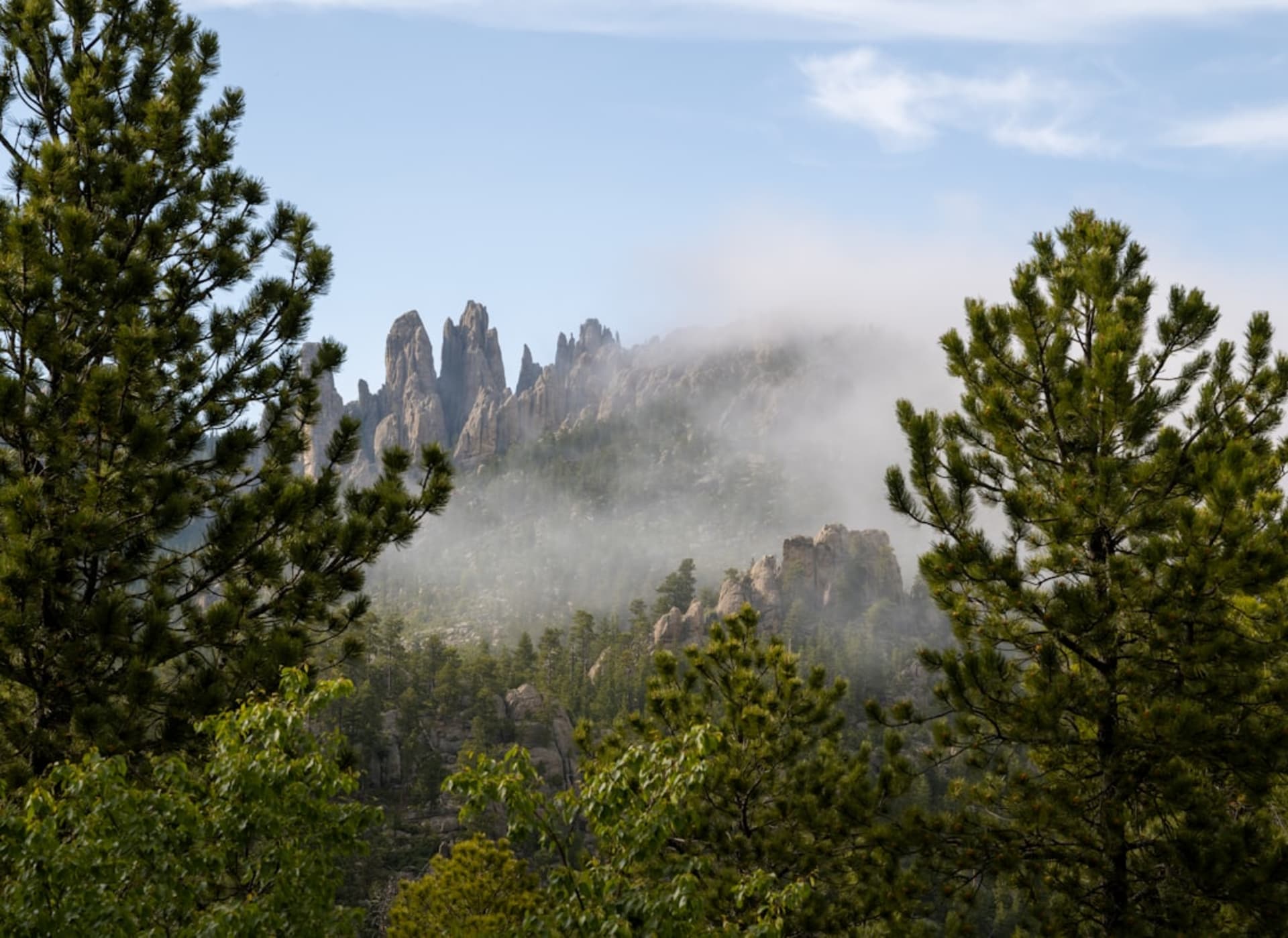
We’d been driving across South Dakota for hours, the kind of driving where the landscape doesn’t change and you start to doubt your own progress, when the Black Hills appeared on the horizon like a low dark cloud that refused to move. The Lakota called them Paha Sapa, the hills that are black, because from a distance the ponderosa pines gather the light and hold it, and the slopes go the color of a storm. Then the road climbed, the plains dropped away behind us, and suddenly we were in a forest, cool and green and utterly unlike the four hundred miles we’d just crossed. Lia rolled down the window and the smell of pine sap poured in.
The Needles and the Granite
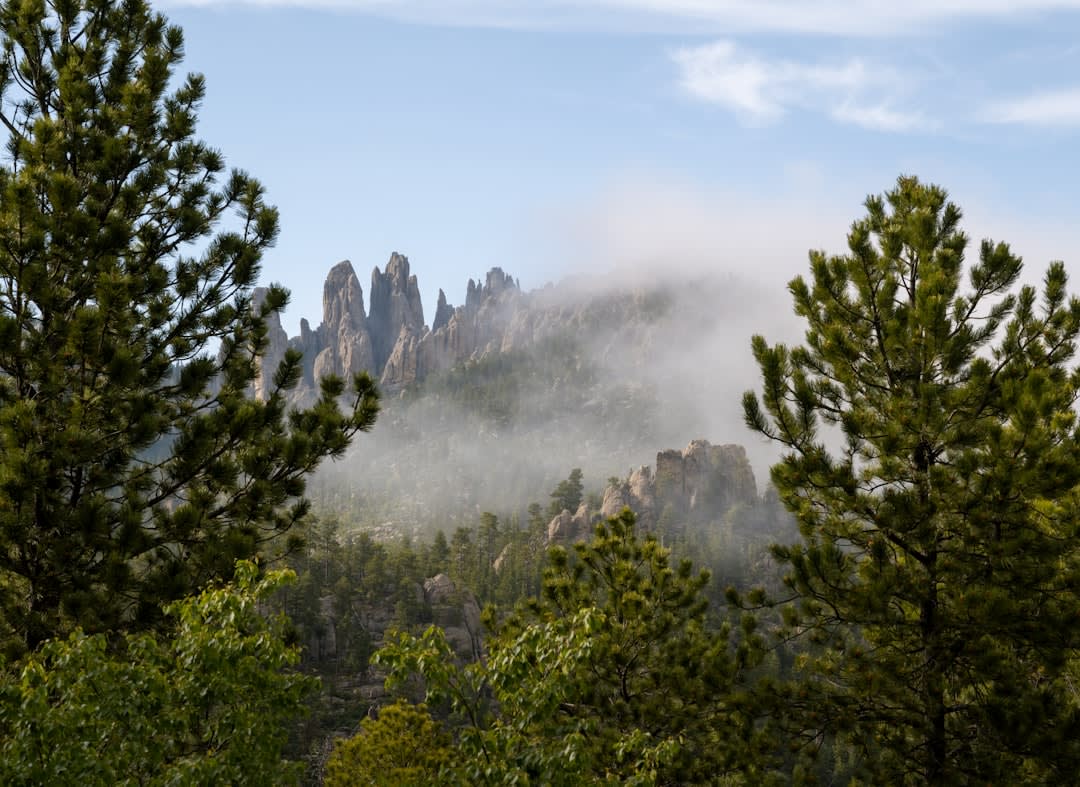
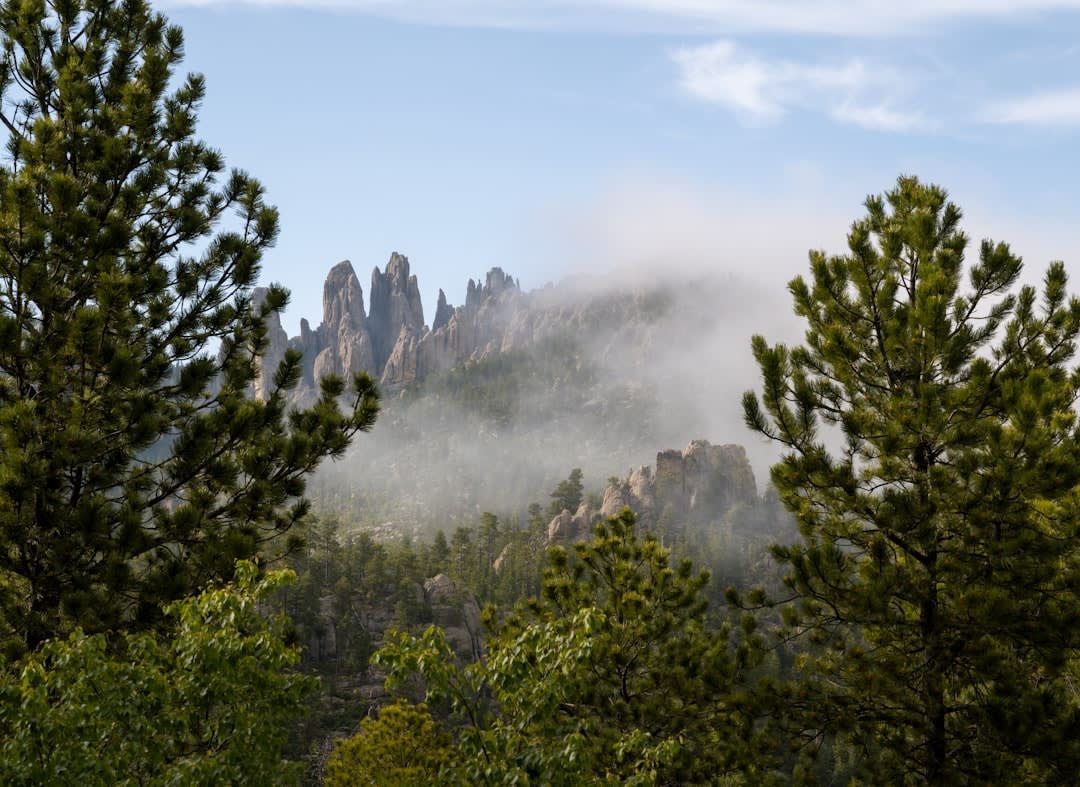
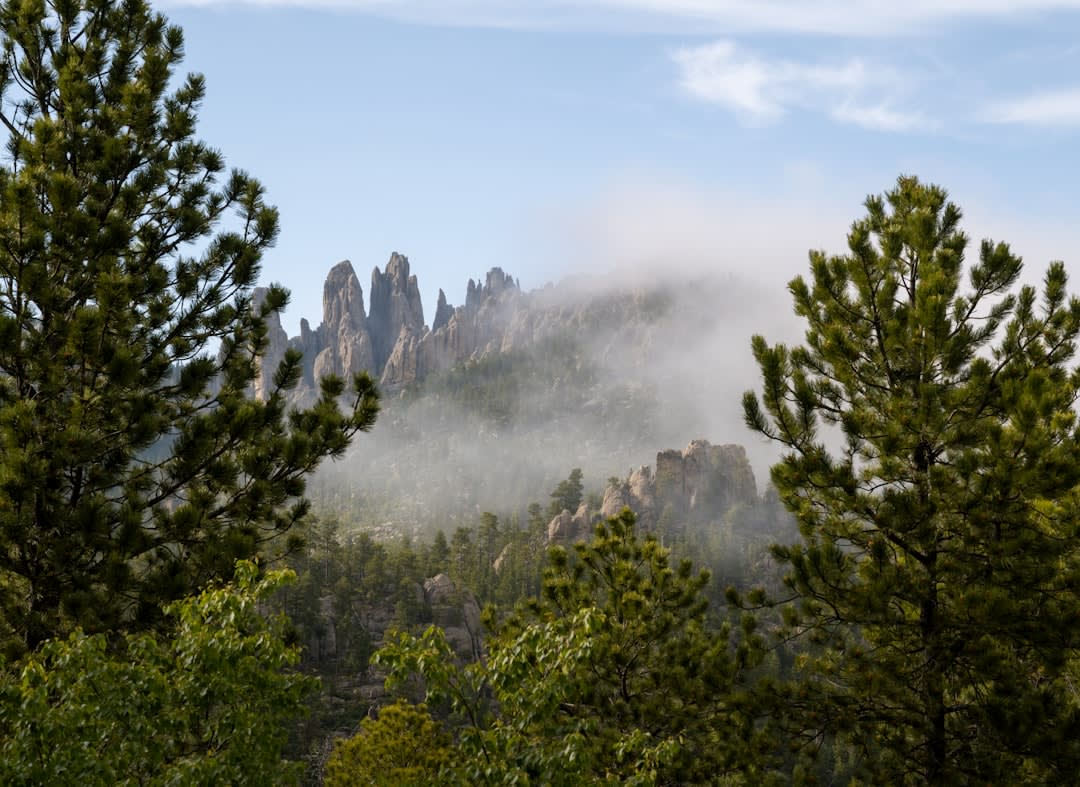
Nothing prepared me for the Needles Highway. It’s a road that has no business existing — fourteen miles of switchbacks and hairpins that thread between granite spires so close together the state had to blast single-lane tunnels through the rock. We inched through one, folding in the mirrors, and came out the other side to a wall of stone fingers pointing at the sky. We parked and scrambled up onto a slab of warm granite and just sat there. Climbers were working a route on the far spire, tiny bright specks against the gray. The wind moved through the pines with a sound like distant water.
Bison on the Wildlife Loop
In Custer State Park we drove the Wildlife Loop Road at first light, when the meadows were still silver with dew, and came around a bend into the middle of the bison herd. Not near them — in them. The road ran straight through the animals, and they were in no hurry to move. A bull the size of a small car stood in our lane and regarded us with total indifference, breath steaming, then ambled off. We turned the engine off and waited, and the herd flowed slowly around the car, calves trotting to keep up, the whole prairie smelling of dust and animal. It went on for twenty minutes. I’ve rarely felt so small and so lucky at once.
Sylvan Lake and the High Country
Sylvan Lake is the postcard everyone comes for, and for once the postcard undersells it. The little lake sits in a bowl of rounded granite, the boulders tumbling right down to the water, pines leaning over the edges. We walked the shoreline loop in the early evening, hopping between the great smooth rocks, and Lia waded in to her knees despite the cold and declared it worth it. A pair of paddleboarders drifted across the still water. On the far side, the trailhead for Black Elk Peak — the highest point east of the Rockies — climbs up into the backcountry, and we promised ourselves we’d come back for it. Some mountains you have to leave a little unfinished, so you have a reason to return.
Getting There
The Black Hills sit in the far southwest corner of South Dakota, easiest reached by flying into Rapid City, which is about a 40-minute drive from the heart of the hills. A car is essential — this is a landscape built for driving, and the scenic roads (Needles Highway, Iron Mountain Road, the Wildlife Loop) are half the reason to come. Custer State Park makes a superb base, with lodges and campgrounds inside the park. Come in late spring or early autumn to dodge the summer crowds; September, when the crowds thin and the light goes long and gold, is my quiet recommendation.