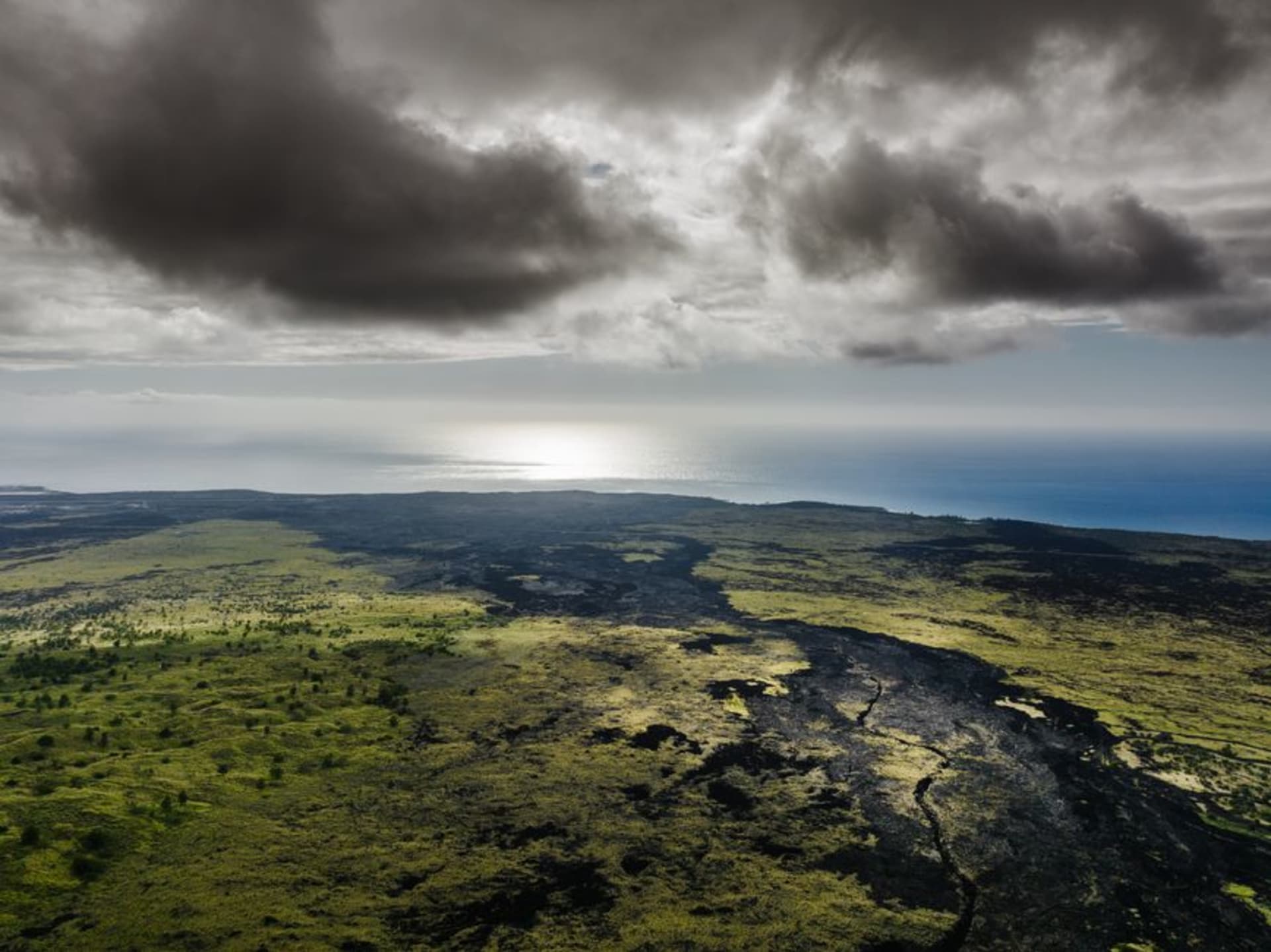
Big Island of Hawaii
"You can watch the island get bigger. That is not a metaphor here."
The Big Island does not feel finished, and that is the wonder of it. Lia and I stood at the edge of the Kilauea caldera after dark, and across the vast bowl an orange glow pulsed against the low clouds like a heartbeat. Somewhere down there the earth was still liquid, still building. We had spent the morning on a beach of black sand and the afternoon in a rainforest, and now we were watching a volcano breathe. It is the only place I have been where the ground itself feels like a work in progress, and you are simply passing through while it happens.
Hawaii Volcanoes National Park
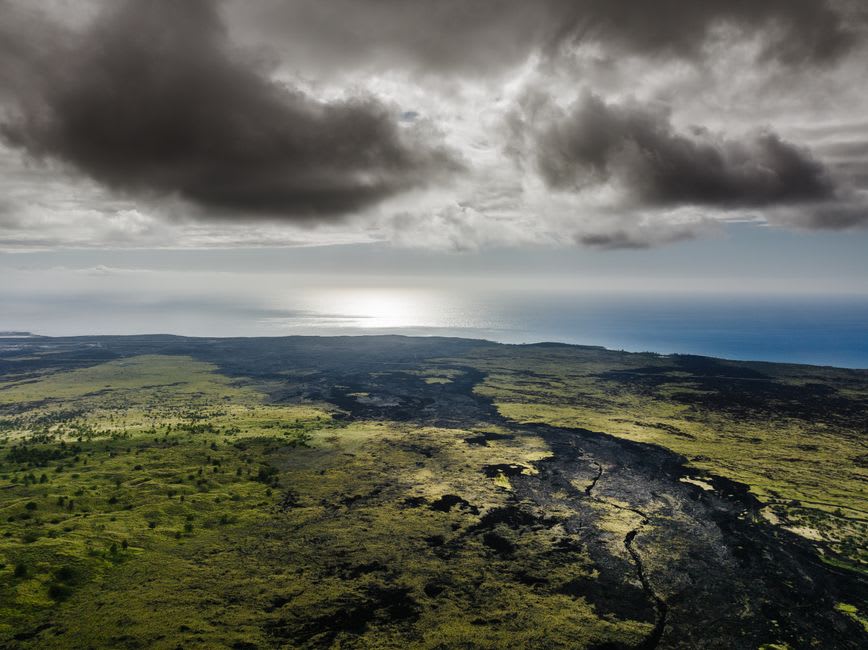
We gave the park two full days and could have used a week. By day we walked across the Kilauea Iki crater floor, a hardened lava lake still steaming from vents at the edges, feeling the heat rise through our boot soles. We drove Chain of Craters Road down to where old lava flows have buried the pavement in frozen black rivers and the sea pounds a raw new coastline. At dusk we returned to the caldera overlook, and the glow deepened as the sky darkened until it was the brightest thing for miles. A ranger told us the Hawaiian goddess Pele is said to live in the crater. Standing there, you do not need convincing.
Black Sand and Green Turtles
At Punaluu the sand is genuinely black, ground from lava, and it soaks up the sun until it is almost too hot to stand on. We arrived to find several enormous green sea turtles hauled out on the shore, basking utterly unbothered while a ranger kept visitors at a respectful distance. Lia crouched a few meters off and watched one for a long time as it blinked its slow reptile blink. Palms leaned over the dark beach, the surf was too rough to swim, and none of that mattered. We just sat on the strange black sand as the turtles slept and the waves came in, and it was one of those hours that stitches itself permanently into memory.
Kona Coffee and the Slopes of Mauna Kea
On the western Kona coast the land climbs quickly from the sea, and on those upland slopes coffee grows in the volcanic soil and afternoon cloud. We toured a small family farm, walked the rows of red-cherried bushes, and drank a cup so good it ruined the airport coffee waiting for us at the end of the trip. Later we drove partway up Mauna Kea, the great dormant volcano whose summit can wear snow even in a tropical winter, and watched the sunset from the visitor station as the temperature dropped and the stars came out hard and bright. One island, and we had been to the tropics, the desert, and nearly the mountaintop, all in a day.
Getting There
The Big Island has two main airports: Kona (KOA) on the drier west coast and Hilo (ITO) on the wetter east, near the volcano. Flying into one and out of the other saves backtracking across a large island. A rental car is a must — distances are real here, and a full loop takes hours. Bring layers: you may start the day on a warm beach and end it shivering near Mauna Kea’s summit. Check the national park’s website for current volcanic activity and air-quality advisories, since the eruption and viewing conditions change often.