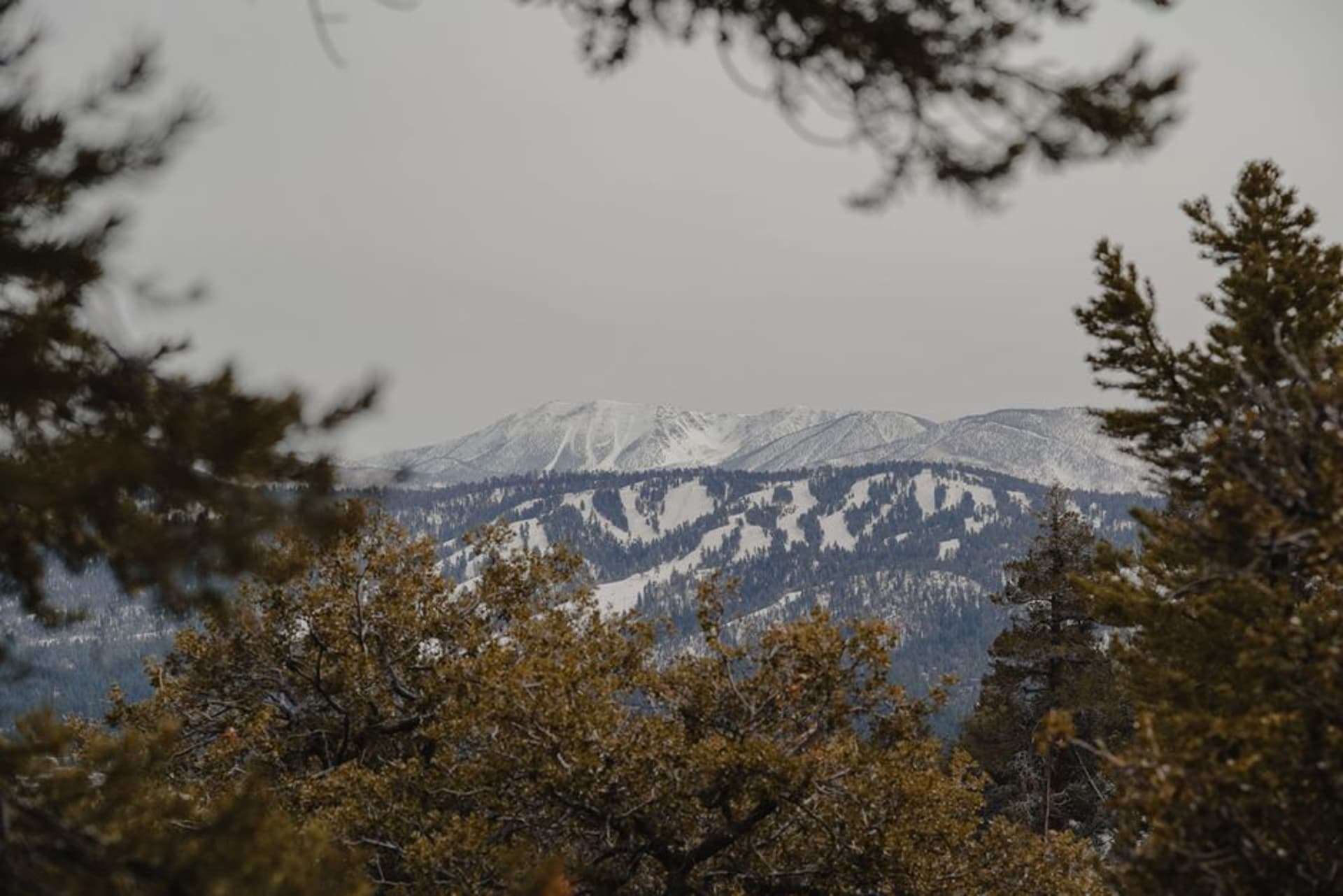
Big Bear
"An hour from the freeway, and suddenly we were breathing pine at seven thousand feet."
The first time we drove up to Big Bear I did not believe the mountain. We’d left the San Bernardino sprawl in the heat haze, and the road began switchbacking so hard that Lia went quiet and gripped the door. Then the pines closed over us, the air cooled, and the lake appeared below — long, blue, impossibly calm — as if someone had installed the Alps an hour above Los Angeles as a practical joke. We pulled over at a turnout just to look, engine ticking, and neither of us said anything for a while.
The lake, in its summer mood
We rented a little pontoon boat one July morning, the kind that putters along at walking pace, and spent the whole day on the water. Big Bear Lake is seven miles long and edged with coves, and the mountains hold the light so that by afternoon everything goes gold. Lia trailed her hand in the water and yelped — even in July it’s cold, snowmelt-cold. We cut the motor in a quiet arm of the lake and ate sandwiches while ospreys worked the surface. On the far shore, Boulder Bay’s namesake rocks glowed. It’s not a wild lake — there are docks and jet skis and families — but there’s real beauty in it if you slow down enough to find the corners.
Snow, the other town
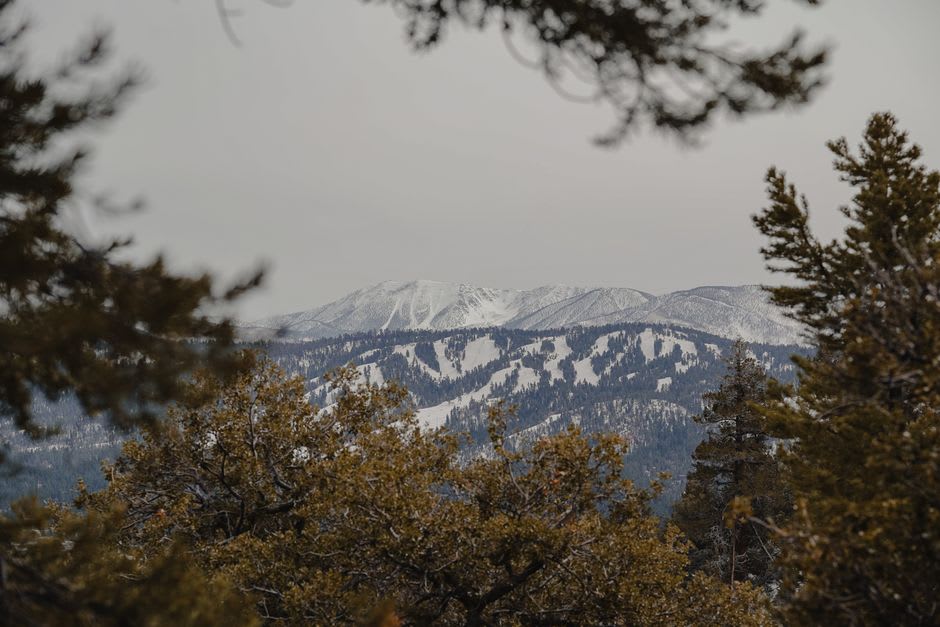
We came back in February and it was a different place entirely. Snow Summit and Bear Mountain were running their lifts, the village was full of people clomping around in ski boots, and the pines wore white. I am not a strong skier and I admit it, but Big Bear is forgiving — the runs are short, the sun is out, and you can be back at a fireside with a hot drink by mid-afternoon. Lia, who skis properly, disappeared up the mountain and came back grinning with cold. What I loved was the strangeness of it: palm trees and Pacific beaches were two hours downhill, and here we were, boots crunching, breath fogging.
Up above the town
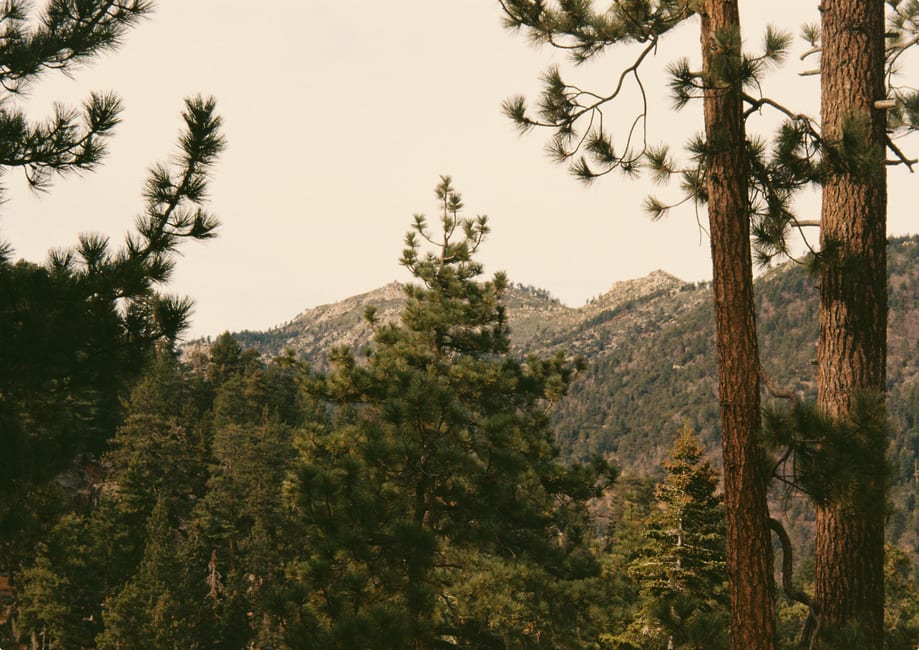
Both times, our best hours were away from the lakefront. We drove the ridge to the Big Bear Discovery Center and took a trail out through the Jeffrey pines, whose bark, when you press your nose to it in the sun, smells absurdly of butterscotch — a thing a ranger told us, that we did not believe, that turned out to be true. Higher up, the Pacific Crest Trail crosses these mountains, and we walked a stretch of it to a viewpoint where the whole San Bernardino range fell away in blue folds. That’s where Big Bear stops being a resort and becomes a mountain again.
Getting There
Big Bear Lake is about 100 miles east of Los Angeles, a two-to-three-hour drive depending on traffic and season. The classic approach is Highway 18, the “Rim of the World” road, which earns its name with long drops and long views — the other route, Highway 38, is gentler and less white-knuckle, and we prefer it going up. In winter you may need tire chains and should check road conditions before you leave; snow closures happen. There’s no public transport worth the name, so a car is essential, and the mountain air will have you reaching for a jacket the moment the sun drops behind the ridge.