Baltimore
"You do not eat a Baltimore crab so much as negotiate with it — slowly, messily, and with both hands."
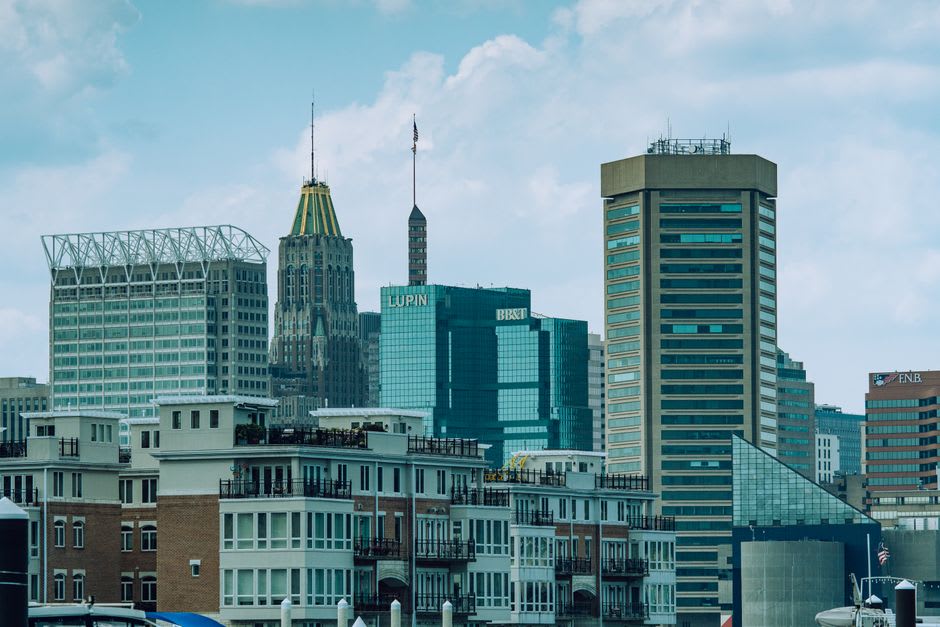
We arrived in Baltimore at the wrong hour on purpose — late afternoon, when the light goes long and amber across the water and the Inner Harbor fills with people who have just finished work. Lia leaned on the railing near the old ships and said the city smelled like brine and Old Bay seasoning, and she was exactly right. There is a particular Baltimore perfume — steamed shellfish, harbor water, warm brick — that hits you the moment you step out near the docks and never quite leaves for the rest of your stay. I liked it immediately, the way you like a place that is entirely itself and makes no apology for it.
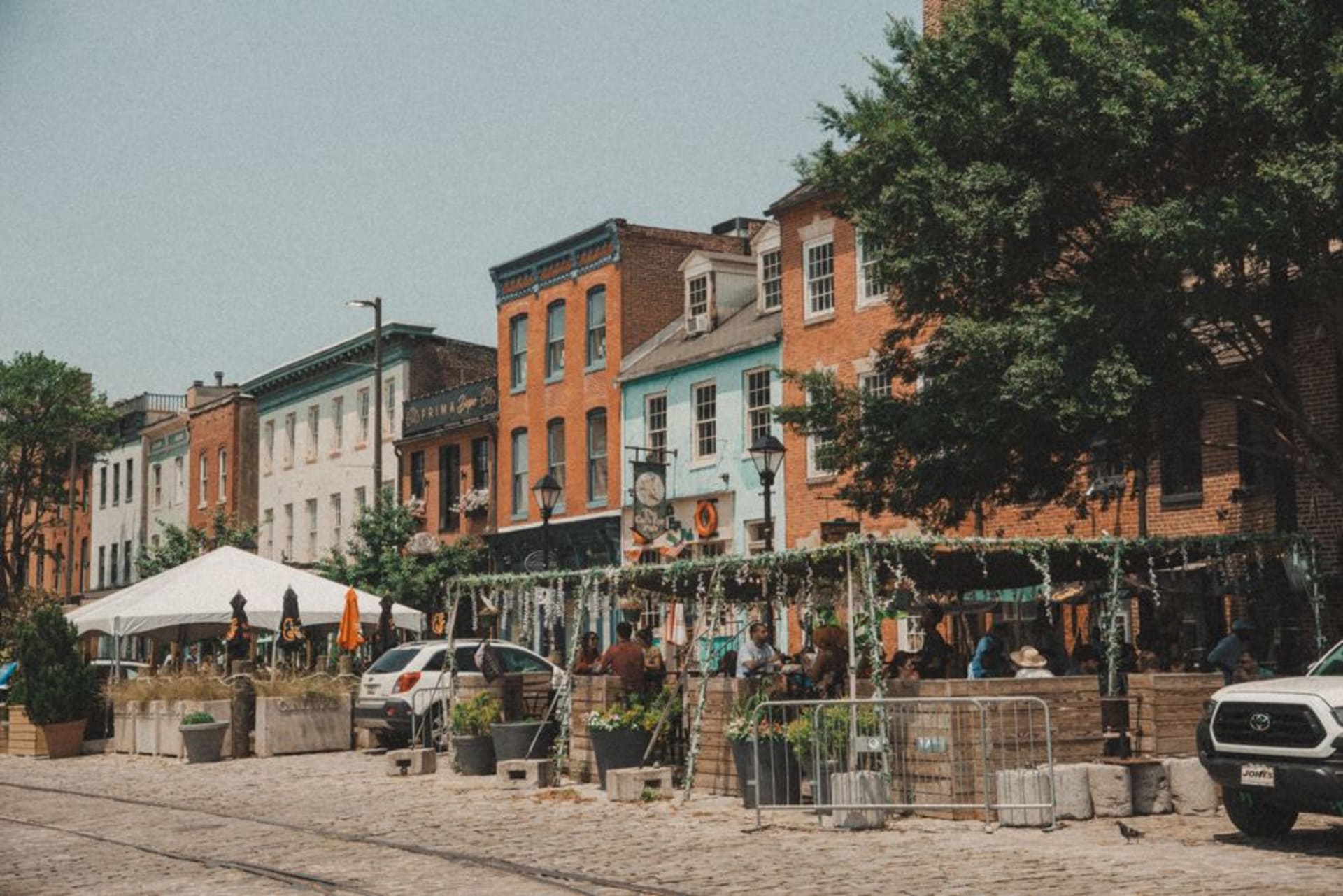
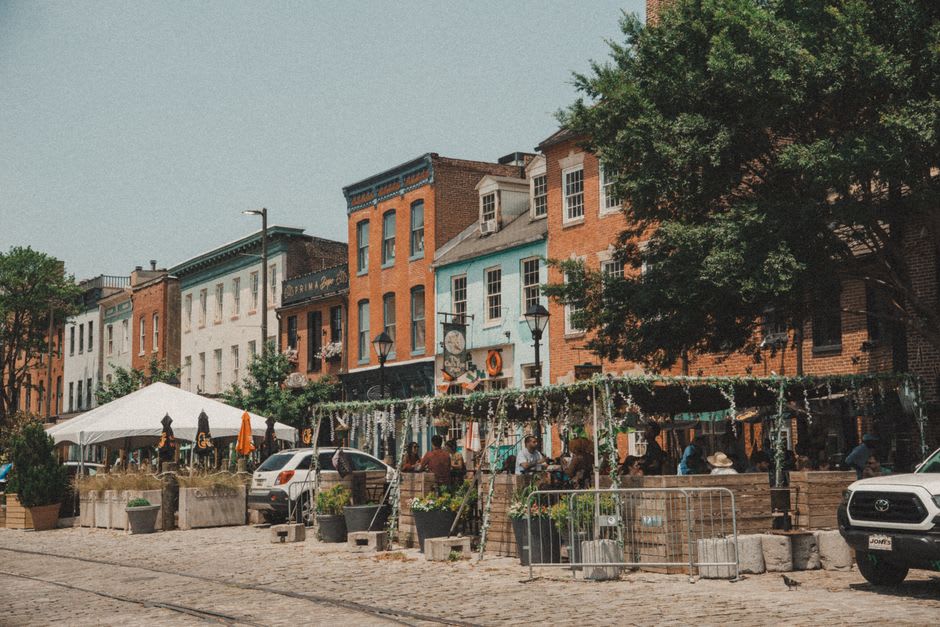
Cracking crabs in Fells Point
Our first serious meal was in Fells Point, a cobblestoned old maritime quarter of tilting brick houses and bars that have poured drinks for two centuries of sailors. We sat at a paper-covered table, were handed wooden mallets, and were presented with a mountain of blue crabs crusted in Old Bay. Nobody explained the technique; you are simply expected to figure it out, and figuring it out is half the pleasure. Lia and I spent two happy hours cracking, picking, and arguing about the best method, our fingers stained orange with spice, a pile of shells growing between us. It is slow food in the most literal sense, a meal that refuses to be rushed, and by the end we understood why Baltimoreans treat crab season as something close to a religion.
Row houses, marble stoops, and painted screens
The next morning we walked the residential streets, and this is where Baltimore truly reveals itself. Block after block of narrow red-brick row houses, each fronted by a scrubbed white marble stoop — a local point of pride, once cleaned daily on hands and knees. In Hampden and Federal Hill we found the famous painted window screens, a working-class folk art of pastoral scenes brushed onto mesh so the occupants can see out while passers-by cannot see in. Lia photographed a dozen of them. The neighbourhoods feel intensely lived-in, doorways open, neighbours calling across the street in the broad Baltimore accent, and we drifted through them for hours with no destination, which is my favourite way to know a city.
Fort McHenry and the harbor’s history
On our last afternoon we walked out to Fort McHenry, the star-shaped brick fort on a point of land guarding the harbor mouth. It was here, during the War of 1812, that the sight of a vast flag still flying after a night of British bombardment inspired the words that became the American anthem. Standing on the ramparts with the wind off the water and container ships sliding past toward the modern port, the layers of the place stacked up neatly — the fort, the flag, the working harbor that has always been Baltimore’s reason to exist. Lia and I sat on the grass and watched the huge cranes of the port swing in the distance, a city still earning its living from the same water it was born on.
Getting There
Baltimore/Washington International (BWI) sits about fifteen minutes south of downtown, with a light rail line and the MARC and Amtrak trains at the adjacent rail station running straight into the city’s Penn Station. Baltimore is also an easy hop on the Northeast Corridor — barely half an hour from Washington, a couple of hours from Philadelphia and New York — which makes arriving by train the civilised choice. In the city itself we walked almost everywhere, using the free Charm City Circulator buses to link the harbor with Fells Point and Federal Hill, and only wished we had left more time for the crabs.