Saguaro National Park
"Lia counted the arms on one cactus and gave up at eleven. It was older than both our countries put together."
Forests of giant saguaro cactus stand like a slow-motion crowd on the mountain-ringed edge of Tucson. They lift their arms toward a sky that goes from bleached white at noon to bruised violet at dusk. To walk among them is to feel very briefly, and very small.
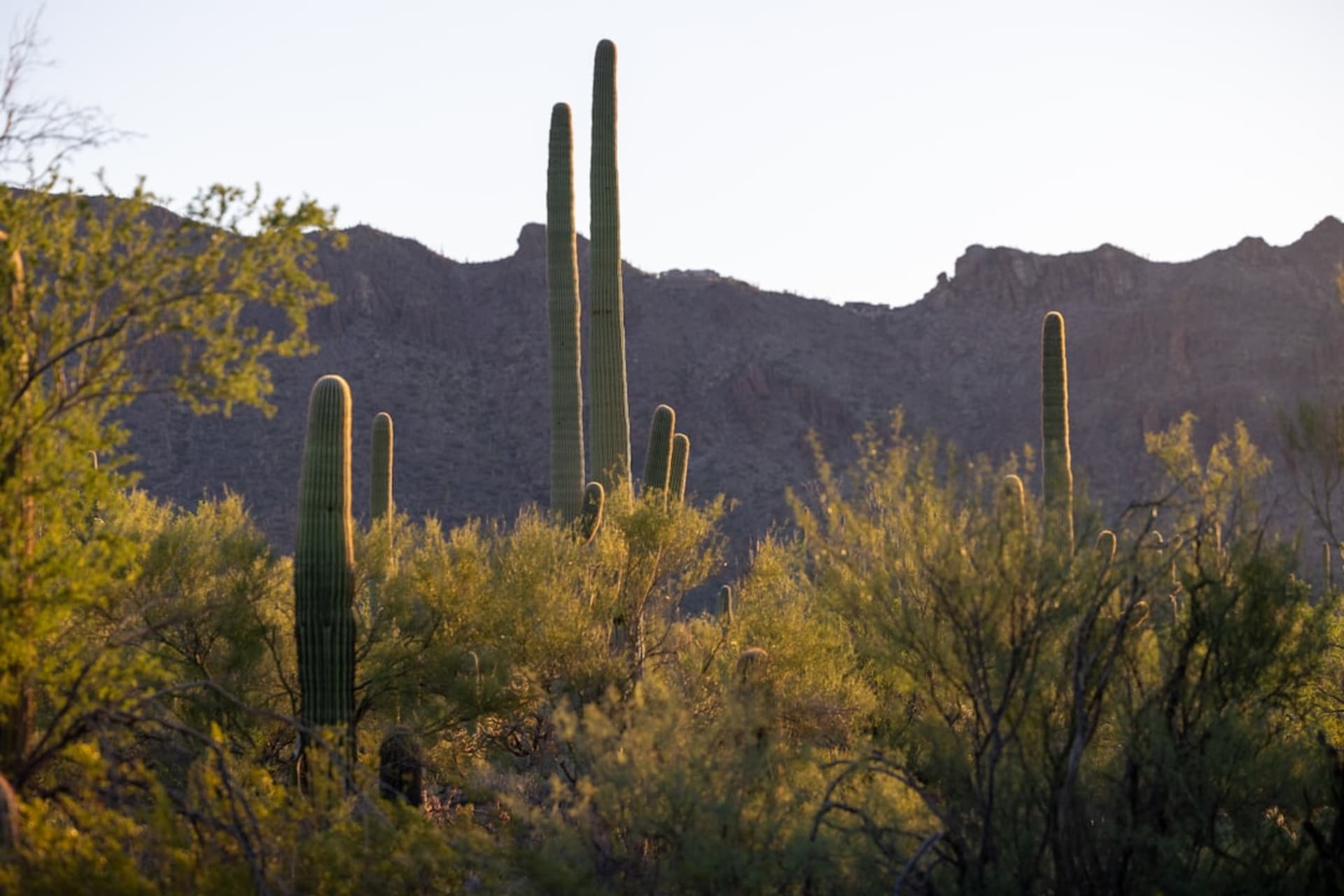
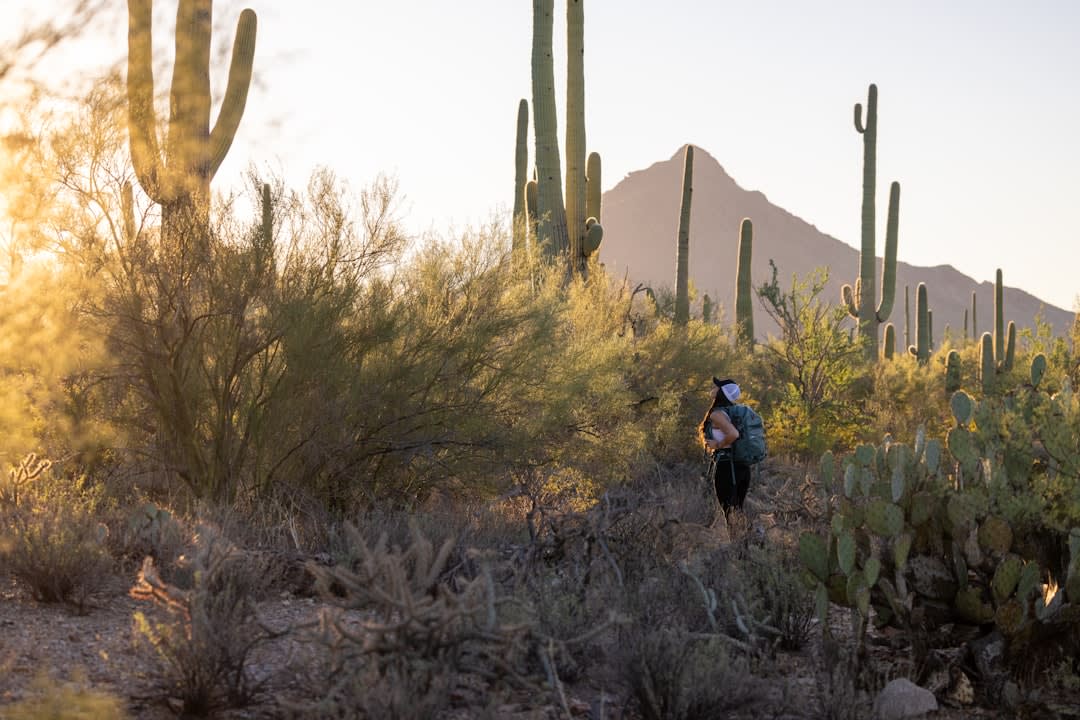
We arrived at the Rincon Mountain side in the last hour of light, which is either the best or the worst decision, depending on whether you have water. We had water. What we had not accounted for was how completely the desert rearranges your sense of scale in that low gold light — a saguaro that reads as chest-high from the car turns out, when you stand beside it, to loom two heads above you, ribbed and green and improbably alive. Lia put her hand near one, not touching, the way you’d hold your palm toward a fire, and said she could feel it giving off the day’s heat. I don’t know if that’s true. I know we both stood there longer than we meant to.
The Cactus Forest at Golden Hour
The saguaro is not in a hurry about anything. It takes a decade to reach an inch; it may not grow its first arm until it’s seventy years old; the giants standing over the Cactus Forest Loop Drive were seedlings when Arizona was still Mexico. Knowing that changes how you look at them. We drove the loop slowly, then abandoned the car and walked a spur of the trail as the sun dropped behind the Tucson Mountains to the west. The whole forest went from green to black in silhouette, thousands of upraised arms against a sky the color of a peach going bad in the best possible way. A cactus wren scolded us from a hole punched high in one trunk. Everything smelled of warm dust and creosote.
Signal Hill and the People Before
On the Tucson Mountain side, a short scramble up a boulder pile called Signal Hill brings you to petroglyphs pecked into the desert-varnished rock by the Hohokam people, perhaps a thousand years ago. There are spirals, deer, a figure that might be a person and might be a lizard. Lia traced the air above one spiral with her finger and asked the obvious unanswerable question — what did it mean to the hand that made it. We ate oranges up there in the shade of nothing, squinting at the valley, and it struck me that the saguaros below us were the only witnesses old enough to have possibly known. Some of them were.
Dawn, and the Cool You Don’t Expect
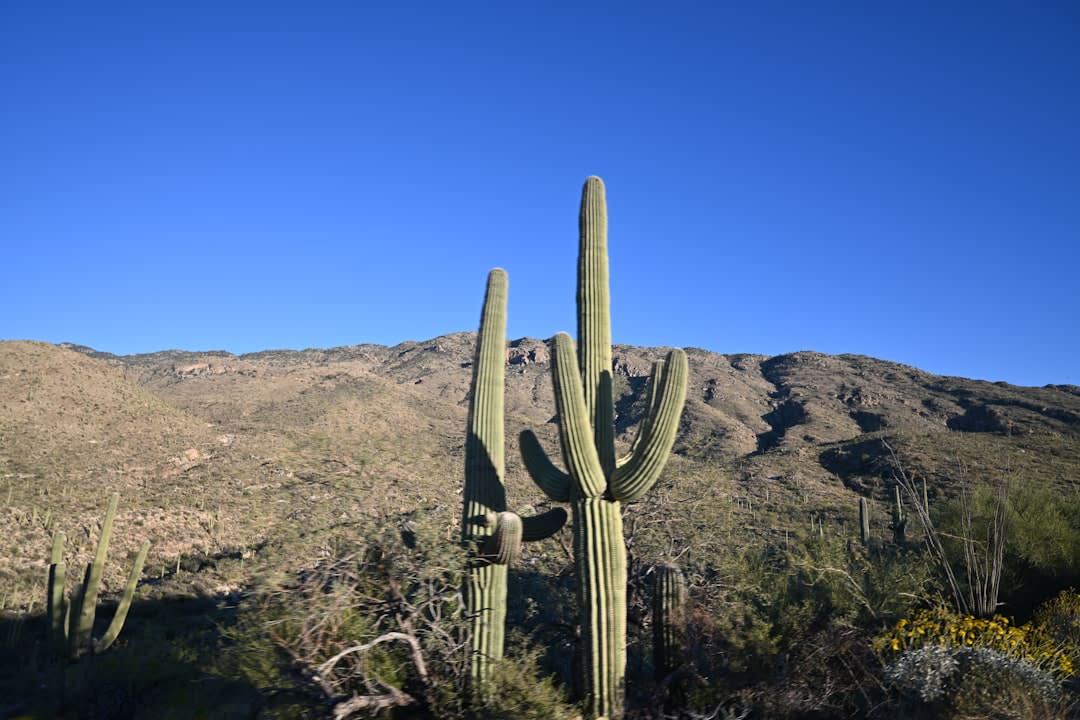
The second morning we came back before six, when the desert is briefly, almost shockingly cold. The saguaros stood in a blue half-light, and the birds were louder than I thought a desert could be — Gila woodpeckers, doves, the manic laugh of a cactus wren. This is the hour the desert keeps for itself. A jackrabbit froze on the trail ahead of us, ears backlit and glowing pink, then thought better of the whole encounter and was gone. By eight the heat was already pressing down like a hand, and we understood why every living thing here does its business at the edges of the day. We drank our coffee leaning on the car, watching the light climb the flanks of the mountains, in no rush to leave.
Getting There
Saguaro National Park sits in two districts on either side of Tucson, Arizona, about a fifteen-minute drive from downtown to either entrance. Fly into Tucson International, or make the roughly two-hour drive south from Phoenix. The Rincon Mountain District (east) and Tucson Mountain District (west) are separated by the whole city, so pick one per outing rather than trying to bridge both. A car is essential; there’s no transit. Go October through April to avoid genuinely dangerous summer heat, carry far more water than feels reasonable, and time your visit for the first or last hour of daylight when the desert briefly forgives you.
Keep exploring
More of Arizona