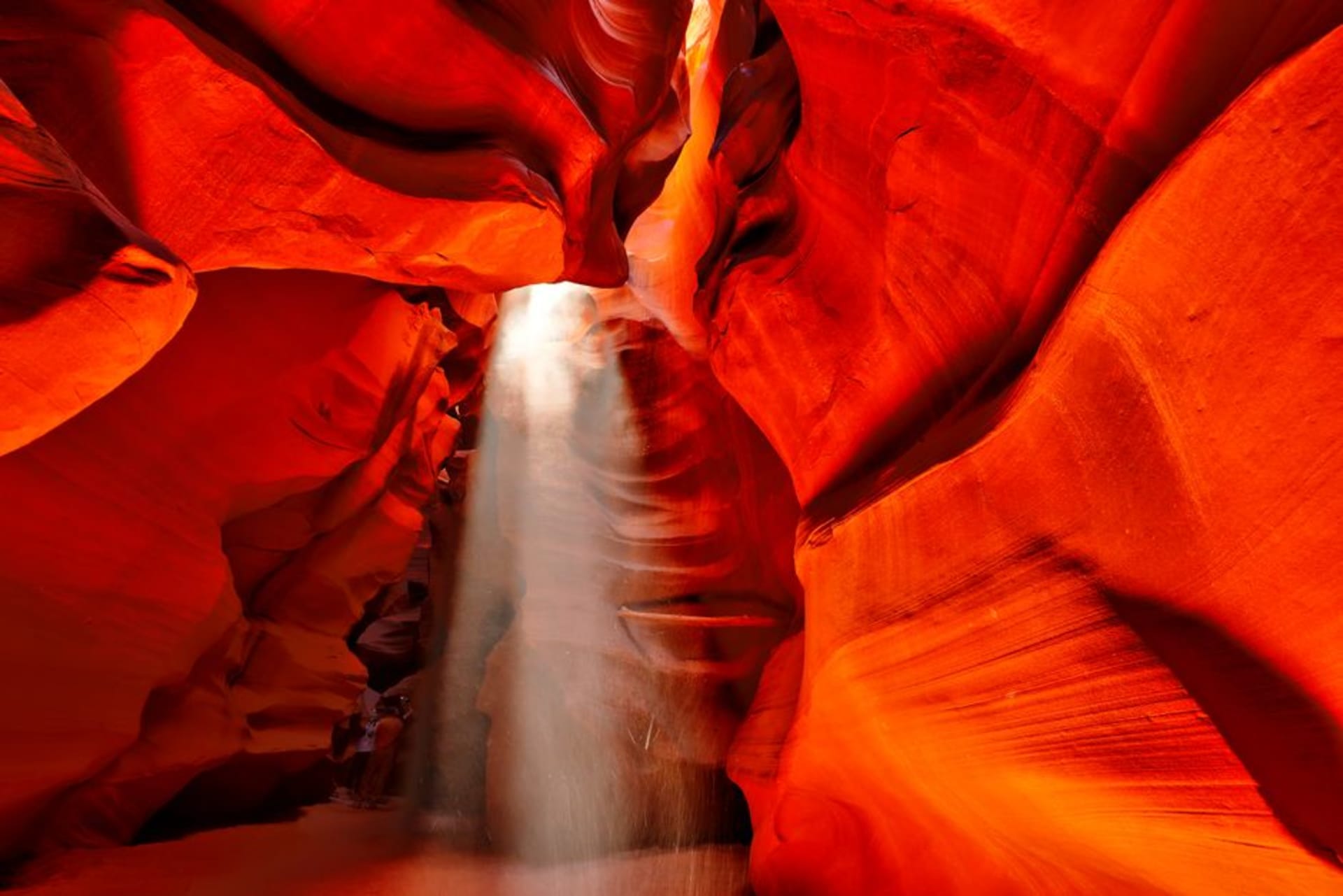
Antelope Canyon
"Lia put her hand flat against the wall as if she could feel the water that made it."
I will admit I was skeptical. Everyone has seen the photograph, that impossible orange corkscrew with a beam of light spearing down through it, and I had assumed the reality would be a crowded letdown. Then our guide led us down a metal staircase into a crack in the desert floor, the temperature dropped, the light went amber, and I stopped mid-sentence. Antelope Canyon does not photograph better than it looks; it looks better, because a photograph cannot give you the cool air, the hush, or the way the walls seem to be moving even though they have not moved in a thousand years.
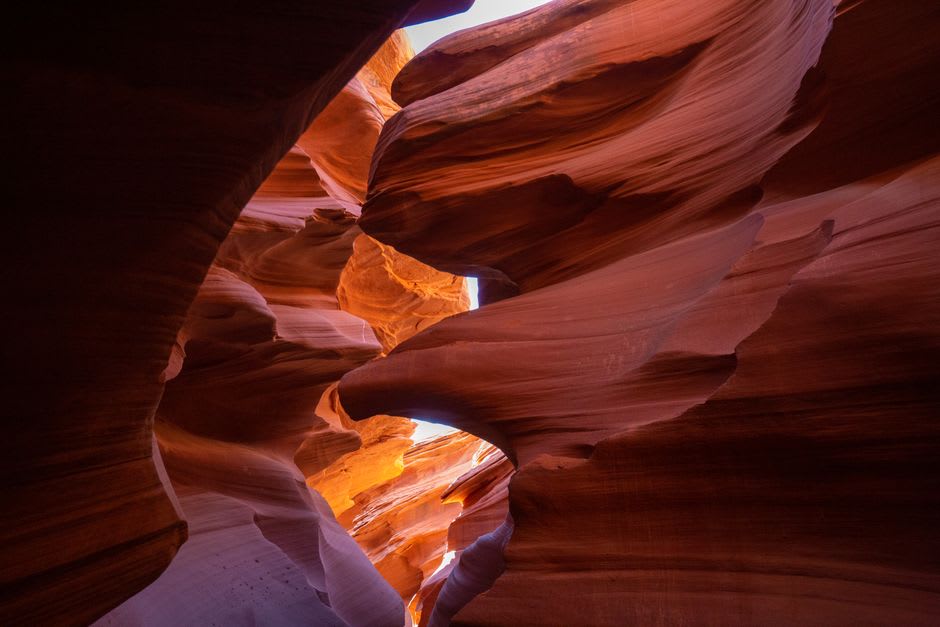
The Walls
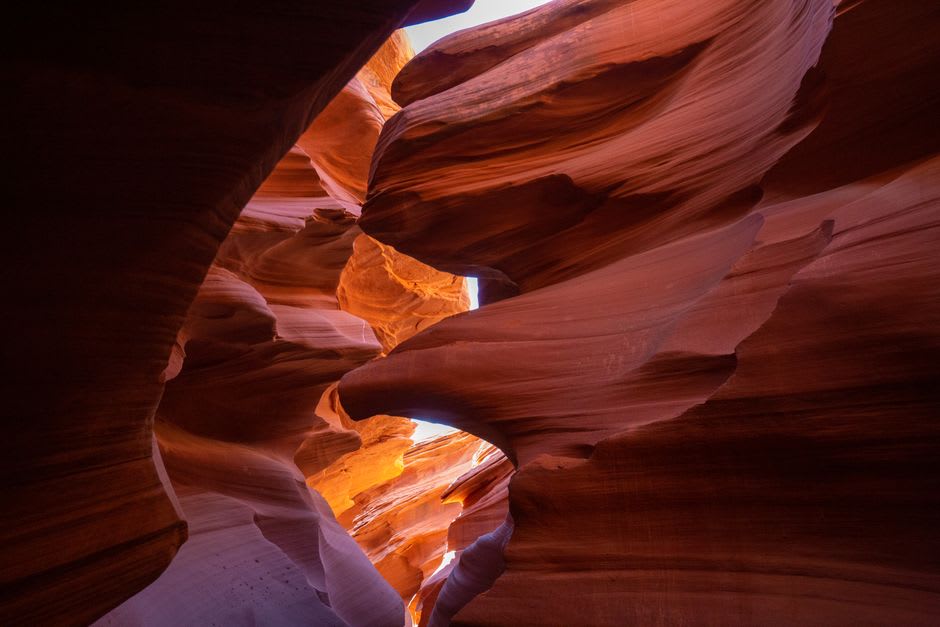
The canyon was carved by flash floods tearing sand and water through the sandstone, and you can read that violence in every surface, the rock flowing overhead in ribbons and whorls and sudden smooth curves. Lia put her hand flat against a wall as if she could still feel the water that made it, and I understood the impulse. Our Navajo guide, walking backward and talking softly, pointed out shapes in the stone, a seahorse here, a chief’s profile there, and though I usually resist that kind of thing, in the shifting light they genuinely appeared. The colors change minute to minute as the sun moves above the slot, purples deepening into golds.
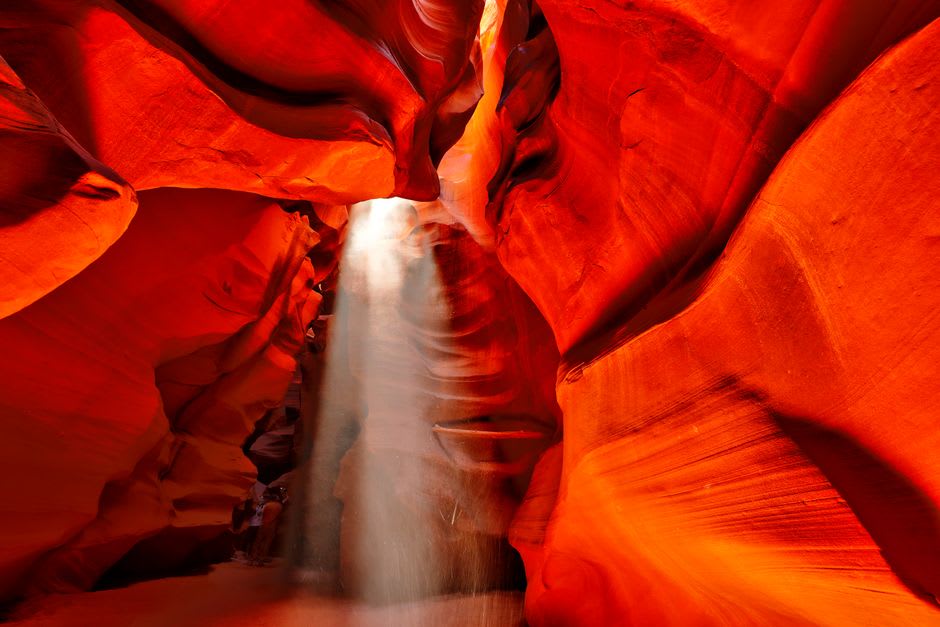
The Light Beams
We had timed our visit for late morning, when the sun climbs high enough to send shafts of light straight down through the narrow openings to the sandy floor. When the first beam appeared it was almost theatrical, a solid-looking column of gold hanging in the dust, and the whole group fell quiet. Our guide tossed a handful of sand into it so we could watch the light take shape, and Lia laughed out loud with delight. For a few minutes the canyon felt less like geology than like standing inside a slow, silent piece of music. Then the beam thinned, tilted, and was gone.
Above Ground
What surprised me was how ordinary the surface is. You climb back out of that jeweled underworld and you are standing in flat, scrubby desert near Page, the wind blowing grit, a few juniper bushes, the great blank sky. It made the canyon feel like a secret the land was keeping, something you would never guess was down there. We sat on the tailgate of the tour truck afterward, drinking warm water and blinking in the brightness, both a little dazed. Lia said it was like waking from a very vivid dream, and I could not think of a better way to put it.
Getting There
Antelope Canyon lies on Navajo land just east of Page, Arizona, and you cannot enter without a booked guided tour, so plan ahead; the midday slots that catch the light beams sell out weeks in advance in summer. We flew into Page’s small airport, though most visitors drive up from the Grand Canyon or from Kanab in Utah, each a couple of hours away. Upper Antelope is the classic beam-filled slot; Lower Antelope is narrower and involves ladders and fewer crowds. Whichever you choose, bring only what you can carry, tip your guide, and leave the tripod at home unless you book a photography permit.