Albuquerque
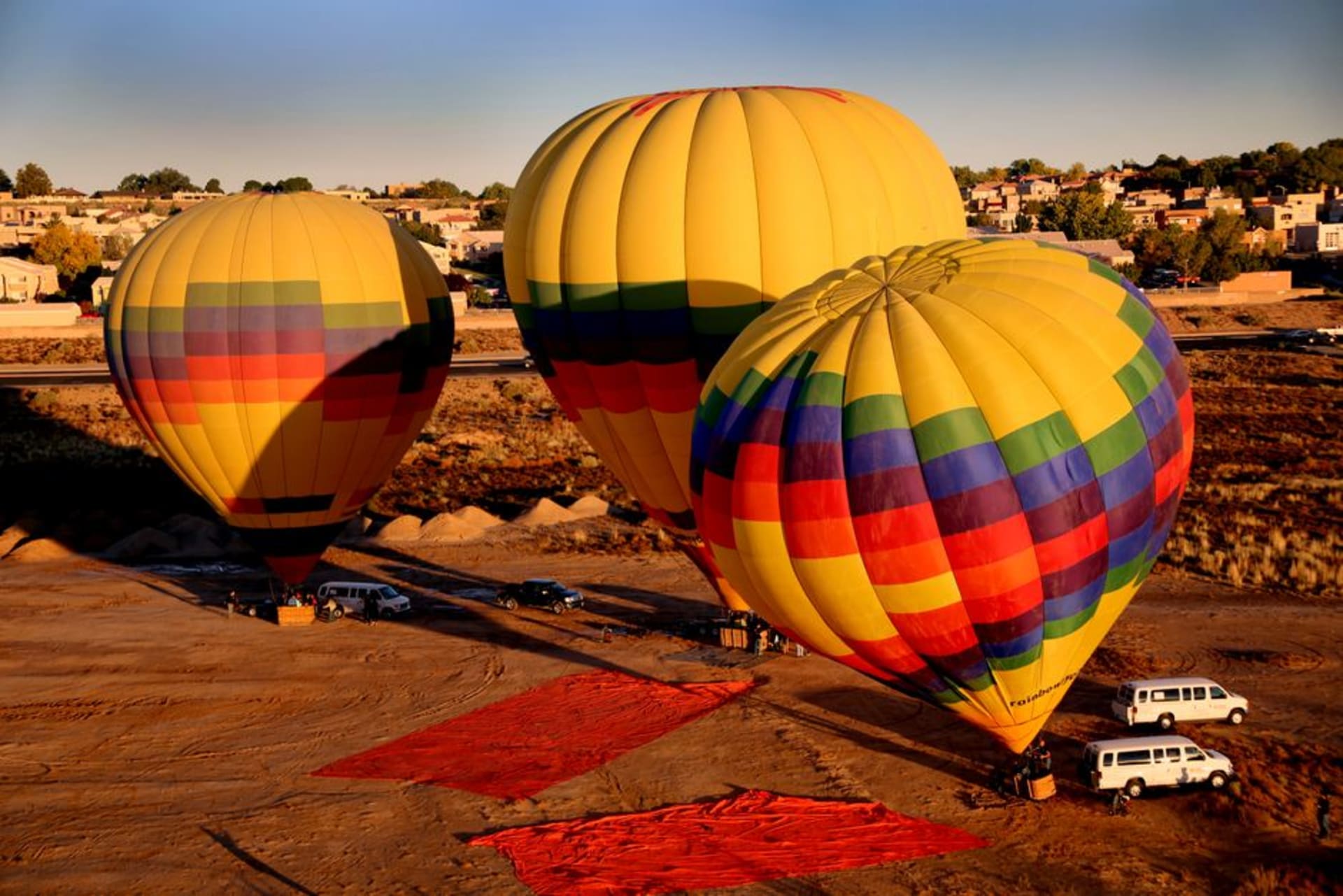
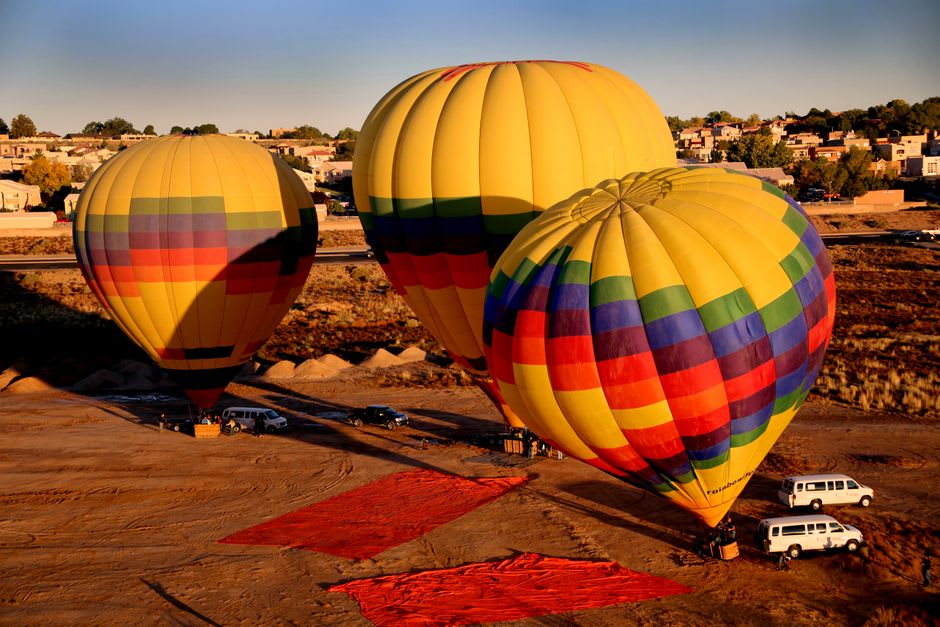
"We stood in a field before dawn and watched the sky fill, one balloon at a time, until we couldn't count them."
I did not expect Albuquerque to move me. We came for a single night, a place to sleep on the way to somewhere else, and then a friend insisted we get up in the cold dark and drive to a field on the north edge of town. So we did, grumbling, coffee in hand — and then the balloons began to rise. First one, glowing from within as the burner roared, then five, then dozens, whole shapes lifting silently off the desert floor into a sky going from black to grey to pink. Lia gripped my arm and said nothing. It is the closest thing to a religious experience I have had over a city.
Old Town and the Rio Grande
Albuquerque’s Old Town holds the original 1706 plaza, a shaded square of adobe wrapped around the twin-towered church of San Felipe de Neri, still holding Mass three centuries on. We wandered its low arcades in the morning, ristras of dried red chile hanging in every doorway, and ate breakfast burritos smothered — green, of course — at a counter where the woman behind it called everyone “hon.” Down the hill the Rio Grande runs through a green ribbon of cottonwood forest called the bosque, and we walked a stretch of its shaded trail, the river slow and brown, sandhill cranes stalking the shallows in the cool.
Up the Sandia Peak
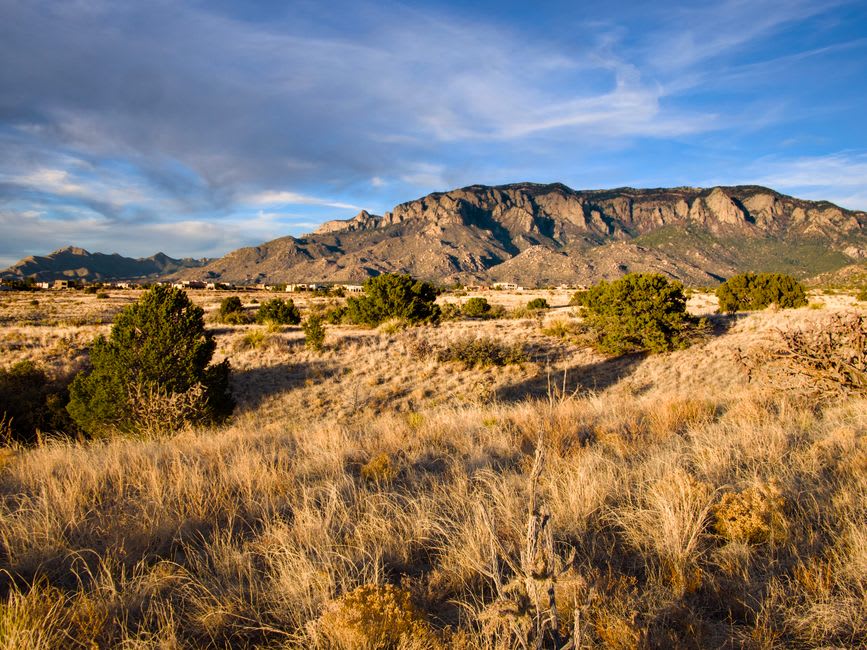
In the afternoon we rode the Sandia Peak Tramway, the longest aerial tram in the country, which hauls you nearly two thousand metres up the sheer western face of the mountains that give the city its horizon. The car swings out over cliffs and canyons, the desert falling away, and at the top the air was suddenly alpine and cold, spruce and fir where an hour before there had been cactus. From the ridge the whole of Albuquerque lay spread below in its grid, the Rio Grande a green thread through it, and at sunset the granite around us turned the watermelon-pink that gave the Sandias — Spanish for watermelon — their name.
Route 66 After Dark
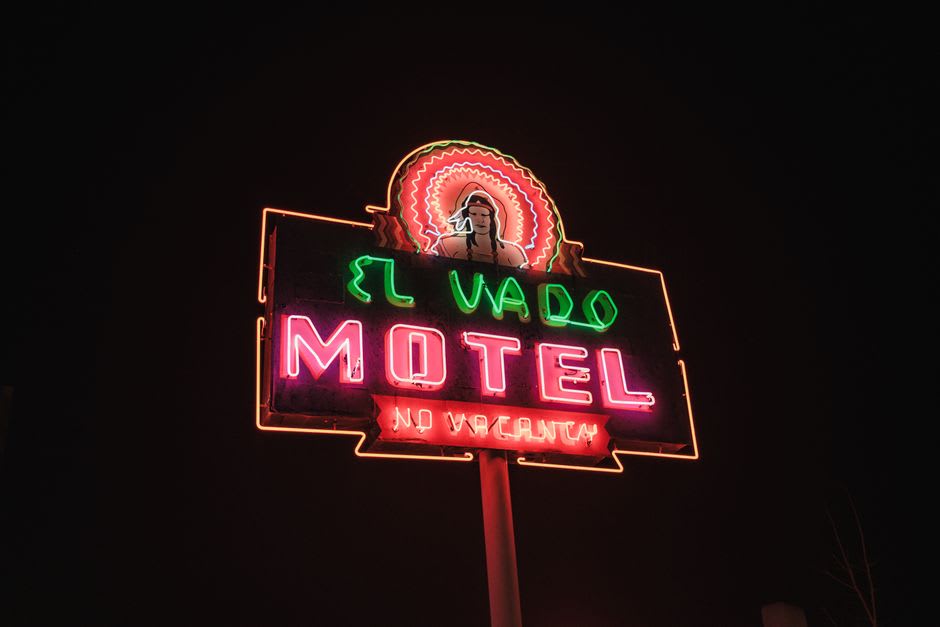
Central Avenue is old Route 66, and after nightfall the Nob Hill stretch flickers back to life in vintage neon — motels and diners and the great restored marquee of the KiMo Theatre, a wild 1927 pueblo-deco fantasy of a building. We walked it slowly, Lia photographing every sign, and ate green-chile cheeseburgers in a booth that felt unchanged since the Mother Road’s heyday. There is a worn, unpretentious honesty to Albuquerque at night that I came to prefer over the prettier towns; nobody here is performing for you.
Getting There
The Albuquerque International Sunport is the main air gateway to New Mexico, well served and only minutes from downtown, which makes the city a natural base for the whole region — Santa Fe is an hour north by road or the easygoing Rail Runner train, and the vast desert beyond opens from here. If you can time your visit for early October, the Balloon Fiesta fills the sky with hundreds of balloons at once and the city with a joy I find hard to describe; book far ahead. Any other time, simply ask a local where to watch the dawn launches, get up in the dark, and go. It is worth every lost hour of sleep.