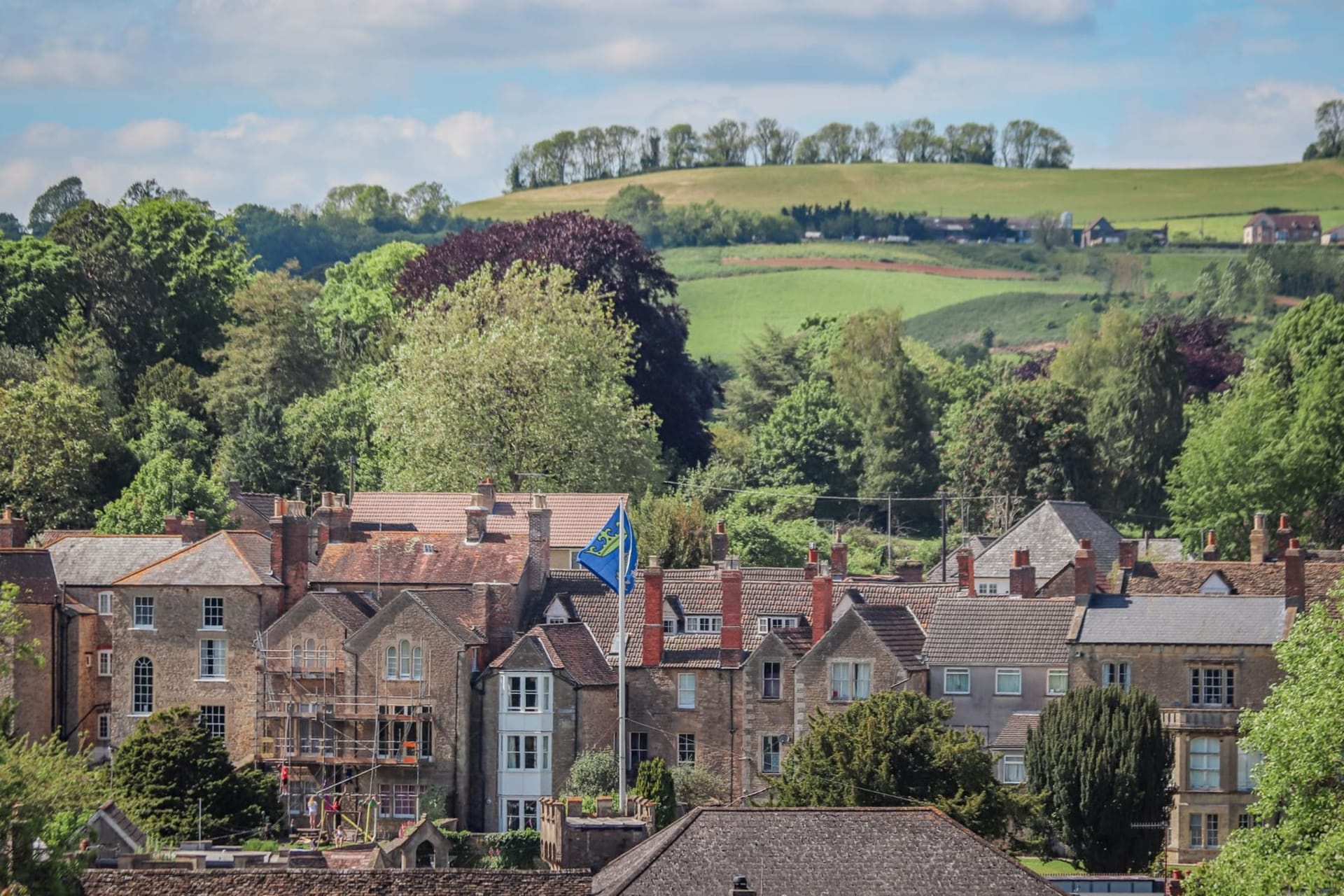
The highest town in the Cotswolds, where eight ancient roads meet at a market square that once handled 20,000 sheep.
I arrived in Stow-on-the-Wold from the south, on the Fosse Way, which the Romans built in a straight line before anyone knew the wind up here could cut through a coat like a blade. The town sits at 244 metres above sea level — the highest in the Cotswolds — and the elevation announces itself before the first building appears. The air changes. Thinner, colder, carrying the smell of damp limestone and something faintly vegetal, like turned earth after rain.
The Square That Held Twenty Thousand Sheep
The Market Square is smaller than its reputation, which is exactly right. Eight roads converge here, and you feel it — the place has the particular stillness of a room where too many things have happened. A medieval market cross stands slightly off-centre. The stocks are still there, iron rings bolted into old wood, next to benches where retirees now eat sandwiches from paper bags. Lia stood in the stocks for a photograph, laughing, and I thought about the last person who’d stood there without a choice.
The square once cleared 20,000 sheep in a single fair. The Stow Horse Fair still runs twice a year, in May and October, drawing Romani traders who’ve worked this ground for centuries. We were there on an ordinary Tuesday in March and it was just pigeons and a man from a nearby antique shop smoking on his doorstep, but the geometry of the place still held some animal logic — wide enough to manage chaos, enclosed enough to keep it contained.
St. Edward’s Church and the North Door
The detail I wasn’t expecting was the north door of St. Edward’s Church, just off the square. Two ancient yew trees frame the doorway, their roots cracking the surrounding stone, their trunks grown so close to the arch that they appear to be holding the church upright. It’s used constantly in films and paintings as shorthand for gothic drama, but in person it reads differently — quieter, more patient. The yews are estimated to be over a thousand years old. The door beneath them is Norman. I stood there longer than I planned to.
Inside, there’s a painting of the Crucifixion that Royalist prisoners were held against in 1646, after the last battle of the Civil War fought in this area. The church walls absorbed the cold of that winter too.
What to Eat and Where to Linger
The Old Stocks Inn on the square serves a decent lamb shank that makes sense after an hour in that wind. Digbeth Street has a handful of independent shops — proper ones, selling things people actually use — and a bakery where I bought a piece of saffron cake that tasted like something my grandmother might have made, if she’d been Cotswolds and not Breton.
When to go: Late April through early June, when the limestone catches the light cleanly and the crowds haven’t yet peaked. October is worth considering for the horse fair, though book accommodation well ahead.