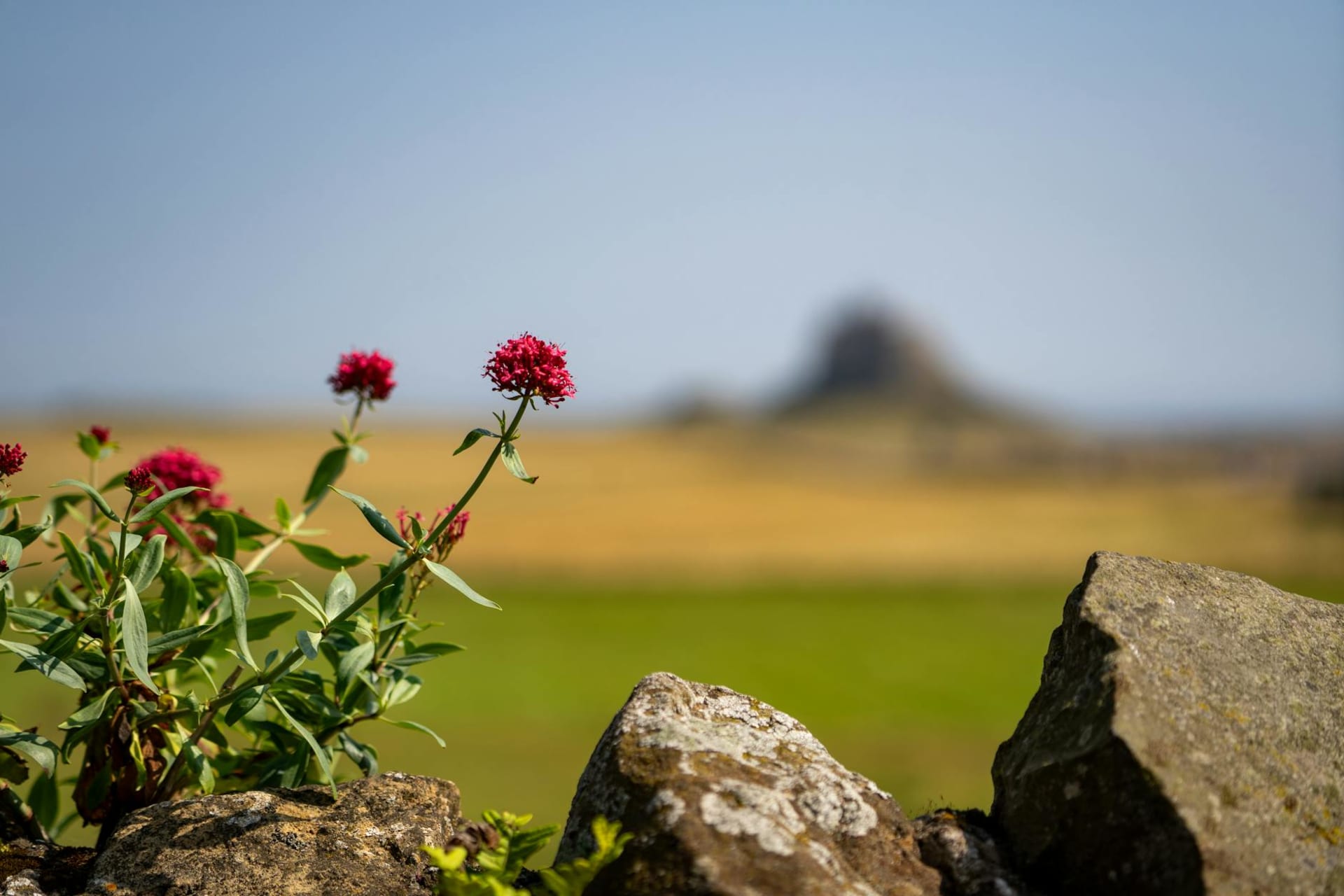
Lindisfarne Holy Island
"The monks chose an island that disappears. Pilgrims still find it."
A tidal island off Northumberland cut off twice a day by the sea, with a priory ruin and a castle on a volcanic rock plug.
The tide tables for Holy Island print like train schedules — departure times with consequences. Cross too late and the causeway drowns under a metre of cold North Sea. Lia photographed the refuge box standing on its stilts above the flooded road on our way in, a bright orange hut where the foolish wait out the water. We were not foolish. We had checked three times.
The Priory and What Remains
The Lindisfarne Priory sits in the middle of the village behind a low stone wall, and entering it feels less like tourism than trespass — as though the monks stepped out a moment ago. The sandstone arches are the rust-red of dried blood, worn smooth by twelve centuries of wind off the Farne Islands. Cuthbert came here in 664. The Vikings came in 793. The monks eventually left, but the arches stayed, and on a February morning when no tour group fills the grounds, the silence is severe in the best possible way.
There is one detail nobody mentions in the brochures: the carved stones in the small museum beside the priory. A row of medieval grave markers, warriors cut in relief, marching in procession — fierce and flat-faced and entirely unexpected. I stood in front of them longer than anything else on the island.
The Castle at the End of the Rock
Lindisfarne Castle perches on a volcanic basalt plug at the island’s eastern tip, a shape so deliberate it looks invented. Edwin Lutyens converted it in 1901 for Edward Hudson, who founded Country Life magazine, which explains its strange interior: more romantic fantasy than defensive fort, all low ceilings and inglenooks, as if the North Sea outside were decoration rather than threat.
The walk up from Fiddlers Green Lane takes ten minutes. The wind on the exposed path takes your voice. Below the castle, on the south shore, the upturned fishing cobles used as storage sheds are the image most people carry home — black-tarred hulls set into the grass like buried boats, which is more or less what they are.
The Light Before the Tide Turns
The quality of light on Holy Island in the late afternoon is something meteorological and specific to this latitude — pewter and horizontal, making the priory ruins glow amber. We ate crab sandwiches from the village shop on Marygate, sitting on the harbour wall while the light did what it does here, and I thought about how the monks chose a place that requires timing and intention just to reach. That was probably deliberate.
When to go: April through early June for long light and smaller crowds; the island’s wildflowers are at their best in May. Avoid August bank holidays, when the causeway queues stretch back toward Beal.