Canterbury
"Canterbury is a city people have been walking toward for a thousand years, and still are."
England's spiritual capital: a UNESCO cathedral city where Chaucer's pilgrims walked, the Black Prince lies buried, and medieval streets curve like memory.
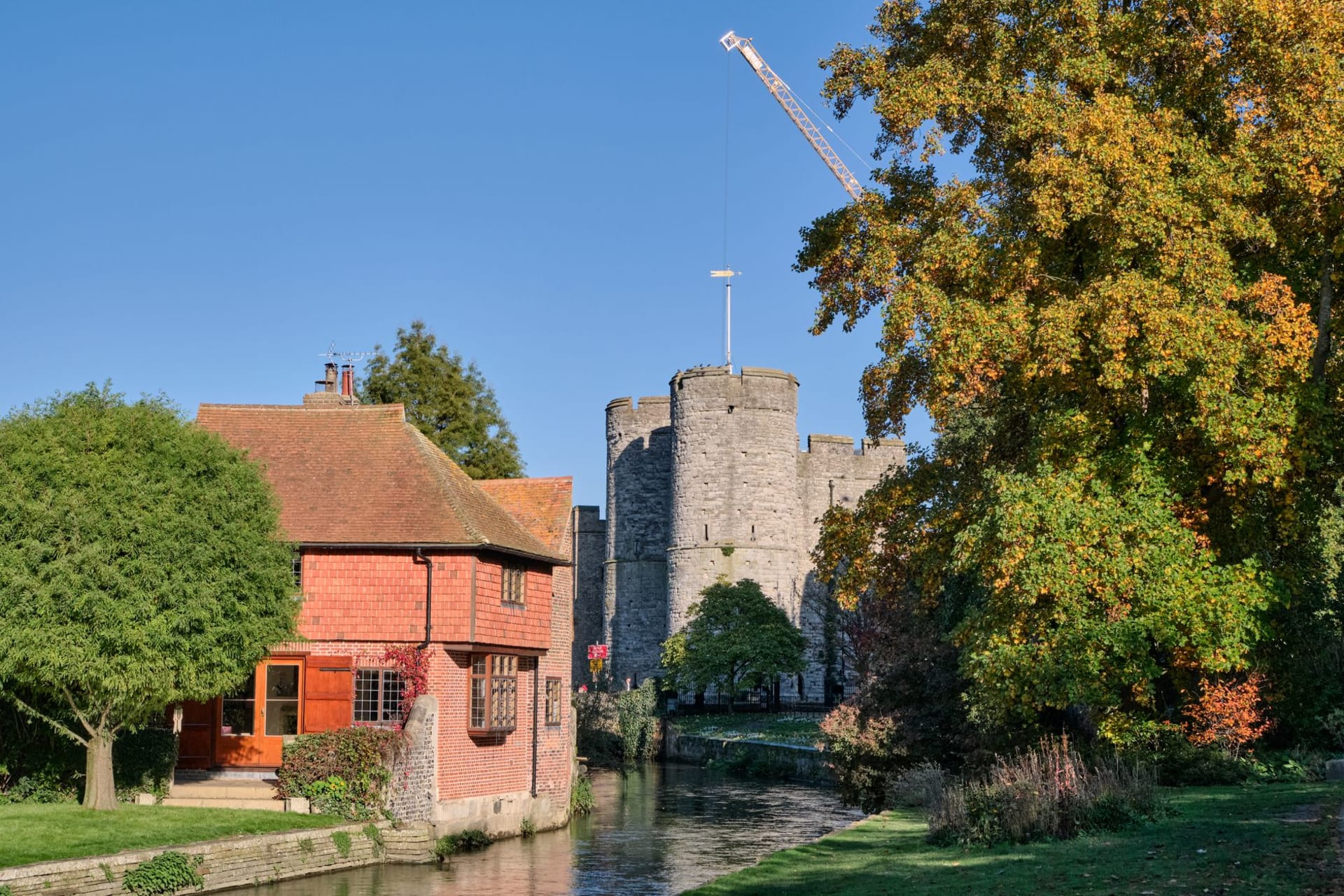
There is a particular quality of light in Canterbury that I was not expecting — diffuse, almost interior, as if the sky itself has been filtering through stained glass for so long that it has simply given up on being direct. We arrived on the train from London St Pancras in under an hour, and by the time we’d walked through the Westgate Towers and turned onto St Peter’s Street, I felt the city’s gravity settle around us like a coat.
The Weight of the Cathedral
You hear the Cathedral before you properly see it. Through the Christ Church Gate, past the vendors selling fudge and umbrella covers, the West Tower resolves out of the limestone blur of the precinct and just keeps going upward. I had seen photographs, of course. They had not prepared me for the sheer vertical insistence of the thing. Inside, the nave draws you forward on some animal instinct — toward the Trinity Chapel, where candlelight plays against the mosaic floor and the effigy of Edward the Black Prince lies in full armour, his gauntlets crossed, utterly still. Lia stood there longer than I expected, reading the inscription twice. Neither of us said anything for a while.
The surprise came not from the cathedral itself but from what’s underneath it. The Roman mosaic floor fragments in the cathedral crypt — stumbled upon almost by accident while following a side passage — dated to long before any Christian stone was laid here. Canterbury has been a place people arrive at since before the arrival had a name.
Medieval Streets and a Proper Lunch
The Buttermarket and the lanes radiating off Mercery Lane have the density of a city that refused to be rebuilt in straight lines. We found ourselves on Stour Street without quite meaning to, then along the river path behind the Greyfriars Chapel — a Franciscan building that sits directly over the Great Stour, water running dark and quiet beneath it. For lunch, we ducked into a pub near the Longmarket for a proper ploughman’s: aged cheddar, pickled onions, rough bread, a half-pint of something local and slightly bitter. It was exactly right.
What Stays
Canterbury is compact enough to walk entirely, strange enough to reward the slow pace. The smell of the place — damp stone, river water, woodsmoke from somewhere — stays with you longer than the photographs.
When to go: Late April through June offers the best balance of long days and manageable crowds before the summer school holidays arrive. Late September, when the light goes amber and the coach parties thin out, is equally rewarding.