Cambridge
"Cambridge made rivers useful for thinking, and the world has been thinking about it ever since."
A city where punting on the Cam beneath ancient college backs is the most civilized way known to humanity to spend an afternoon.
There is a particular quality of light in Cambridge on a clear May afternoon — amber and slightly hesitant, the way English sun always seems apologetic about showing up — that lands on the limestone facades of King’s College and turns them the colour of old honey. I stood on King’s Parade for the first time with my hands in my pockets, and felt, against all my better instincts, genuinely humbled.
The River as a Way of Thinking
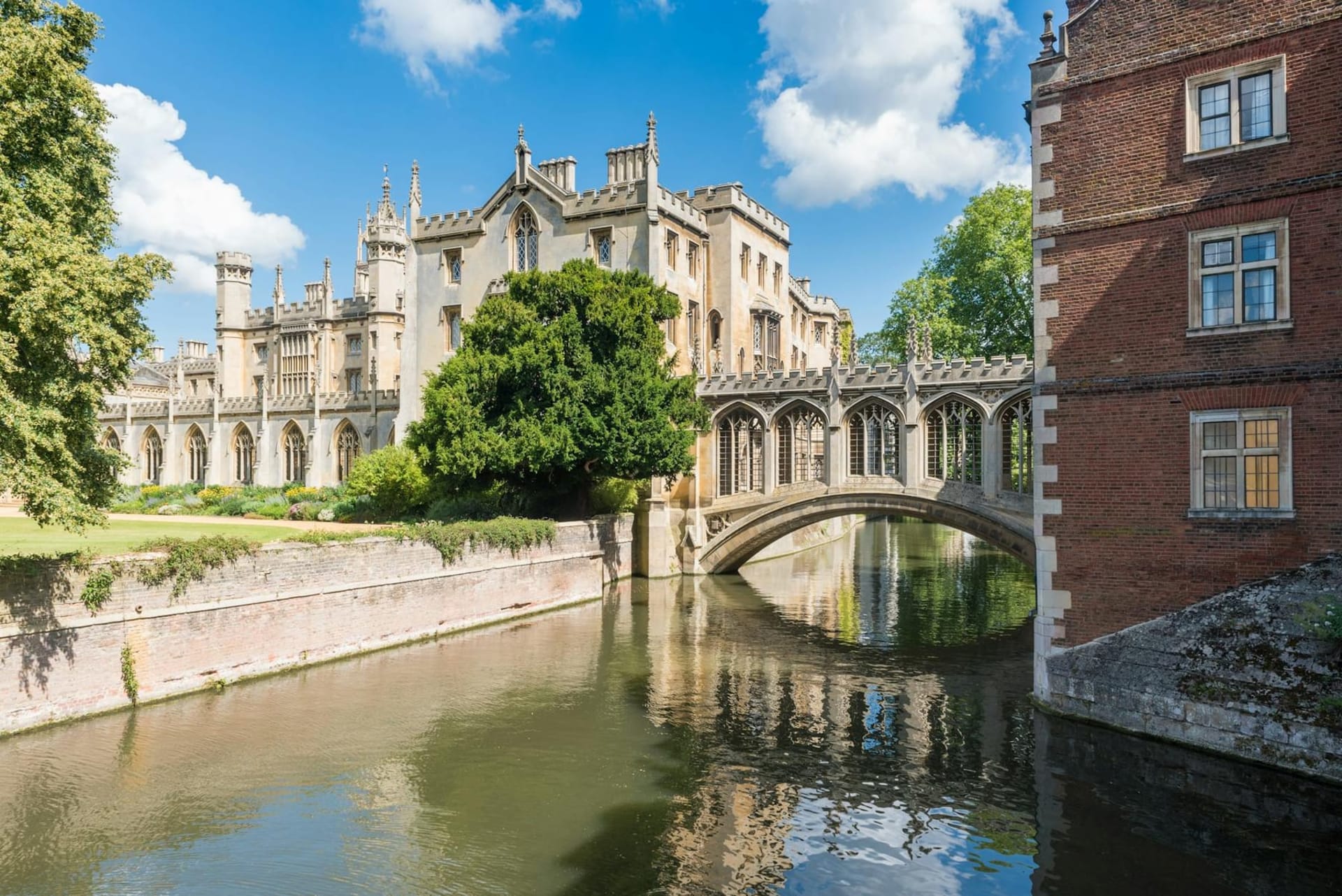
We hired a punt from Scudamore’s on Granta Place, which is to say we paid a man to hand us a long wooden pole and politely pretend we knew what to do with it. The Cam here is narrow and slow and entirely forgiving of amateurs. Lia took the pole first and was immediately elegant with it; I took it second and immediately ran us into a willow. Neither of us minded. The point of punting, I decided after ten minutes of drifting beneath the Bridge of Sighs and past the austere rear gardens of St John’s and Trinity, is not the locomotion. It is the enforced stillness. The city, seen from water level, becomes a series of solved riddles — each college facade suddenly legible, each arched bridge a small declaration of intent.
The smell of the Cam in summer is green and faintly mineral, something between rain and moss. Swans shoulder past with the confidence of locals.
Unexpected Geometry on the Backs
What surprised me — genuinely caught me off guard, which Cambridge managed twice — was the Mathematical Bridge at Queens’ College. I had expected something ornate, another piece of Gothic theatre. Instead: a plain wooden footbridge, no bolts, no metal fixings visible, held together by sheer geometric logic. I walked across it three times. A student cycling past on Silver Street gave me the look Cambridge locals must reserve for people who treat the ordinary with reverence. Fair enough.
The other surprise was a bowl of cullen skink at The Anchor on Silver Street — a smoked haddock soup I had not thought to associate with this landlocked university town. It arrived thick and almost aggressively warming, and I ate it watching the punts file past the window, and felt, in a way that is difficult to explain, perfectly located.
King Street and the Walk Back to Nowhere in Particular
The evening took us down King Street, past the Cambridge Blue and the quiet terraces behind Christ’s Pieces, to a pint of something local and dark that I couldn’t name but finished without complaint. Cambridge at dusk shrinks itself down to something almost village-sized. The student crowds thin. The colleges lock their gates. On King’s Parade, the chapel holds its shape against a sky going violet, and the whole city seems to be concentrating very hard on something.
When to go: May and early June are the finest months — the Cam is warm enough to punt without regret, the horse chestnuts along the Backs are flowering, and the city has not yet been fully surrendered to summer tourists. Avoid the third week of June, when exam season ends and the garden parties consume every available lawn.