
Fethiye is the Turquoise Coast at its most relaxed. The town wraps around a natural harbor dotted with wooden gulets, backed by forested mountains into which the ancient Lycians carved their tombs — the Amintas Rock Tombs are illuminated at night and visible from every waterfront restaurant, a two-thousand-year-old audience watching you eat your grilled sea bream. I liked Fethiye immediately. It has the energy of a town that knows it is beautiful but has not yet become insufferable about it.
The Tuesday market fills the center of town with a river of spices, honey, olives, textiles, and handmade soaps that demonstrates why Turkey’s markets remain among the world’s finest. I bought a kilo of pine honey from a beekeeper who had driven down from the mountains that morning, and a linen shirt for the equivalent of twelve euros. The fish market near the harbor operates on a system I wish every coastal town would adopt: you choose your fish from the stalls, and the restaurants surrounding the market cook it for you for a small fee. The system is democratic, transparent, and results in the freshest fish dinner of your life.
Oludeniz, Butterfly Valley, and the Lycian Way
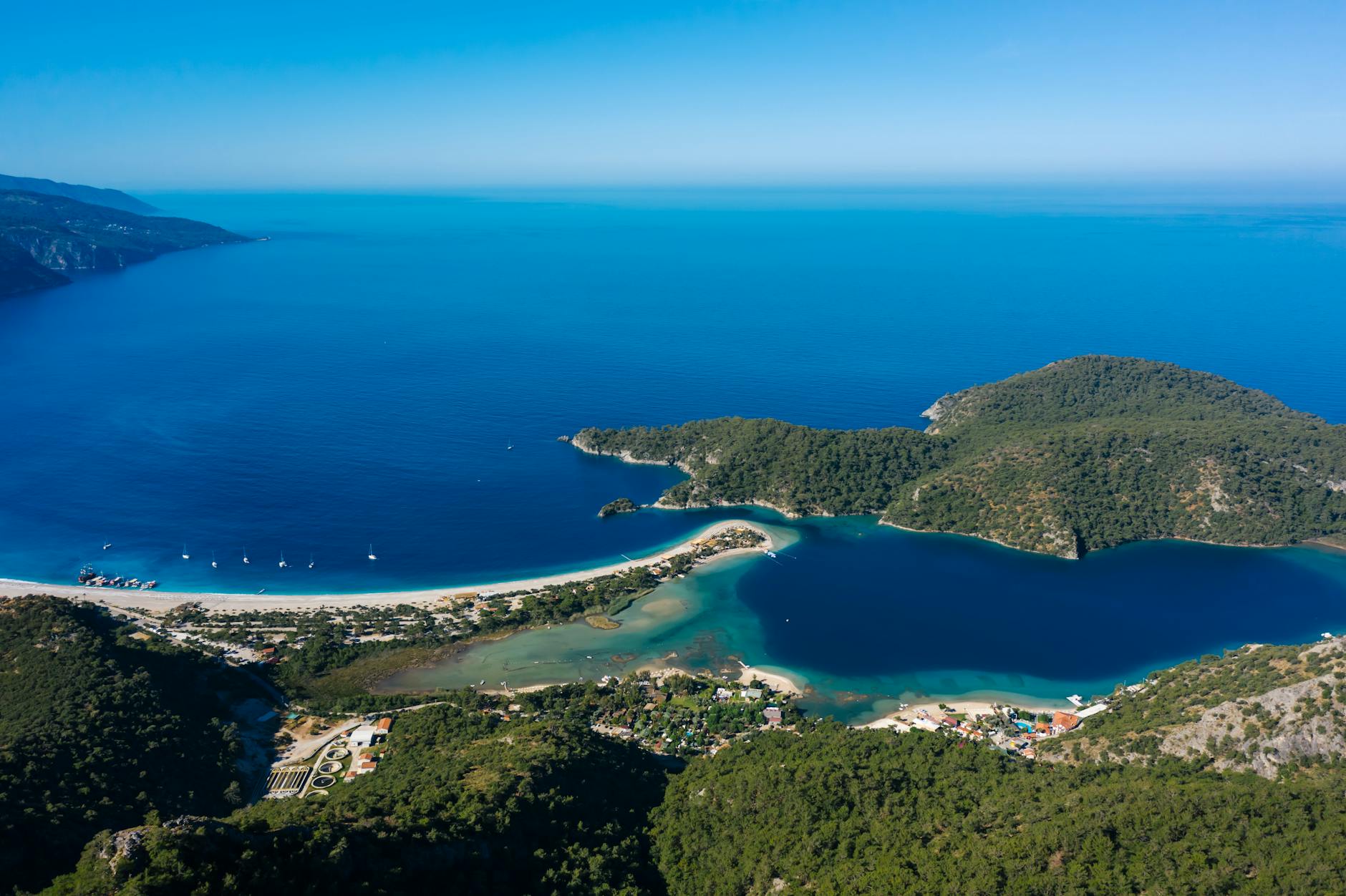
The surrounding coastline is the real draw. Oludeniz, just south, has the famous Blue Lagoon — a sheltered cove of implausibly colored water backed by a white sand beach. Paragliders launch from Babadag Mountain above and spiral down in lazy circles, landing on the beach in a scene that has become one of Turkey’s iconic images. I did the tandem flight, and the twenty minutes of silent gliding above the coast — the lagoon below a shade of blue I had never seen outside a color chart, the Lycian mountains fading into haze to the east — was worth every lira.
Beyond the beach, the Butterfly Valley is a steep-walled gorge accessible only by boat, with waterfalls and endemic butterfly species in a setting so enclosed it feels like a secret the coast is keeping from the rest of the world. The first section of the Lycian Way from Fethiye passes through ancient ruins and coastal forest before emerging at remote coves where the only footprints are yours. I walked a two-day section and slept in a village pension where the owner cooked gozleme on a wood-fired griddle and told me stories about the Lycian tombs on the hill behind his house that his grandmother had used as a storage room.

When to go: May to June or September to October. Oludeniz in July and August is crowded; the surrounding Lycian coast trails remain peaceful year-round. Late September has the warmest water.