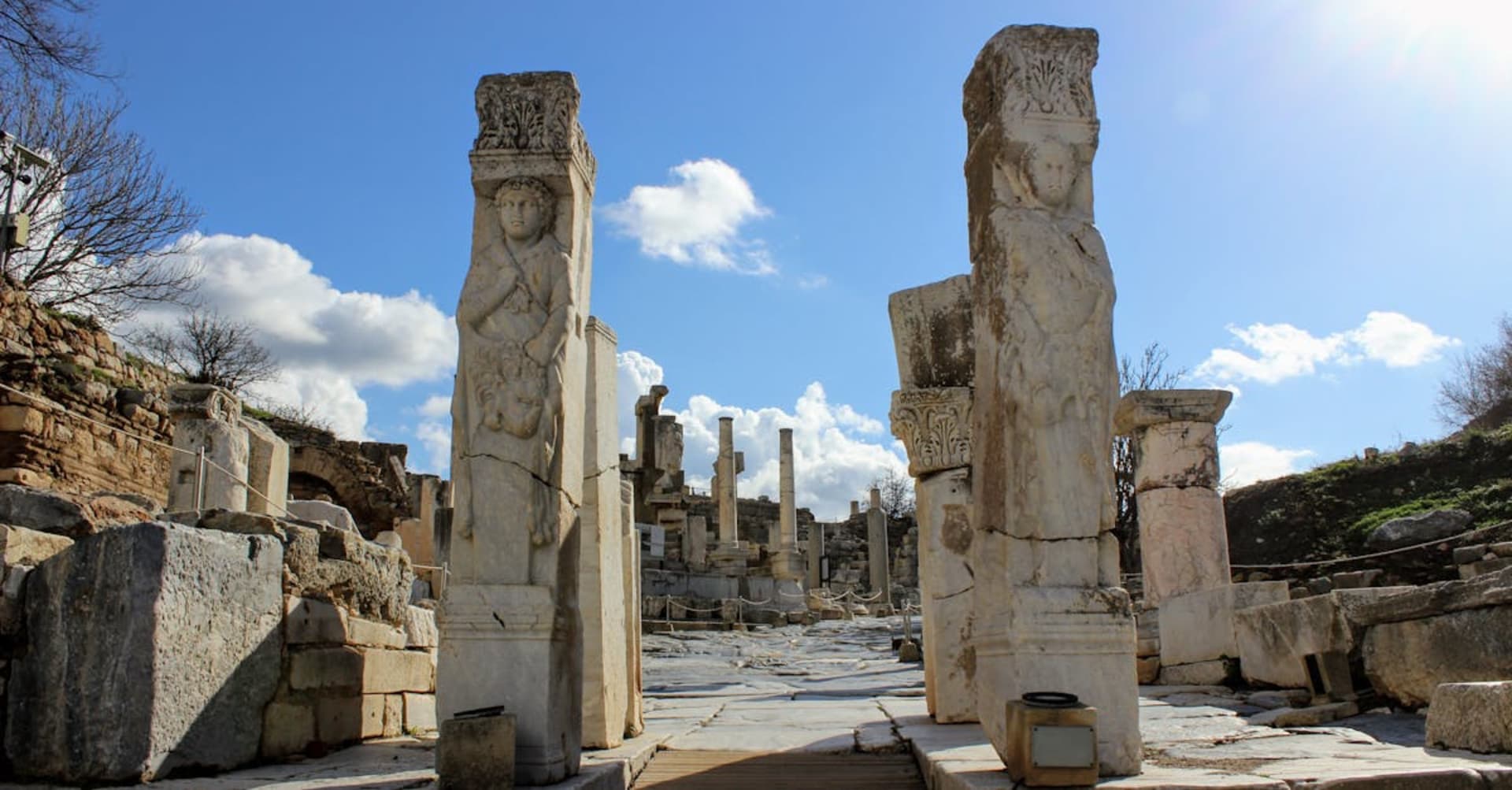
Ephesus is the rare archaeological site that does not require imagination to understand — the scale speaks for itself. I arrived at opening time on a Tuesday in April, and for the first forty minutes I had the marble streets nearly to myself. The Library of Celsus, with its two-story facade of columns and carved figures representing wisdom, knowledge, intelligence, and virtue, is one of the most beautiful Roman structures still standing anywhere. It was built as a tomb — Celsus is buried beneath it — and as a library that once held twelve thousand scrolls. Standing before it in the early light, when the stone glows warm and the shadows are still long, you understand why the Romans built not merely to function but to astonish.
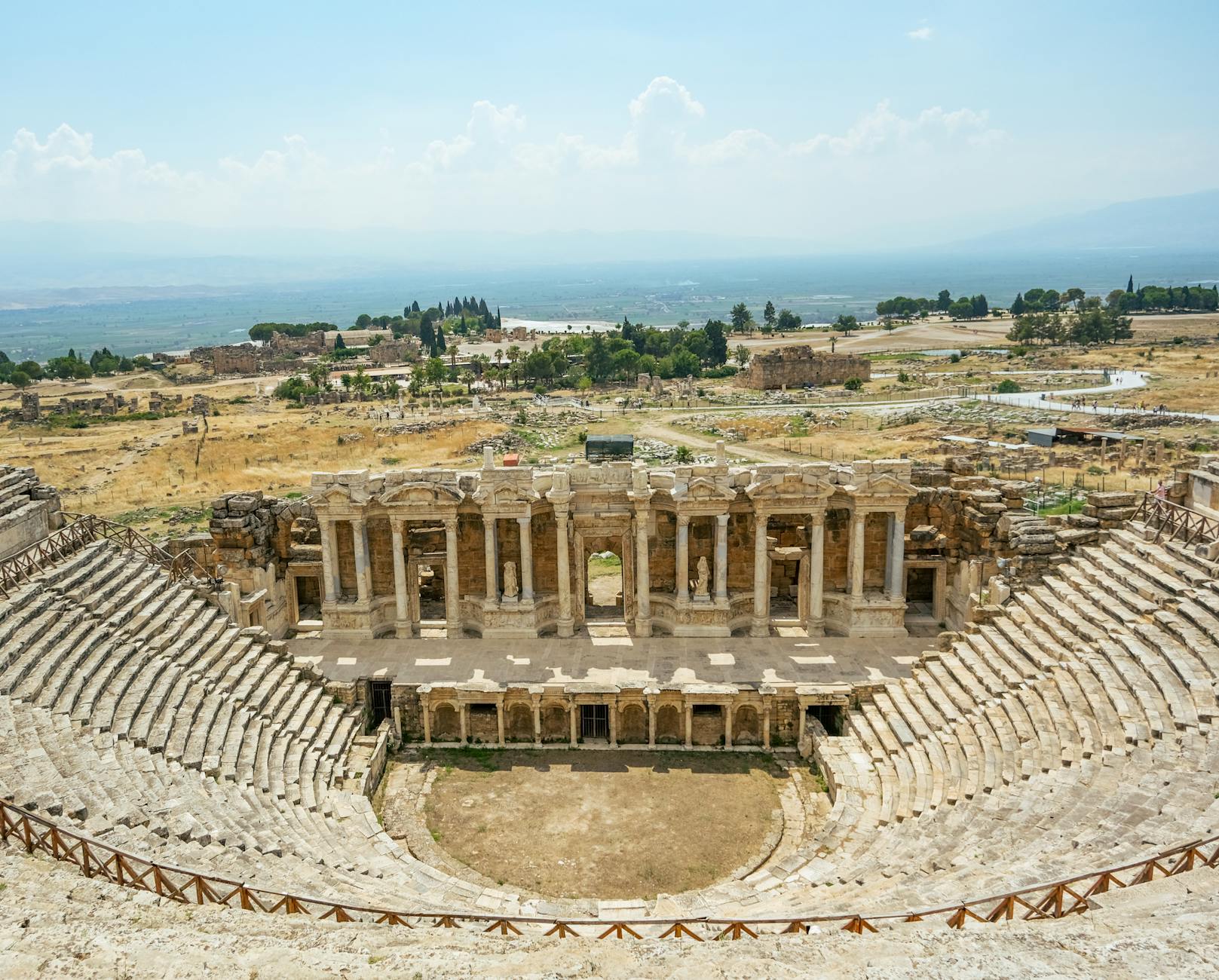
The marble street leading to the library is grooved with ancient chariot tracks, lined with columns, and ends at a twenty-five-thousand-seat amphitheatre where St. Paul once preached and where the acoustics still carry a whisper to the top row. I tested this with a fellow visitor — she stood at the top, I spoke at normal volume from the stage, and she heard every word. The engineering is not decorative. It is precise.
The Terrace Houses and Beyond
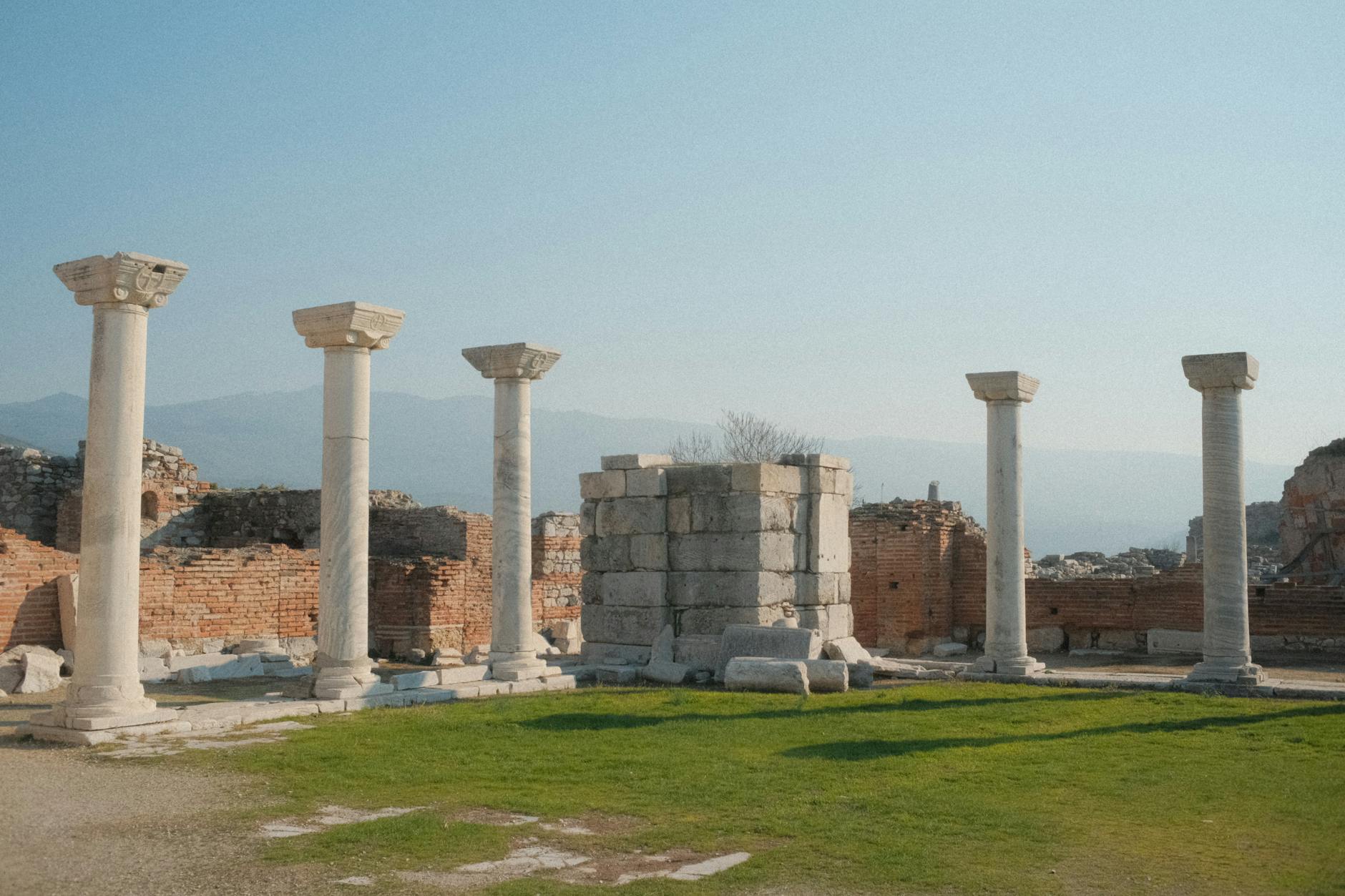
Beyond the headline ruins, the site unfolds with domestic intimacy. The Terrace Houses — the luxury apartments of Roman Ephesus — preserve mosaic floors, frescoed walls, and even ancient graffiti. One room has a fresco of Socrates; another has a mosaic floor depicting the seasons with a detail that would challenge a contemporary tile-setter. These were the homes of the wealthy, and walking through them — the underfloor heating systems, the private latrines, the courtyard gardens — you realize that Roman domestic comfort was not so different from our own. They simply built it to last longer.
Nearby, the Temple of Artemis survives as a single reconstructed column, a humbling reminder that one of the Seven Wonders of the Ancient World can be reduced to rubble by time and repurposed stone. The nearby town of Selcuk offers a fine archaeological museum and the purported last home of the Virgin Mary on a forested hilltop above, where the air smells of pine and the view stretches to the Aegean.
When to go: Early spring or late autumn to walk the marble streets without competing with cruise-ship excursions from Kusadasi. Arrive at opening time for near-solitude. The midday sun in summer makes the exposed ruins uncomfortable — the Romans had shade; the ruins do not.