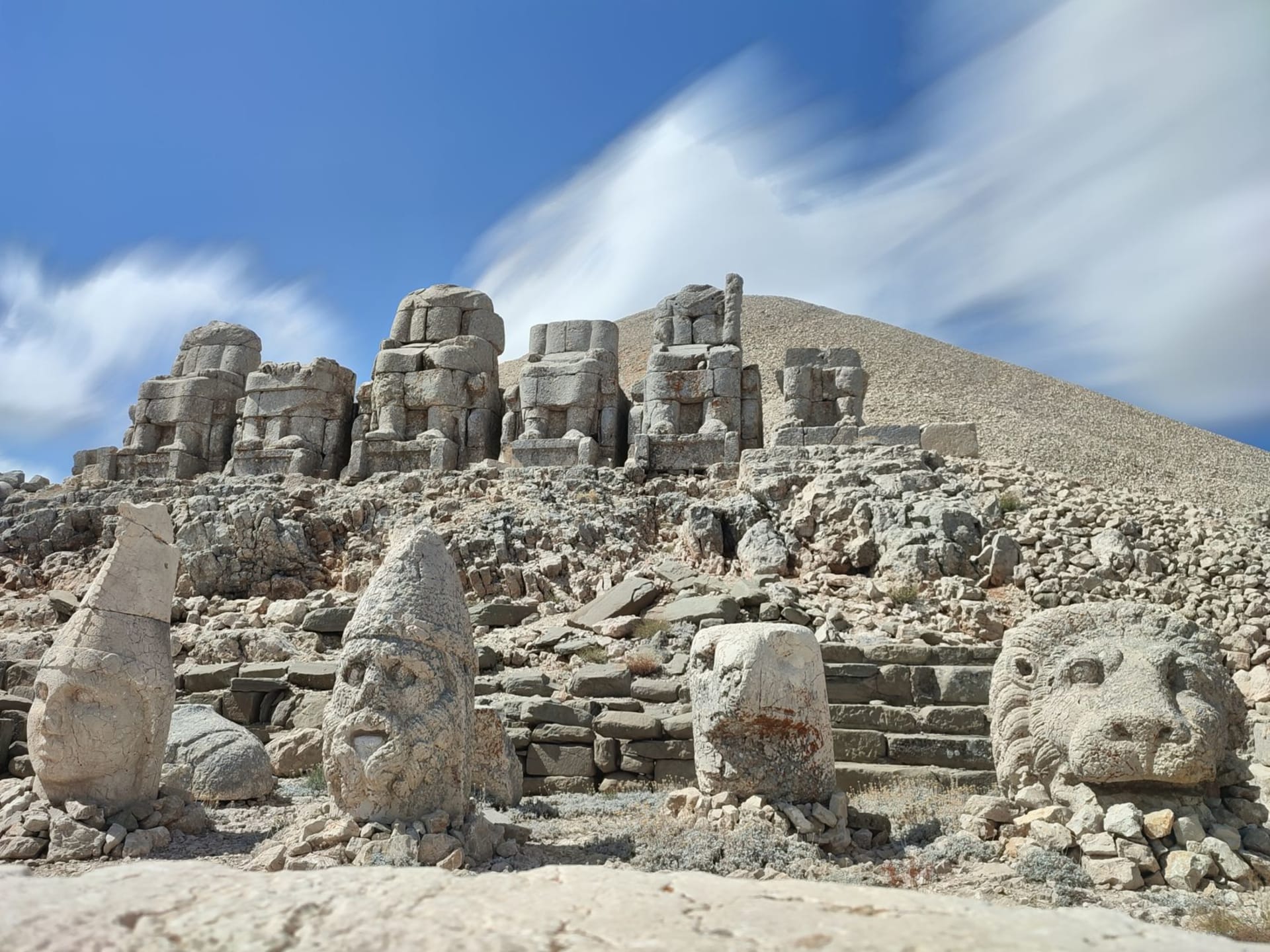
Giant stone heads of gods and kings crown a 2,000-year-old royal tomb at 2,100 metres — best seen at sunrise.
We left Kahta at three in the morning. The minibus driver played Turkish pop music at a volume that made conversation impossible, which was fine — neither Lia nor I were in the mood for talking. The road climbed through darkness, switchback after switchback, the headlights cutting nothing but dust and the occasional flash of dry limestone. An hour into the climb, the engine complained audibly. The driver turned the music down. For a moment there was only the sound of the mountain.
We had come to see the heads of King Antiochus I of Commagene, who ruled this remote corner of what is now southeastern Turkey in the first century BC and, evidently, had opinions about his own importance.
The Summit Before Dawn
The walk from the minibus park to the summit takes about twenty minutes on a rocky path that winds through scrub and loose stone. We climbed in headlamp light, cold in a way that surprised me — the Anatolian plateau in September, at 2,100 metres, is not the desert warmth I had imagined. The other visitors on the path were largely silent. There is something in the dark and the altitude that discourages small talk.
Then the path crested and the East Terrace opened before us, and I stopped.
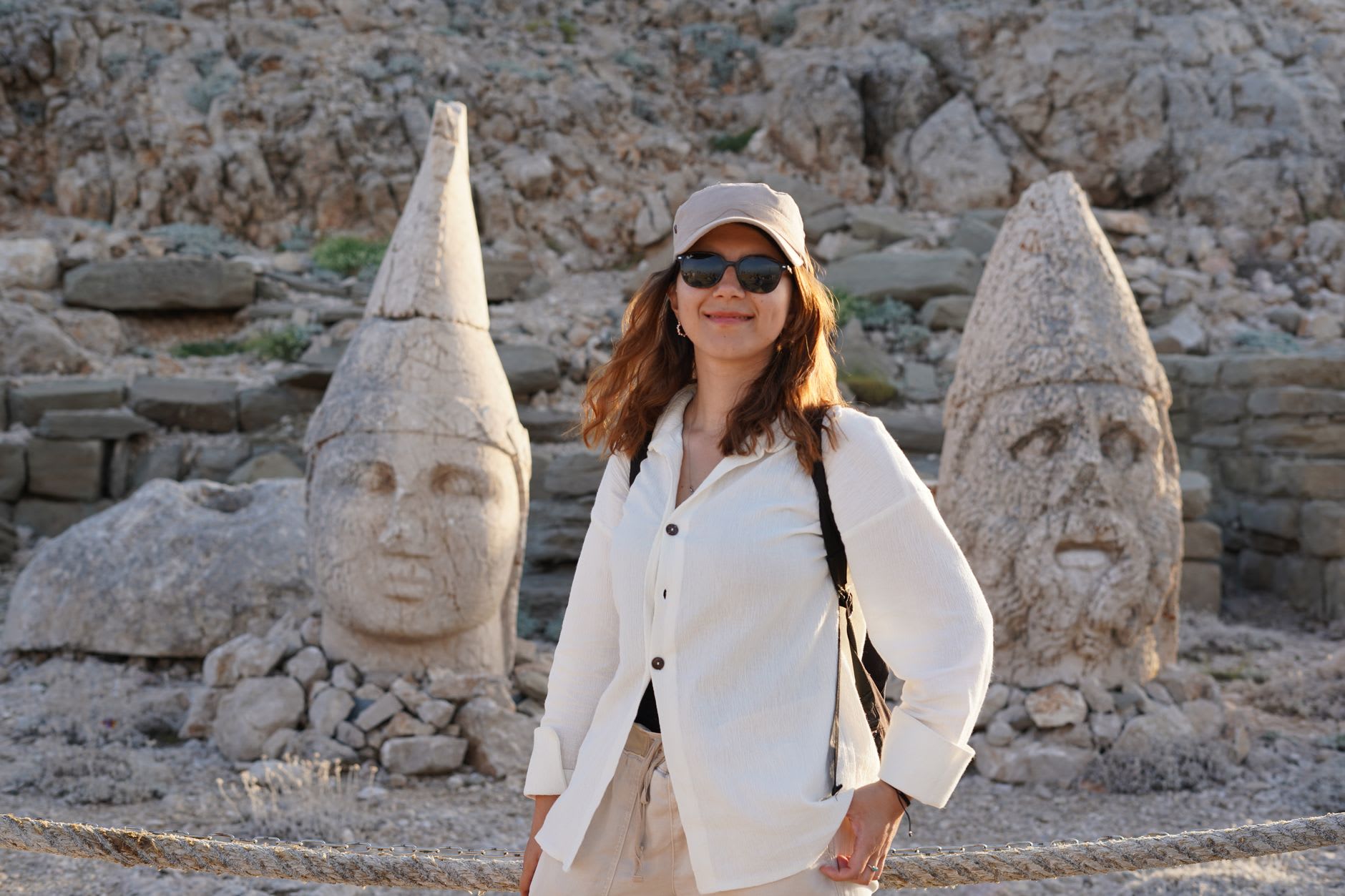
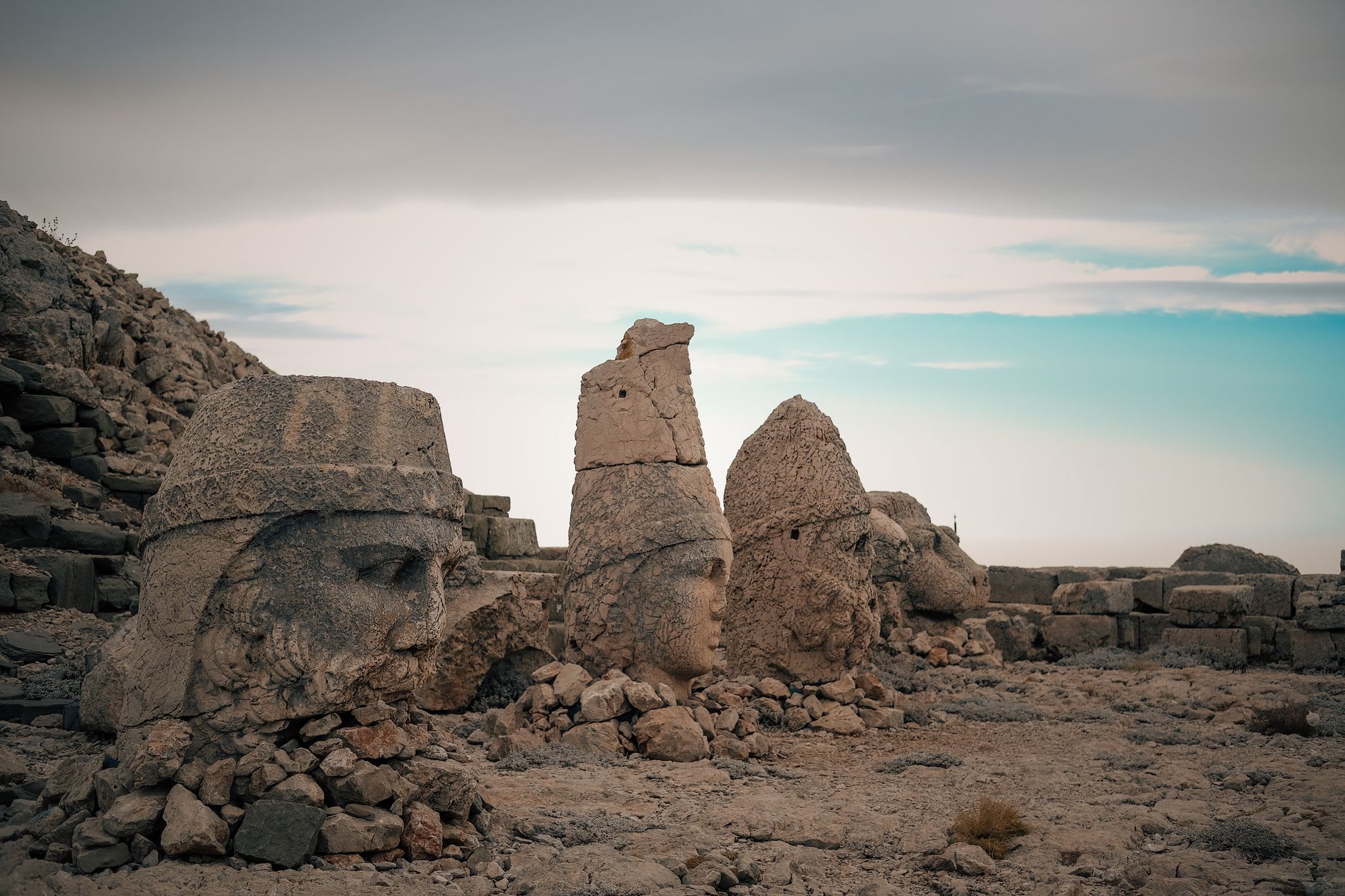
Five heads. Seated, in their original configuration, the figures would have stood nearly ten metres tall — but earthquakes long ago toppled the statues from their thrones, and now only the heads remain, arranged in a rough line in front of the stone bodies they once belonged to. Each face is roughly two metres high. Each one is different: Zeus-Oromasdes with his patriarchal beard, the eagle-headed Verethragna, Apollo-Mithras with his radiate crown worn smooth by two millennia of wind. King Antiochus himself is among them, his expression somewhere between serenity and self-satisfaction — the face of a man who spent decades building his own funerary monument and believed every stone of it was justified.
The summit smelled of cold rock and something faintly mineral, like rain on limestone. We found a place to sit among the other early arrivals — mostly Turkish tourists, a pair of Japanese photographers with serious tripods, a German couple who had arrived on motorcycles from Adıyaman — and waited.
When the Light Arrived
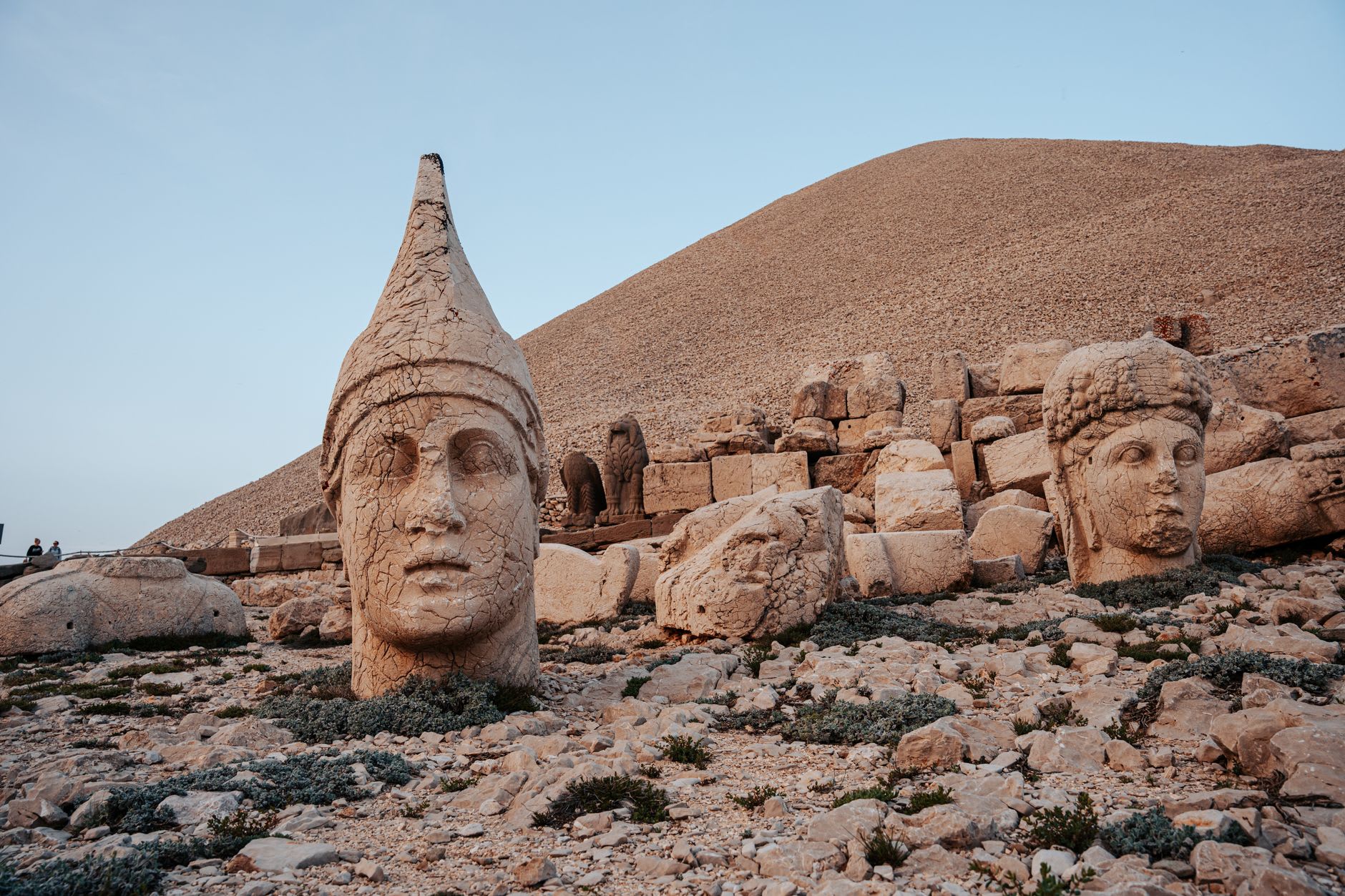
The sunrise at Nemrut does not arrive the way a Turkish breakfast arrives — with ceremony and noise. It arrives gradually, and then all at once. First the eastern horizon warmed from black to indigo to a thin orange line. Then the line widened, and the stone faces, which had been grey in our headlamps, began to catch the light — first on the crowns, then on the cheekbones, then flooding down into the hollow eyes, and the effect was extraordinary. The heads looked, for a few minutes, as though they had been made from the light itself rather than from the limestone beneath them.
Lia grabbed my arm. She did not say anything. There are moments when language would be a reduction, and this was one of them.
The unexpected discovery was this: I had expected the heads to be imposing. They are — but they are also, up close, strangely tender. The stone has been worn by wind and rain for so long that the faces have lost their hard edges and taken on the quality of something almost organic. Apollo’s features have softened into something approaching melancholy. The eagle’s beak is chipped and blunted. Antiochus’s nose is long gone. What remains is not the triumphant self-monument of an ancient king but something more complicated — the evidence of enormous ambition meeting enormous time, and time winning, as it always does.
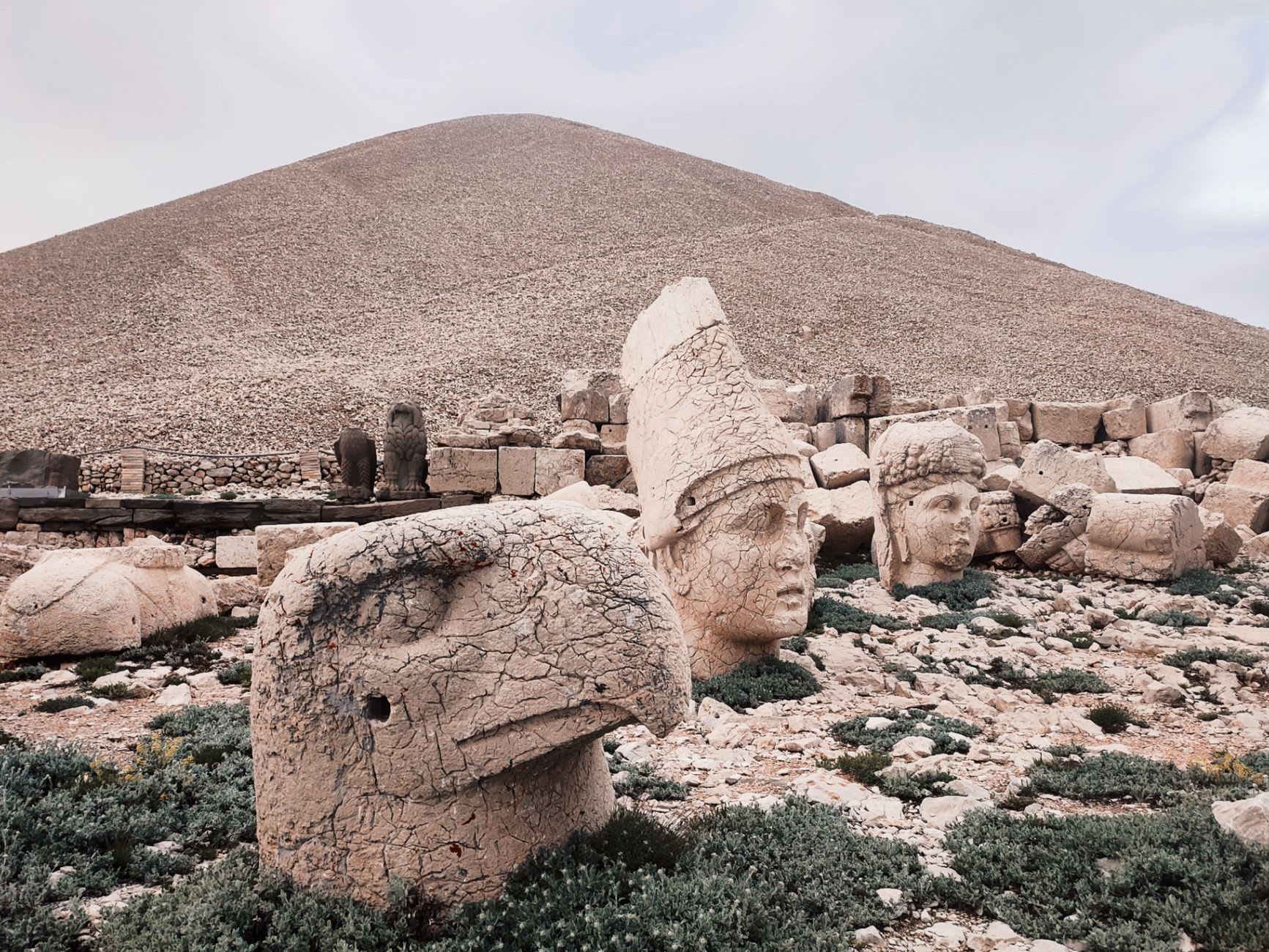
I crouched beside the head of Zeus-Oromasdes. The stone was cold under my hand. The face, at close range, was extraordinary — not because it was beautiful in the conventional sense, but because it was so clearly made by people who were trying, with the tools and beliefs available to them in the first century BC, to reach toward something permanent. They almost succeeded. Two thousand years later, the heads are still here. The king they were made to honour is, by most measures, forgotten.
The West Terrace and the Silence After
Most visitors spend their time on the East Terrace, which catches the sunrise. We walked over the summit tumulus — the burial mound of Antiochus himself, 50 metres of loose gravel piled by hand — to the West Terrace, which looks toward the opposite horizon and was quieter, the crowd having thinned with the vanishing light.
The West Terrace has the same arrangement of heads, but the light here was different — softer, the sun now behind us, picking out the texture of the stone rather than the silhouette. A relief panel on the western terrace shows Antiochus shaking hands with various gods, the carved dexiosis — the handshake of equals — repeated across the stone surface. He is greeting Hercules, then Apollo, then Zeus, then the Persian deity Ahura Mazda, each encounter rendered with the same regal ease. The king, in his own iconography, was on excellent terms with everyone divine.
The wind on the West Terrace was stronger and smelled faintly of thyme — there are small aromatic shrubs growing in the cracks between the stones, survivors at altitude, unbothered by their extraordinary neighbours.
We descended in full daylight. The road back down to Kahta took us through the Euphrates River valley — the Fırat, as it is called in Turkish — wide and brown and moving with calm purpose through a landscape of yellow hills and olive groves. We stopped in Kahta for çay and a plate of something the tea-house owner called mercimek çorbası — red lentil soup, thick and spiced with dried mint and red pepper flakes, served with a wedge of lemon. I ate two bowls. The altitude and the cold and the long morning had left me hollow, and the soup filled me in exactly the right way.
When to go: Late April to October for reliable road access; the summit road is often closed in winter. Sunrise visits are the whole point — plan to arrive at the East Terrace forty minutes before dawn. The light lasts only fifteen to twenty minutes at its best, so position early. September and October offer cooler temperatures and fewer crowds than the July peak.