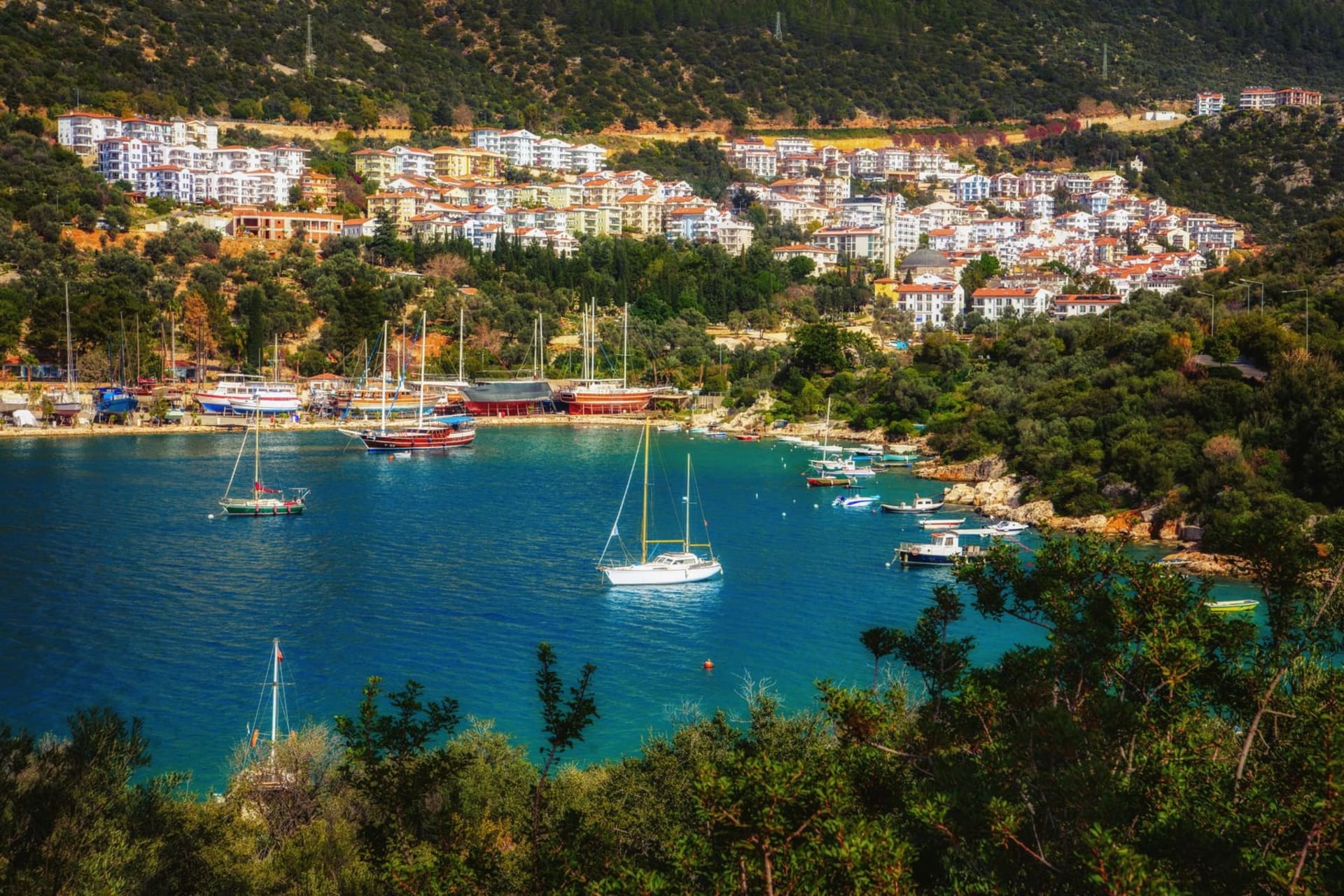
A charming Lycian village above turquoise water — sunken cities to dive, Greek theatre above the harbour.
The bus from Antalya drops you at the edge of things — at a junction where the road narrows and the sea suddenly appears below, impossibly blue and completely unannounced. I had been half-asleep, and then I wasn’t. Kas does that.
The Village at the Edge of the Lycian Coast
The main bazaar street, Uzun Çarşı, smells of dried oregano and leather in the morning and of grilling fish by noon. It is narrow enough that the shop awnings nearly touch overhead, and the cats — there are dozens of them, Kas is a city of cats — arrange themselves on the warm stone ledges as though they are part of the architecture. Lia spent twenty minutes photographing one orange tom who had draped himself across an ancient Lycian sarcophagus on a side street, wholly indifferent to his historical setting.
Those sarcophagi are everywhere. They stand in front of houses, in overgrown gardens, at street corners. The Lycians built their tombs above ground, close to the sky, and two and a half millennia later the tombs are simply part of the neighbourhood. One particularly fine lion-crested example sits at the top of Hükümet Caddesi, so embedded in daily life that a motorcycle was leaned against it when I passed.
Below the Surface
Kas is a serious diving town. The waters off the peninsula hold submerged ruins — columns, amphorae, the ghost outline of ancient harbour walls — and the visibility on a calm morning reaches thirty metres. I am not a diver, which meant I rented a mask and fins and floated above the shallower sites, watching groupers move through the kelp while the real divers descended below me into the blue. Even from the surface, the scale of what is down there registers.
The unexpected thing — the thing I did not expect — was the Greek theatre. A short climb above the harbour, carved into the hillside in the Hellenistic manner, its stone seats still perfectly graded, and from the top tier an unobstructed view straight out to the Greek island of Meis, so close you could believe you might swim it. Sitting there at six in the evening, the shadow of the hill creeping across the water, I understood something about why people settled this particular cliff.
What to Eat, Where to Sit
Dinner in Kas means mezes at a harbour-front table: acili ezme sharp with chilli, haydari thick and cool, whole grilled sea bream that arrived with a half-lemon and nothing else because nothing else was needed. The restaurants on the small marina square compete quietly for attention — choose any of them and order the fish.
When to go: May and June offer the best light and calm seas before the summer crowds arrive in earnest; September and October are equally beautiful and considerably quieter, with water still warm enough to swim and dive through late in the month.