The world's oldest known temple, built 11,500 years ago before pottery, farming, or writing existed.
I did not expect to feel small. I have stood inside cathedrals that took centuries to build, and I have walked through ruins that swallowed whole empires. But nothing prepared me for the particular vertigo of Göbekli Tepe — a place where the math of human history stops making sense.
The Hill That Rewrote Everything
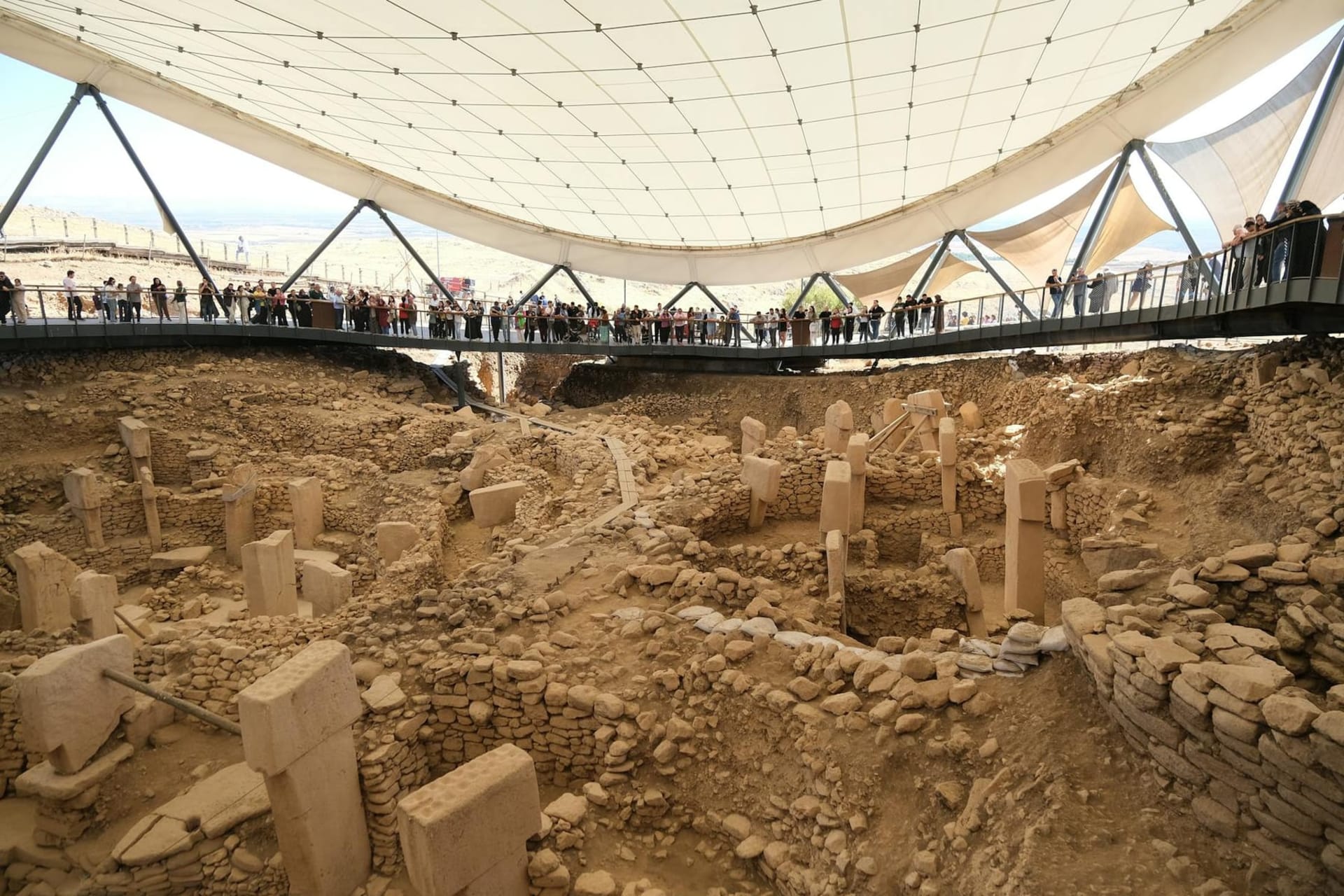
The site sits on a limestone ridge above the Harran Plain, about fifteen kilometers northeast of Sanliurfa. The road up is dusty and unremarkable, a single lane cutting through scrub and dry wheat fields that smell of mineral heat in the late morning. Then the canopy structures appear — those broad, angular shelters that protect the excavations — and you understand, before you have even descended into the site, that something different is happening here.
Göbekli Tepe was built roughly 11,500 years ago. That number refuses to sit still in the mind. The pyramids at Giza are less than 5,000 years old. Writing, the wheel, agriculture — these came millennia after whoever quarried these T-shaped pillars and dragged them up a hill and carved them with foxes, vultures, scorpions, and creatures nobody has yet named. The builders had no metal tools. They had no permanent settlements. They were, by every conventional definition, hunter-gatherers. And they built a temple.
Stone Before Seed
Lia stood at the edge of Enclosure D and said very little for a long time, which is unusual for her. The carved animals on the pillars are rendered with a confidence that feels almost modern — the fox on Pillar 27 has a specificity to its haunch, a tension in its limbs, that a skilled sculptor today would recognize as deliberate. These were not rough attempts. Someone knew exactly what they were doing.
The unexpected discovery, for me, was the absence of dwellings. Archaeologists have found no evidence of people living here. Göbekli Tepe was not a settlement that grew a temple around it. It was a destination. People traveled to this hill, perhaps from great distances, to do something we do not yet have a word for — something between ritual and architecture and collective memory. The site was deliberately buried around 8,000 BCE, covered in fill as if archived rather than abandoned.
After the Excavation
We drove back into Sanliurfa in the late afternoon, the light turning amber over the Balikligol pool where fat carp slide between pilgrims’ feet. We ate at a kebab house near the old bazaar — lahmacun thin as paper, smoky and sharp with fresh parsley — and I kept trying to locate the feeling that had followed me down from the hill. It was not awe exactly. It was closer to the disorientation of realizing a story you thought you knew began much earlier than the first page you were ever given.
When to go: April through early June or September through October, when the Anatolian plateau is warm but not punishing — summer temperatures near Sanliurfa regularly exceed 40°C, and the site offers little shade outside the covered enclosures.