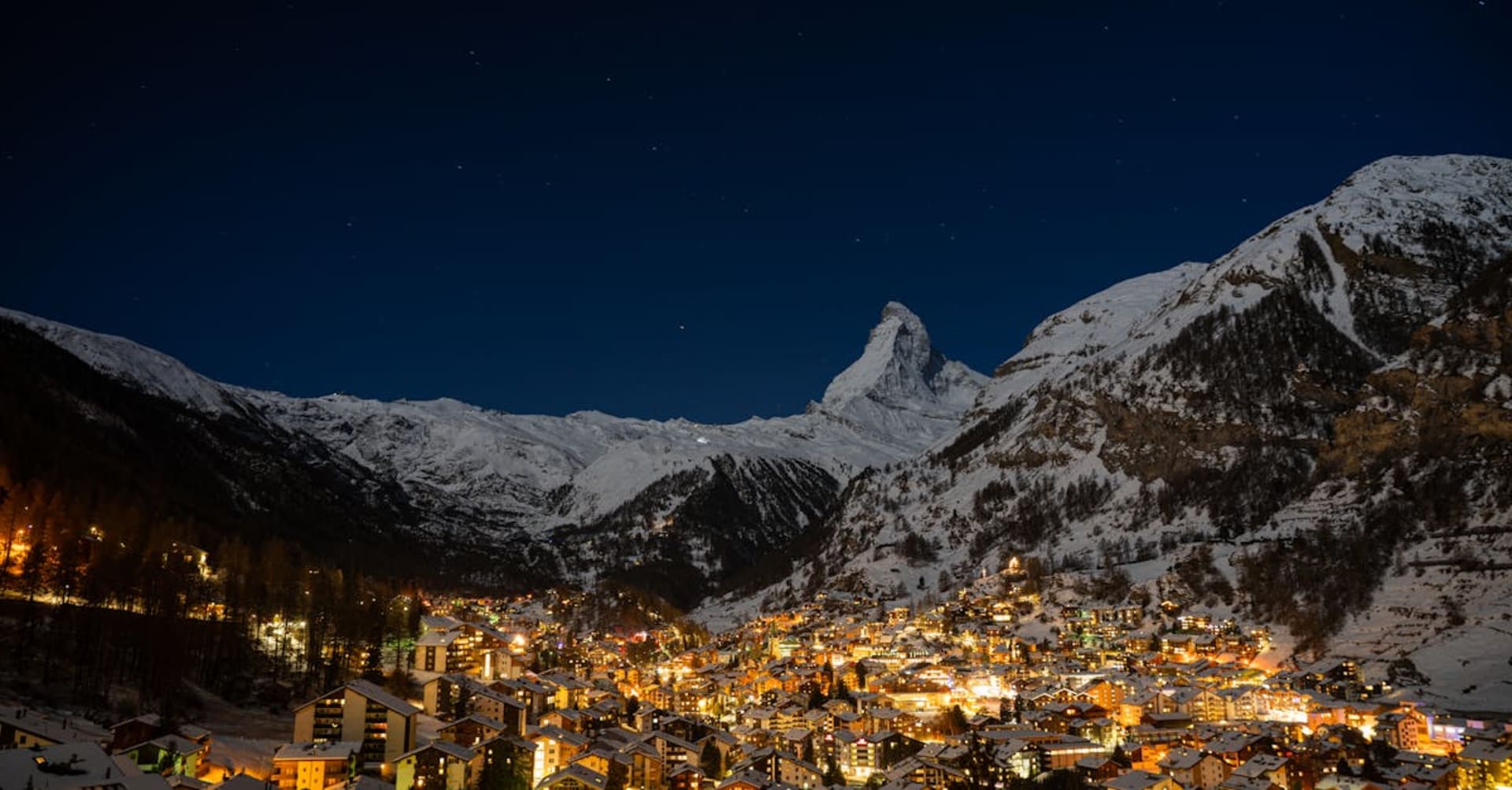
Zermatt exists because of the Matterhorn, and the mountain dominates everything — every view, every postcard rack, every breakfast terrace in town. The peak’s perfect pyramid is so iconic it borders on cliche, but seeing it in person resets the scale. It is larger, sharper, and more imposing than any photograph suggests, and its moods change by the hour: pink at dawn, silver at noon, burning orange at sunset, and occasionally hidden entirely behind clouds that only amplify the drama of its reappearance.
The village itself is car-free — electric taxis and horse-drawn carriages handle transport — giving Zermatt an alpine quiet that larger ski resorts have lost. The Gornergrat railway climbs to 3,089 meters, delivering views of twenty-nine peaks over four thousand meters, including Monte Rosa and the Gorner Glacier. In summer, the hiking is extraordinary: the Five Lakes Walk passes a series of alpine tarns that reflect the Matterhorn like natural mirrors. In winter, the ski area connects to Cervinia in Italy, allowing you to ski between countries with the Matterhorn as your constant companion.
When to go: July to September for hiking and clear mountain views. January to March for skiing. The Matterhorn is most photogenic in early morning light year-round.