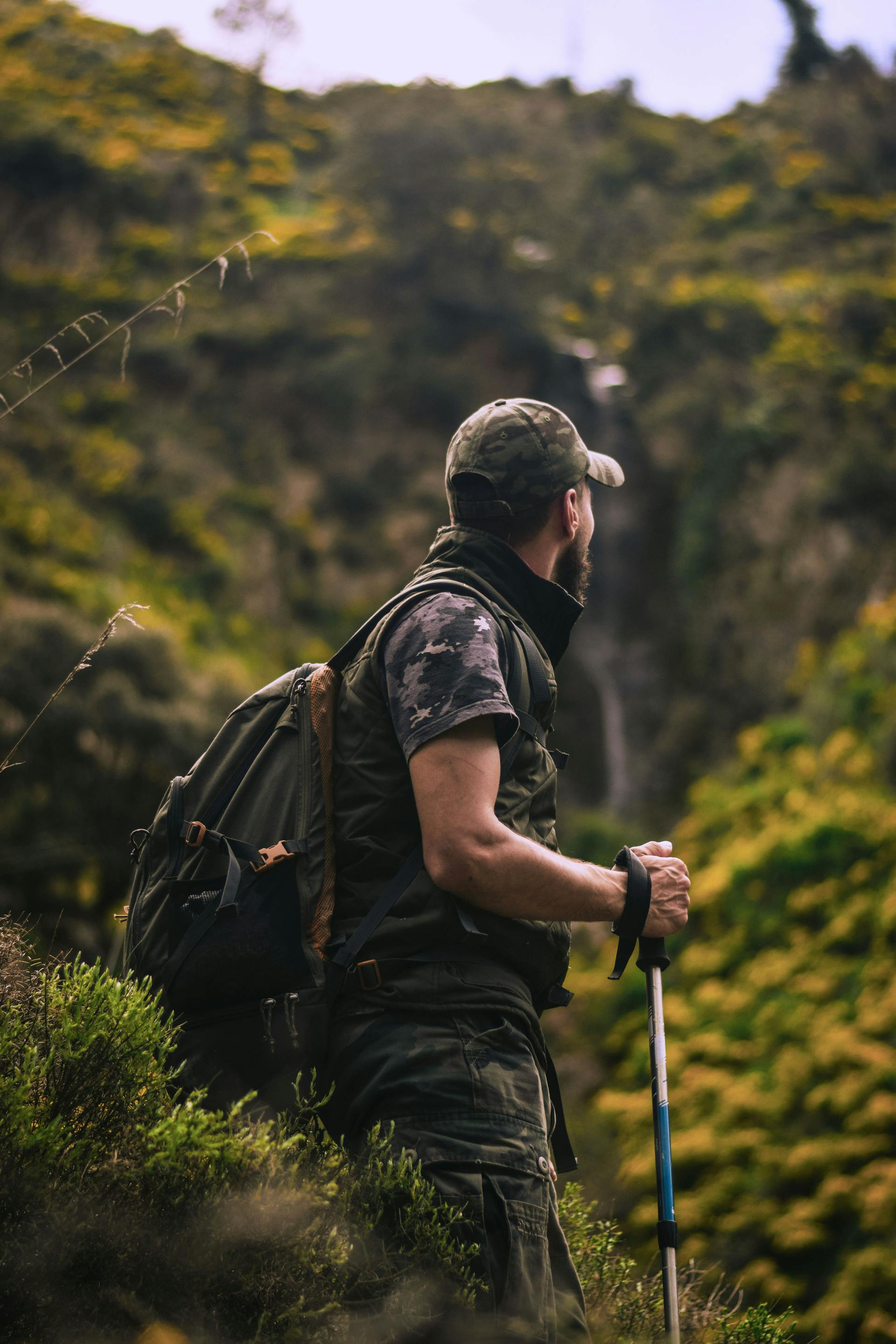
Sigiriya
"A king built a palace on top of a rock and the audacity still takes your breath away."
Sigiriya is an act of royal defiance turned to stone, and nothing quite prepares you for the scale of it. You see the rock from kilometres away — a vertical column of granite rising two hundred metres from the surrounding plains, flat-topped, sheer-sided, improbable. In the fifth century, King Kashyapa, having murdered his father and seized the throne, built a palace complex on its summit. The choice of location was partly defensive, partly megalomaniacal, and the result is one of the most extraordinary archaeological sites on earth. I stood at the base, looked up, and felt the specific vertigo that comes from confronting human ambition at its most deranged and beautiful.
The climb begins through the water gardens — a system of pools, fountains, and channels that demonstrate hydraulic engineering sophisticated enough to still function when the monsoon rains arrive. The symmetry is startling. These gardens were designed to be viewed from above, from the palace on the summit, and the fact that Kashyapa built a garden to be admired from a vantage point two hundred metres in the air tells you everything about the kind of king he was.
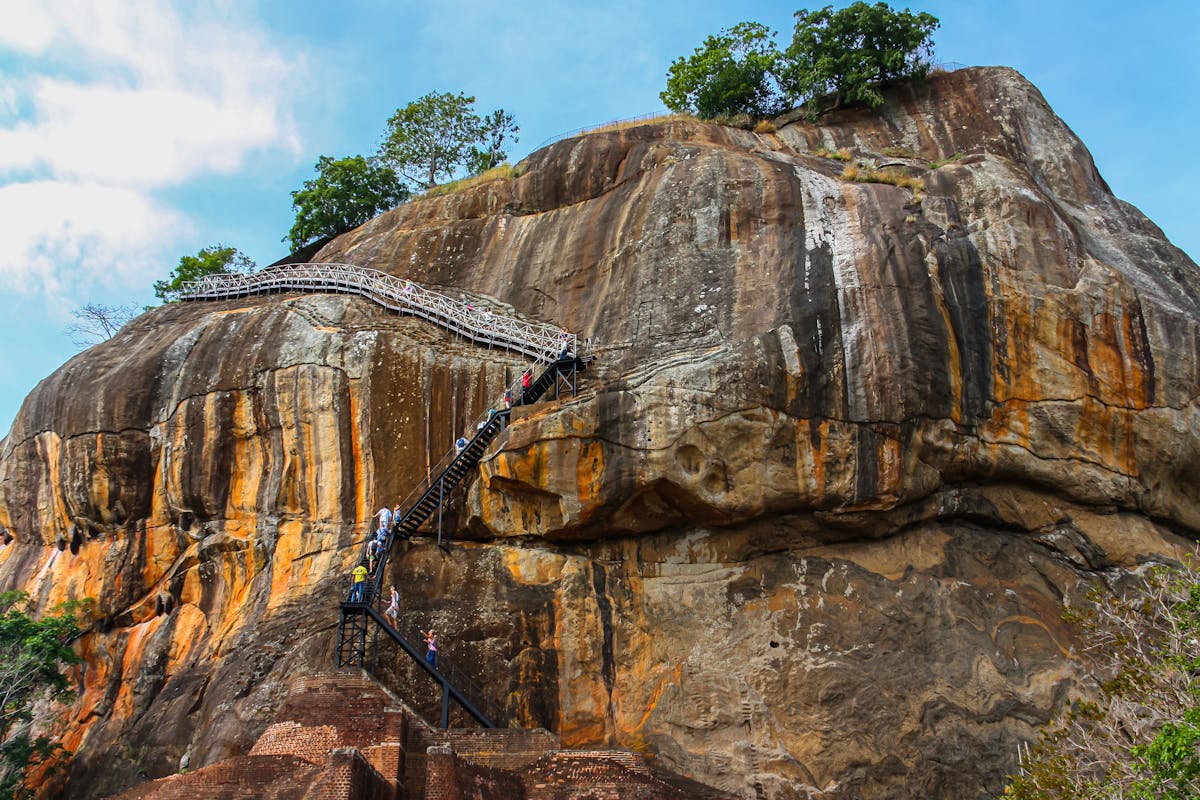
Halfway up, the path narrows to a metal staircase bolted to the rock face — the kind of structure that makes you acutely aware of gravity — and you reach the Sigiriya Frescoes. Painted in the fifth century, they depict celestial maidens in colours that have survived fifteen hundred years of weather, their expressions serene, their jewellery detailed enough to suggest specific craftsmen. The mirror wall beside them, once polished to a reflective sheen, still bears ancient graffiti from visitors moved to poetry by the paintings above. Some of this graffiti dates to the eighth century, which means people have been leaving comments about art on walls for at least twelve hundred years, and human nature has not changed at all.
The final ascent passes through the Lion Gate — a staircase that once emerged between the paws of a colossal stone lion, of which only the paws remain, each one larger than a car. The summit, when you reach it, is a flattened acre of ruins: the foundations of the palace, a throne carved into the rock, cisterns cut from solid granite, and a 360-degree view of jungle stretching to every horizon. The wind at the top is constant and warm. I sat on the throne — tourists do, despite the signs — and tried to imagine Kashyapa sitting here, surveying his stolen kingdom, knowing his brother was raising an army to take it back. He ruled for eighteen years before the army came. He lost.
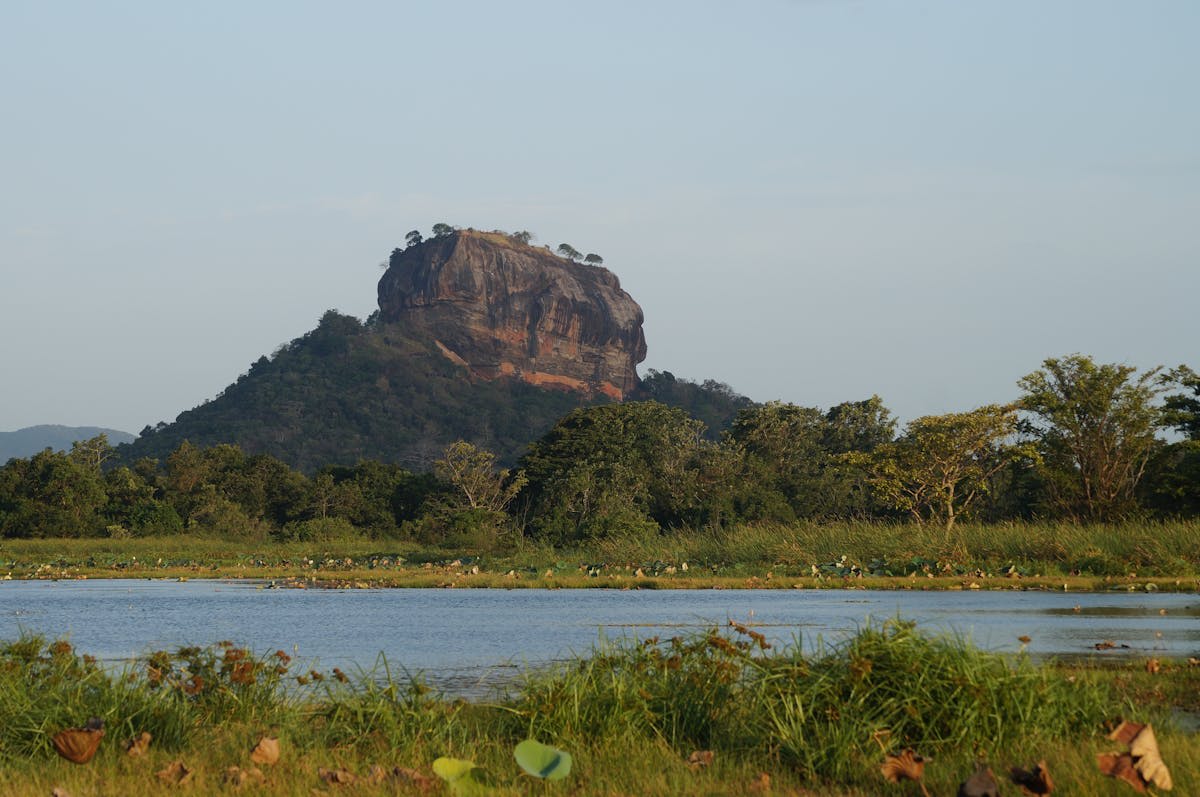
Pidurangala Rock, a short drive away, offers a less crowded climb with arguably the best view of Sigiriya itself. The ascent involves a scramble over boulders and past a reclining Buddha carved from the rock, and the summit gives you Sigiriya in profile — the rock rising from the jungle, the water gardens visible as geometric shapes at its base, the whole improbable structure framed by sky. We went at sunrise. The light turned the rock from grey to gold to orange, and for ten minutes the only sound was the wind and the distant call of a peacock.
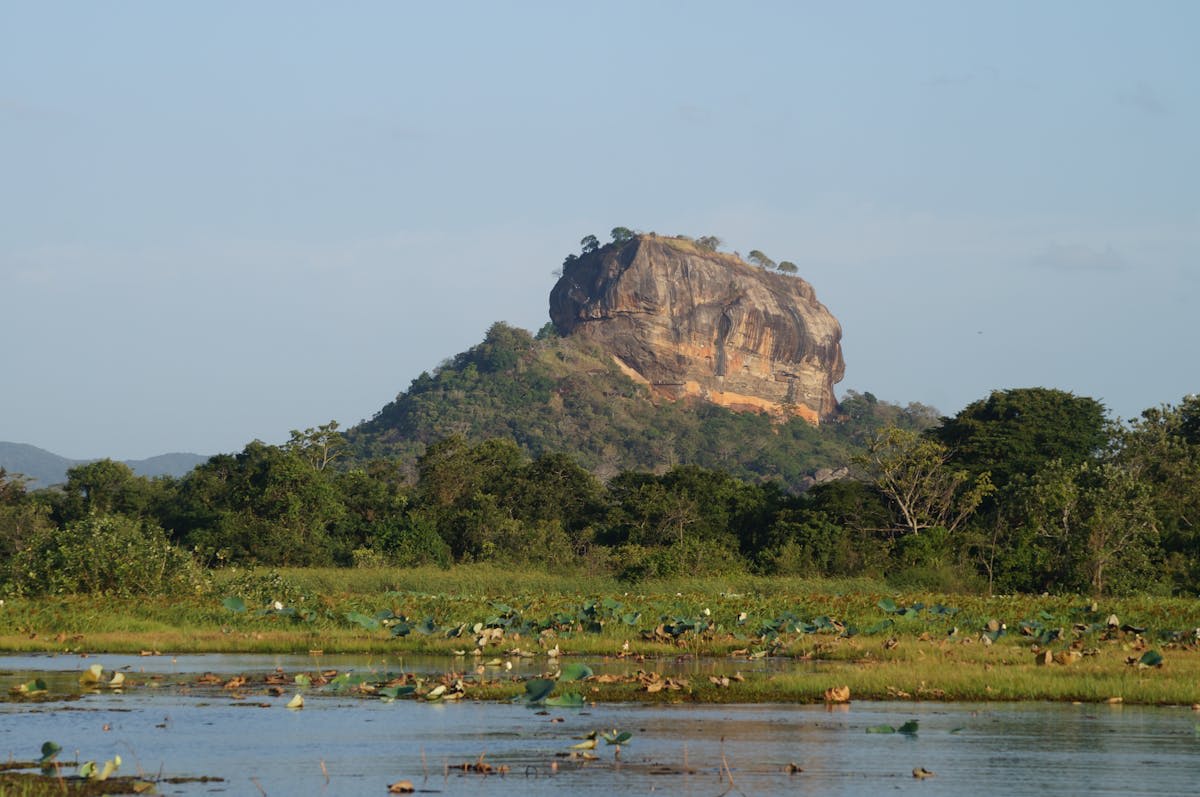
When to go: January to April is driest. Arrive at opening time — 7am — to beat both the heat and the tour groups that arrive by bus from Colombo around 9am. Pidurangala at sunrise requires a pre-dawn start and a headlamp, but the view of Sigiriya lit by first light is worth every lost hour of sleep. The combination of both climbs makes for a full and extraordinary day.