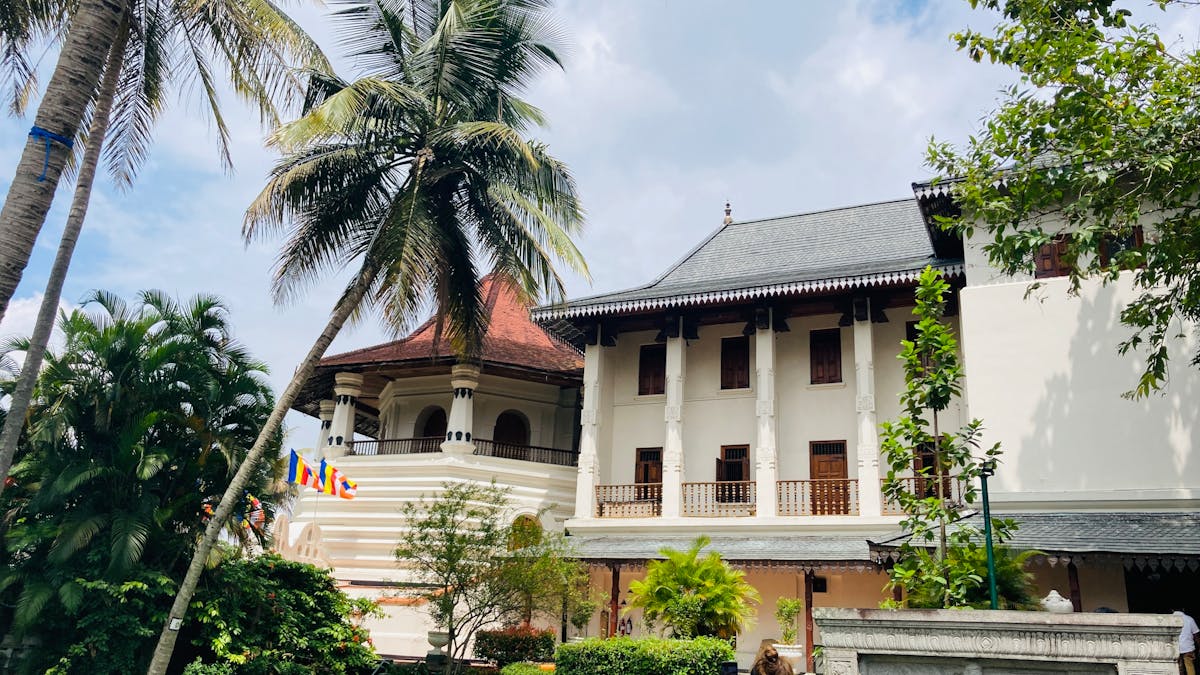
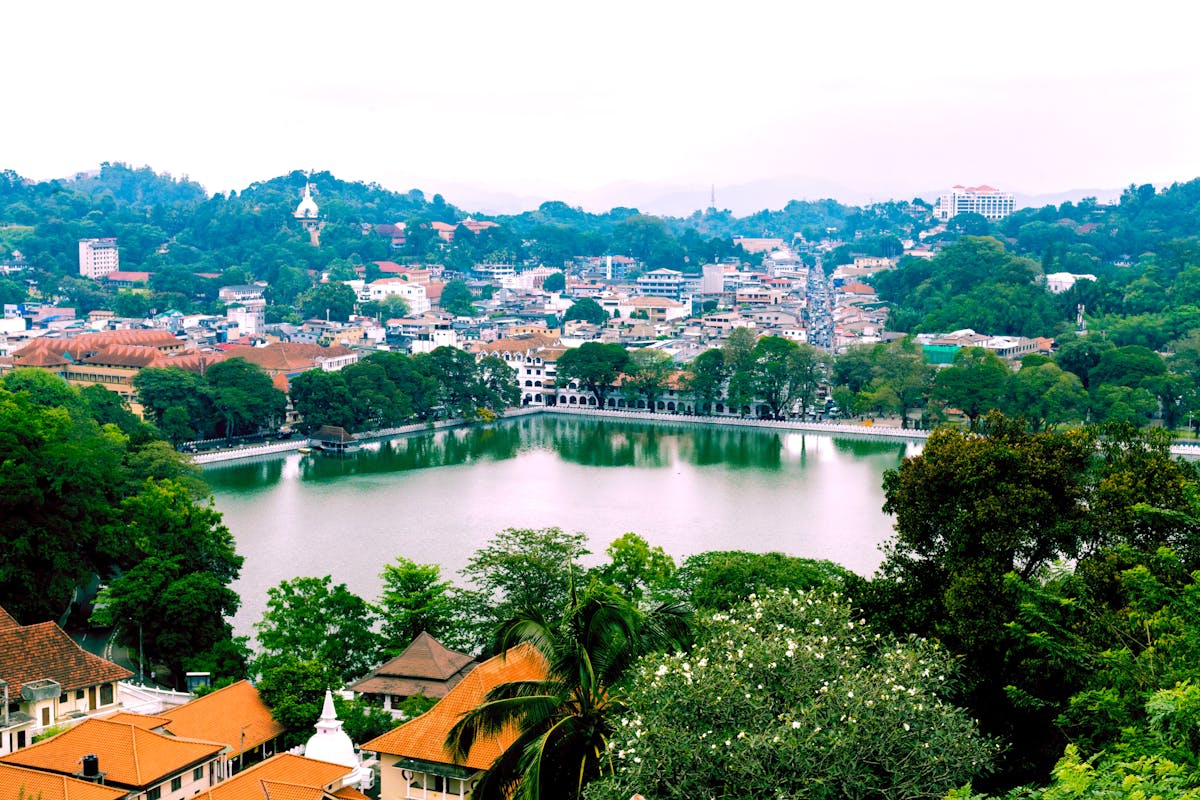
Kandy is the spiritual heart of Sri Lanka, and I felt it before I understood it. The bus from Colombo climbed through rubber plantations and rain, and when the city appeared — white buildings cascading down green hills toward a lake that reflected the clouds — there was a shift in atmosphere that had nothing to do with altitude. Kandy holds the Temple of the Sacred Tooth Relic, Sri Dalada Maligawa, which houses what is believed to be a tooth of the Buddha, and the reverence this generates permeates the entire city. It is not just a place with a temple. It is a place that exists because of the temple.
The evening puja ceremony is one of the most affecting religious experiences in South Asia. We stood in a press of devotees offering lotus flowers and jasmine, the air thick with incense and the sound of drums and chanting echoing off stone walls. Oil lamps flickered in alcoves. The inner sanctum, where the relic is kept in a series of golden caskets, was visible only briefly through a doorway, but the devotion in the room was so concentrated it felt like a physical force. I am not Buddhist, but I understood in that room why people make pilgrimages.
Beyond the temple, Kandy is a hill city of considerable charm. The Royal Botanical Gardens at Peradeniya spread across sixty hectares of orchids, palms, spice trees, and a giant Javan fig whose canopy covers 2,500 square metres — large enough to shelter a small village. We walked the orchid house and the avenue of royal palms, planted in 1905, their trunks straight as columns, their crowns forming a cathedral ceiling of green. The gardens are where Kandy couples come to court, sitting on benches with a careful distance between them that speaks volumes about what is not being said.
The Kandyan dance performances held nightly are centuries old — spinning, drumming, fire-walking, and a final act where a performer dances on hot coals with the expression of someone doing something mildly tedious. The dancers’ costumes, heavy with silver ornaments, make a sound like small bells in a wind. The craft shops around the lake sell traditional Kandyan jewellery, lacquerwork, and batik, though the quality varies and the prices are always the opening position in a negotiation.
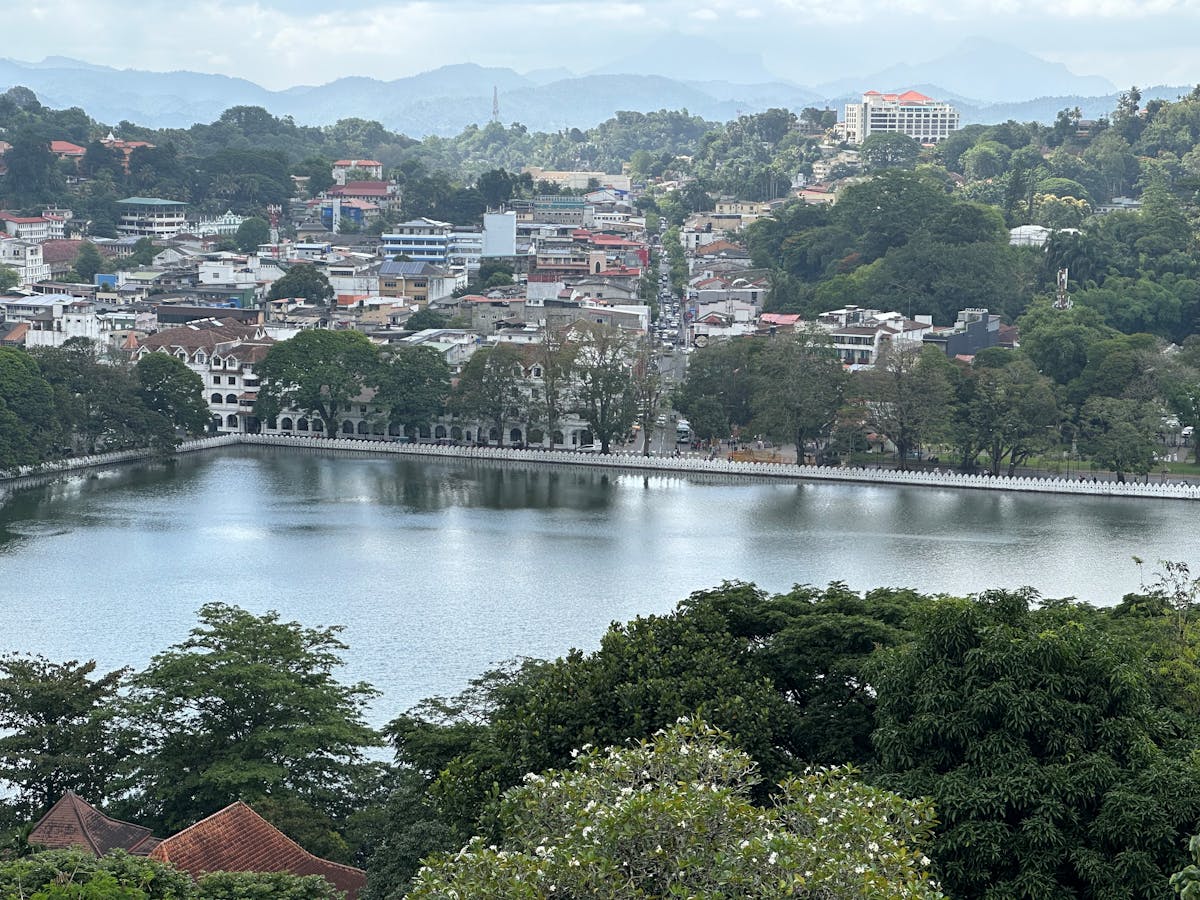
The train from Kandy to Ella is famously one of the world’s most beautiful rail journeys, and it departs from Kandy station — a colonial-era building with the unhurried efficiency of a system designed by the British and perfected by the Sri Lankans who run it now. I bought second-class reserved seats and sat by the window as the train climbed into tea country, the doors open, mist rolling in, the landscape shifting from tropical green to the manicured geometry of tea plantations. But Kandy deserves more than a transit stop. The walk around the lake at dawn, when the mist sits on the water and the temple is reflected in perfect silence, is worth the extra night.
When to go: January to April is driest. The Esala Perahera festival in July or August is a ten-day procession of elephants, dancers, and drummers that is Sri Lanka’s most spectacular cultural event — the streets fill with costumed performers and the night air vibrates with drumming that you feel in your ribcage. Book accommodation months ahead for the festival.