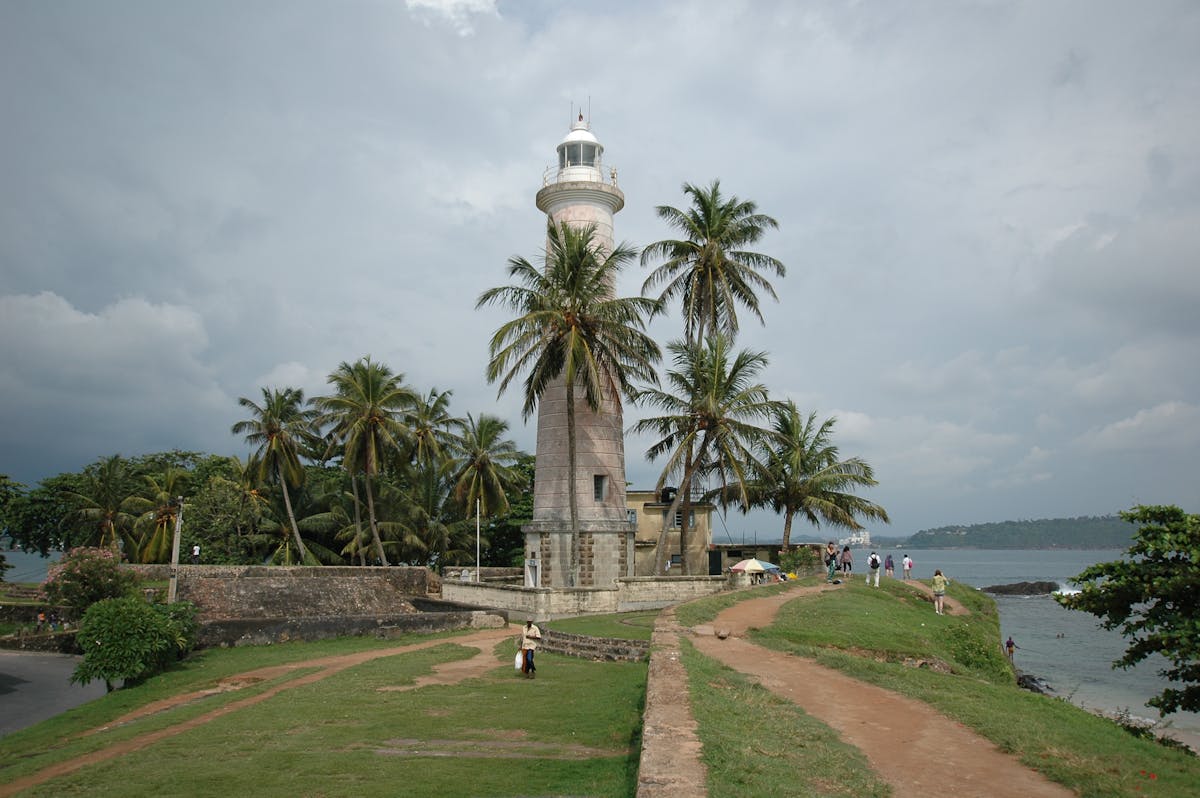
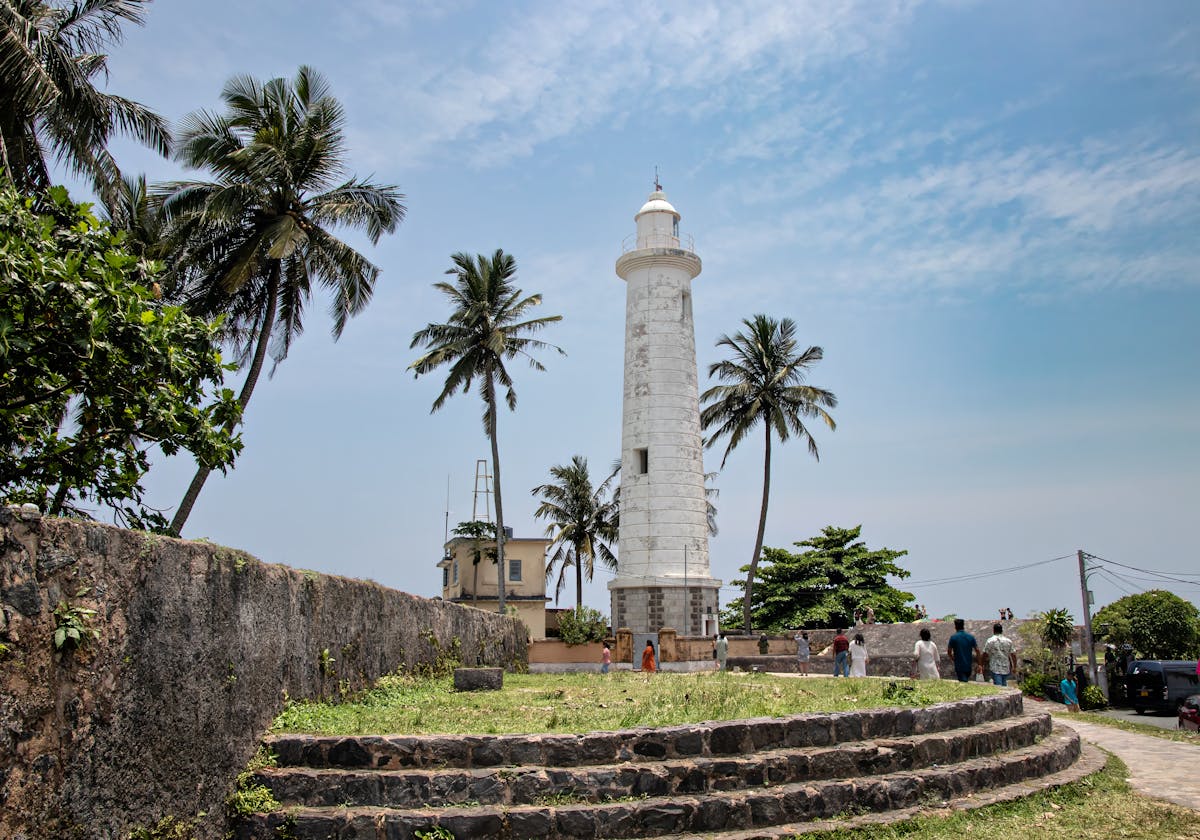
Galle Fort is one of those rare places that has been preserved without being pickled. The Dutch built the fortifications in the seventeenth century on a rocky promontory that the Portuguese had already claimed, and the grid of streets within the walls now holds boutique hotels, jewellery shops, art galleries, and restaurants that together create something I can only describe as a miniature, tropical Amsterdam. Except the light is better, the food is better, and the Indian Ocean is right there, crashing against walls that have withstood four hundred years of monsoons and a tsunami.
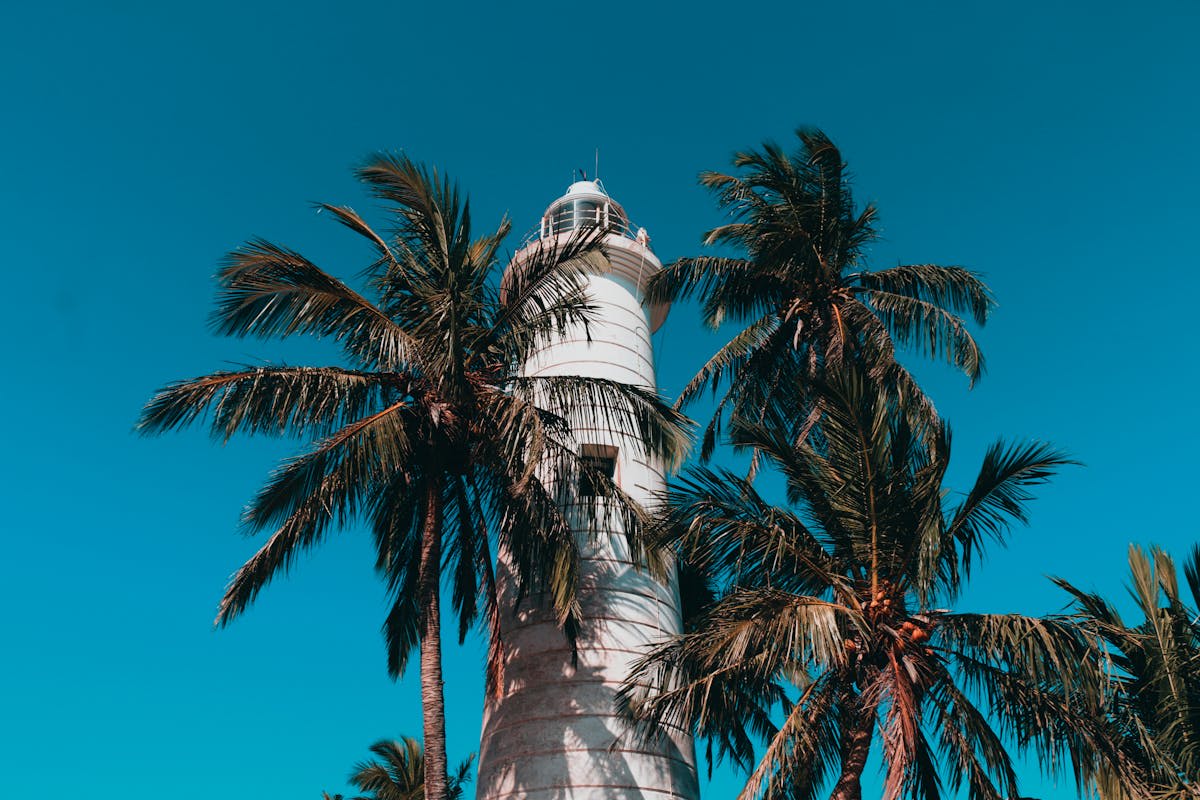
The rampart walk at sunset is one of Sri Lanka’s defining moments. You climb the stone steps near the clock tower and walk the circumference of the fort walls — the ocean on one side, the terracotta rooftops and swaying palms on the other, the lighthouse glowing at the point. Below, on the green inside the walls, local boys play cricket with the intensity of a test match while tourists sit on the ramparts and watch the sky turn colours that feel excessive. I did this walk every evening for three days and it never diminished.
We stayed inside the fort at a guesthouse run by a family that had lived within the walls for four generations. The father told us about the 2004 tsunami, which sent water over the ramparts and into the streets — you can still see the waterline on some buildings. The Historical Mansion Museum, a private collection of antiques and curiosities, tells the story of the spice trade through Dutch-era maps, colonial furniture, and gemstones laid out on velvet. The Maritime Archaeology Museum sits inside a colonial warehouse and contains artefacts recovered from shipwrecks along the coast — cannons, coins, porcelain that survived centuries underwater.
The food inside the fort ranges from upscale fusion — turmeric-infused cocktails and deconstructed hoppers — to a kottu roti stall just outside the main gate that was the best thing I ate in the entire south. The cook worked with two metal blades on a flat griddle, chopping roti with vegetables and egg in a rhythm that drew a crowd every night. Fort Bazaar, a restored merchant’s house turned hotel, serves afternoon tea that would not be out of place in a London club, except you are drinking it in a courtyard where frangipani petals fall into your cup.
The beaches of Unawatuna and Jungle Beach are a short tuk-tuk ride away for those who need sand between courses. Unawatuna is a crescent of golden sand with calm swimming water and a row of beach bars. Jungle Beach, smaller and reached by a short trail through the trees, feels secretive and earns its name. I alternated between fort days and beach days, and the combination — culture in the morning, ocean in the afternoon, rampart sunset, kottu roti by night — was one of the most satisfying rhythms of the entire trip.
When to go: December to March is peak season with dry weather and calm seas. The Galle Literary Festival in January brings writers and readers from around the world and gives the fort an intellectual energy that pairs well with its aesthetic beauty. Shoulder months of November and April offer good weather with fewer visitors and lower prices.