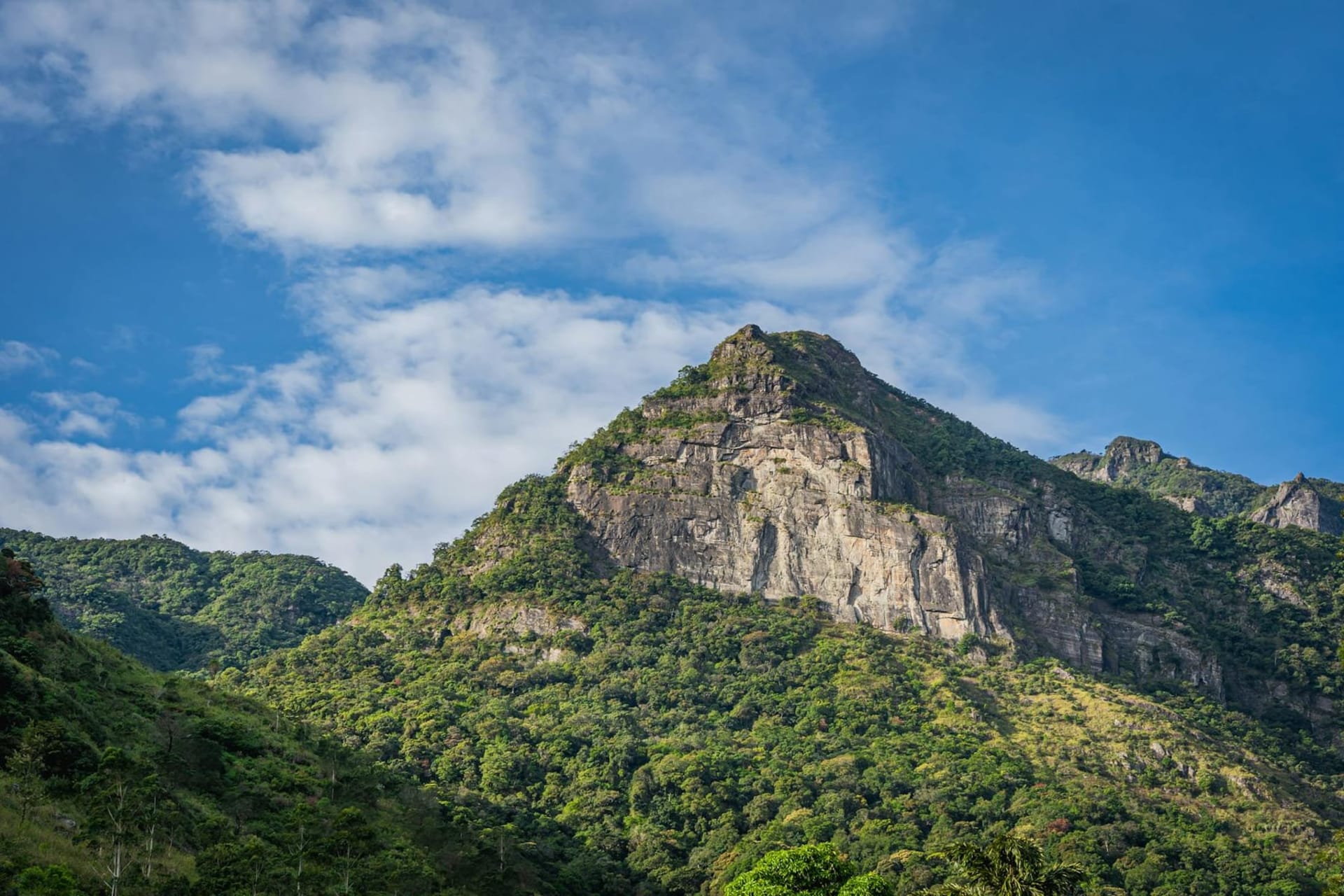
Sigiriya Rock
"Sigiriya asks what kind of king builds his palace on top of a rock and answers: the kind worth remembering."
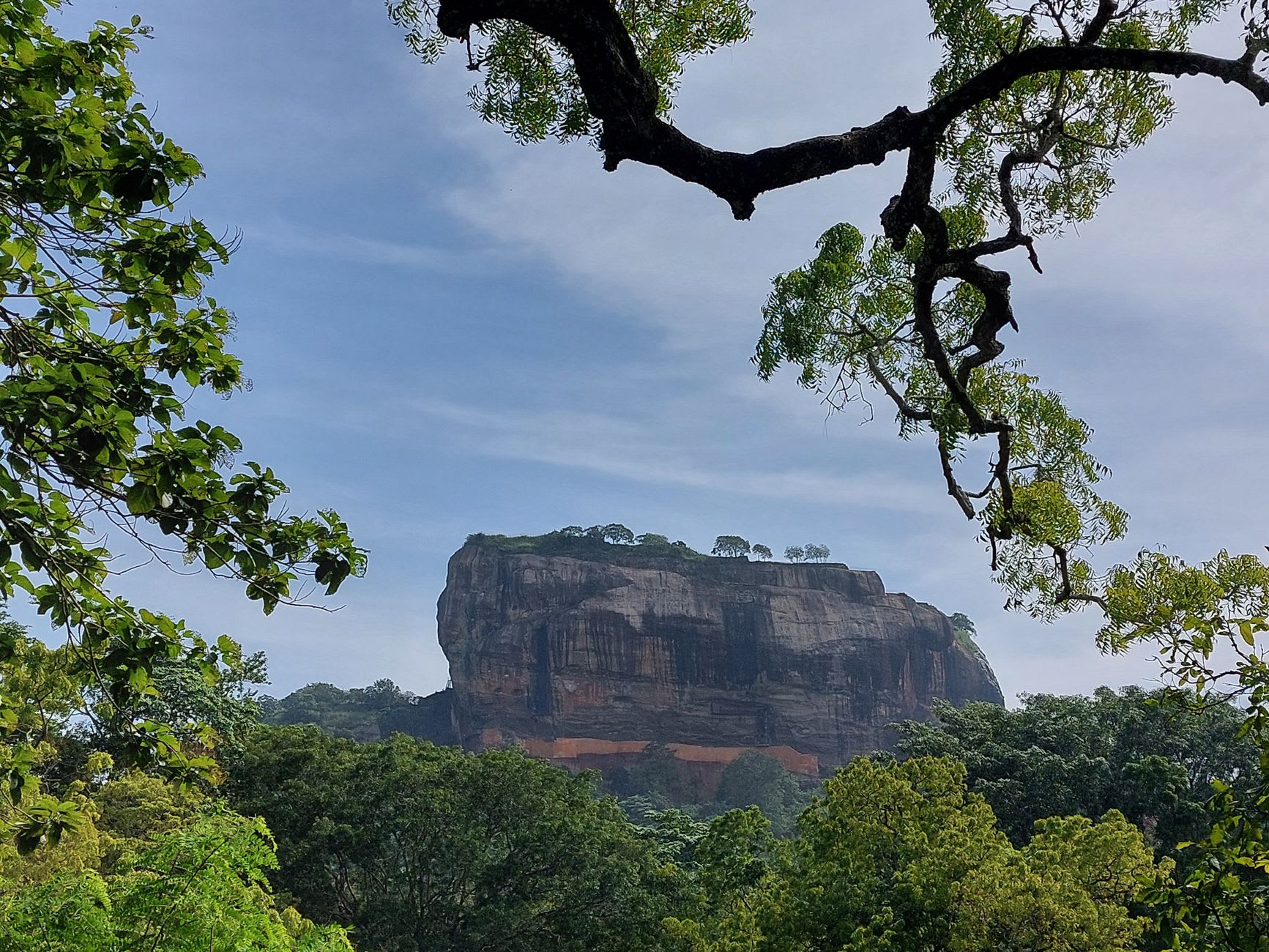
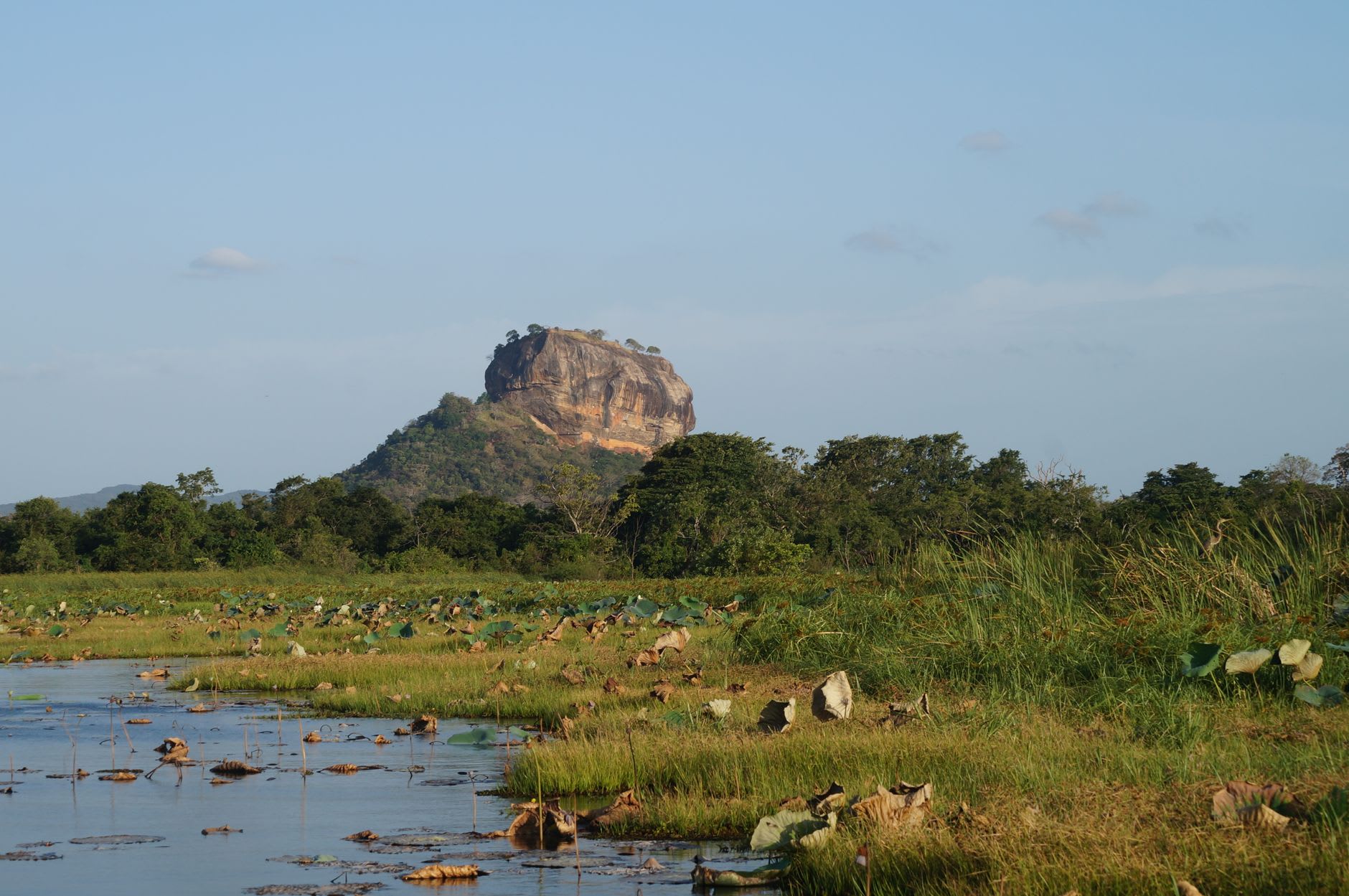
I had been told the climb was steeper than it looked. I had been told this the way people tell you things in Sri Lanka — with a smile that contains more information than the words do. What I had not been told was that the rock itself, from the bottom, looks completely insane. Not magnificent in the way of cathedrals or impossible in the way of glaciers. Just genuinely, stubbornly insane: a 200-metre column of granite that rises out of the flat jungle floor of the Cultural Triangle like something a giant left behind, and on top of which a fifth-century king named Kashyapa built a palace because he had, presumably, run out of more conventional options.
We arrived at the site before seven in the morning, before the heat had settled in and before the day-trippers had filled the spiral staircases. The air at the base smelled of jasmine from the water gardens — the ancient hydraulic gardens that still partially function and lie stretched out across the flat ground to the west of the rock, their stone-lined cisterns and fountains somehow still fed by a system of channels that Kashyapa’s engineers designed fifteen centuries ago. Lia stopped beside one of the circular fountain platforms and said it looked like a sketch of a place rather than the place itself — too symmetrical, too considered to be real.
The Frescoes
The first real surprise came at the fresco gallery, a sheltered overhang about halfway up the western face. The access is via a spiral metal staircase — giddying, gripping, somewhat terrifying — that delivers you to a rock shelter where eighteen women have been painted on the wall in orange and yellow and green that should not have survived this long and yet somehow did. They are bare-breasted, holding flowers, emerging from clouds — celestial nymphs or perhaps the king’s consorts, no one is entirely certain. The older art historical consensus called them apsaras. More recent scholars think they may be the king’s five hundred handmaidens carrying offerings to the summit.
What hit me standing there was the colour. Not the survival of paint across fifteen centuries — though that is astonishing — but the particular quality of the orange against the grey rock. The artists used red ochre and yellow from local mineral sources, and the result is a warmth that the morning light coming in horizontally from the east turns almost luminous. The women glow. They have been glowing, at this particular angle, at this particular hour, since the fifth century. That continuity felt physical, not merely historical.
The Lion’s Paws
Above the frescoes, the path continues to the Mirror Wall — a polished plaster surface so smooth that Kashyapa, it is said, could see his reflection in it, and on which visitors have been leaving graffiti since at least the 8th century, making it one of the oldest collections of poetry and commentary in the world — and then up, steeply, to the feature that gives the site its name. Sinha-giri: Lion Rock.
The lion’s paws are the only part of the original lion figure that remain. They are enormous — each paw is the size of a small car, carved directly from the granite outcrop, and they bracket the final staircase that leads to the summit. The rest of the lion’s body, which would have formed the entrance to the palace above, collapsed long ago. What is left is stranger than the complete figure would have been: two giant stone claws framing a narrow iron staircase that climbs almost vertically into the sky, and at the top, the flat summit plateau where Kashyapa held court and, eventually, lost everything.
The Summit — Where the Theory Ends
The summit catches you off guard. After the vertical climb, after the narrowness of the final iron staircases bolted directly to the rock face, you expect drama. What you get is stillness. The top of Sigiriya is a flat plateau roughly 1.6 hectares wide, and on it are the foundations of the palace — stone outlines, cisterns cut into the bedrock, the remains of a throne platform from which the king could look out over the entirety of his domain.
The view from up there on a clear morning is extraordinary in every direction: the flat jungle stretching to the horizon, the distant shimmer of the Minneriya Tank to the northeast, the formal gardens laid out precisely below like a diagram. The rock is not tall enough for altitude sickness but tall enough to make the world feel rearranged — smaller, more legible, more like a map of itself.
What surprised me was finding a shallow rock pool on the summit, carved from the bedrock and fed by rainwater, still holding water fifteen centuries after it was cut. Lia found it before I did — she had wandered off the main path toward the northern edge — and called me over in that particular quiet voice she uses when she has found something she cannot quite explain. It was just a pool. But a pool on top of a rock in the sky, designed to hold water, designed to reflect the sky back at a king standing above the jungle — the purposefulness of it was quietly devastating.

Kashyapa ruled from this summit for eighteen years. When his brother Moggallana returned from India with an army, Kashyapa descended and fought him on the flatland below, died there, and the palace above was abandoned. The rock outlasted the king by about fifteen centuries. It has that quality — the indifference of stone to the stories told on top of it.
When to go: December through March, when Sri Lanka’s dry season brings clear skies and bearable humidity. Arrive at opening time, around 7am, to climb before the heat builds and the tour groups arrive. Avoid the Sinhala and Tamil New Year period in mid-April when the site is extremely crowded.