Tierra del Fuego
"Darwin wrote extensively about this place. He was right about most of it."
What You’re Looking At
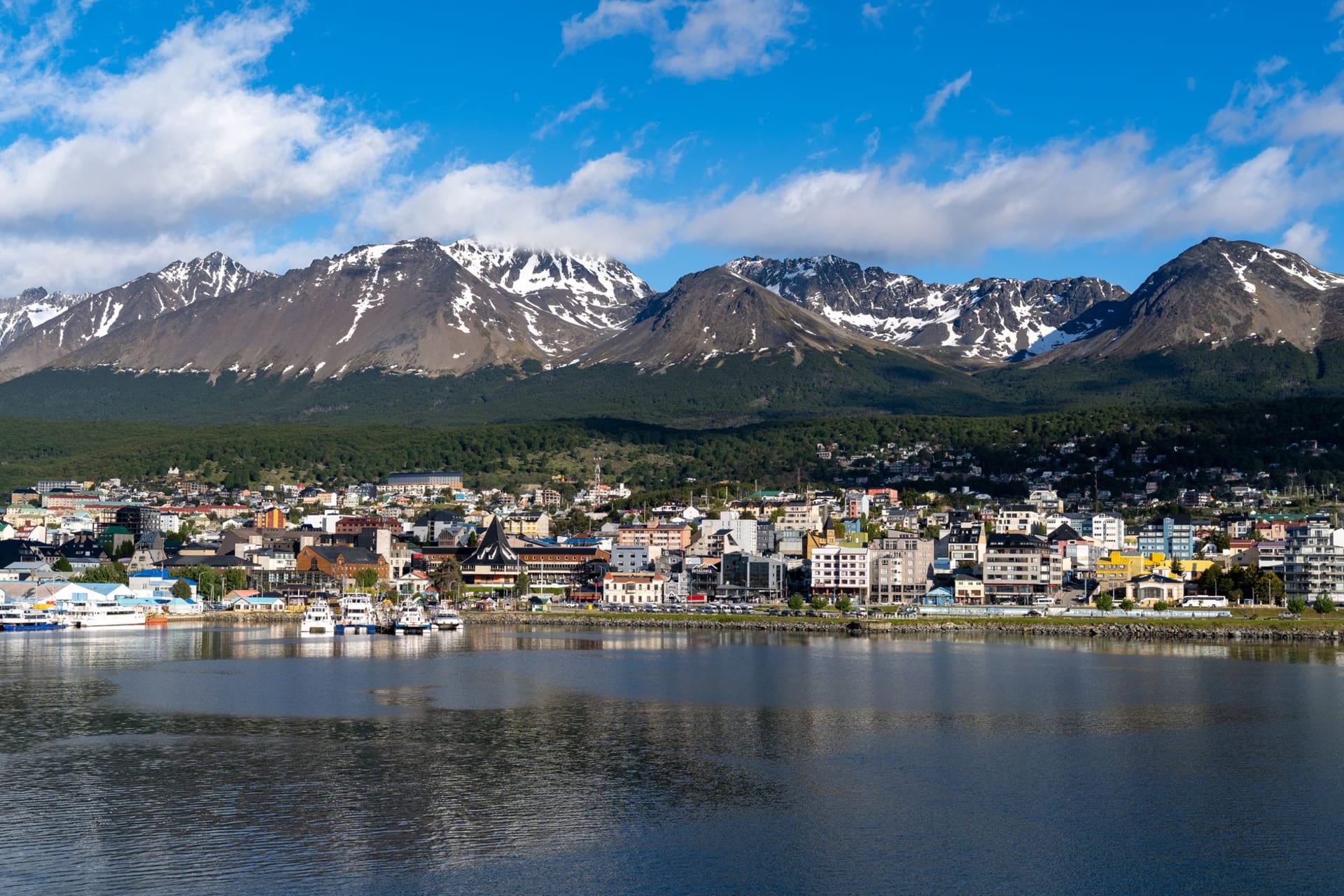
The Chilean side of Tierra del Fuego is not the same experience as Ushuaia on the Argentine side, and I want to make that distinction clearly at the start. The Argentine city with its ski resort and cruise ship infrastructure is a specific and valid thing. The Chilean section of the archipelago — accessible mainly from Punta Arenas — is something different: wilder, less serviced, requiring more effort, and offering in exchange a quality of solitude that the Argentinian side has largely traded away for convenience.
The archipelago south of the Strait of Magellan contains thousands of islands, most of them uninhabited and unnamed in current usage though every channel and cape carries historical names from the survey ships that mapped them. The Beagle, on which Darwin made his second voyage in 1831-36, spent years in these channels. His journal entries about the landscape and the Yahgan people he encountered here have the quality of someone struggling to describe something that didn’t fit his existing categories, which is still roughly the experience of being here.
Getting Into the Archipelago
From Punta Arenas, the ferry to Porvenir on the main island of Tierra del Fuego crosses the Strait of Magellan in about two hours, long enough to understand the Strait’s specific atmosphere — a grey-green body of water with the quality of something that has purpose, that’s going somewhere, even when it’s calm. Porvenir is a small town of about 6,000 people, the largest settlement on the Chilean side, with a waterfront that faces the Strait and a sleepy main square that seems designed for a larger city that never quite arrived.
The road system on the Chilean side of Tierra del Fuego is limited and largely unpaved. Renting a vehicle in Punta Arenas and bringing it across on the ferry is the practical approach for exploring inland. The landscape in the northern part of the island is Patagonian steppe — flat, wind-scoured, populated by sheep and guanacos and birdlife that operates with apparent indifference to the wind — transitioning in the south to forested mountains and the channel systems.
The Beagle Channel and Navarino Island
The Beagle Channel separates the main island from Navarino Island to the south, and Puerto Williams on Navarino — accessible by small plane from Punta Arenas or by ferry — is frequently cited as the southernmost town in the world. It has about 2,000 residents, a naval base, a small museum about the Yahgan people (the last traditional canoe culture of these channels), and a trail called the Dientes de Navarino Circuit: a five-day trek through alpine terrain above the treeline that is considered one of the most demanding and spectacular routes in South America. It requires navigation skills, proper equipment, and a willingness to operate in conditions where the weather can change in minutes. The rewards, by all accounts I’ve heard from people who’ve done it, are proportional.
The museum in Puerto Williams dedicated to Cristina Calderón — for many years considered the last fully fluent speaker of Yahgan before her death in 2022 — is worth the journey to Navarino alone. The Yahgan were the southernmost human population on earth, traveling through these channels in bark canoes in conditions that modern expedition equipment barely makes survivable. The museum doesn’t sentimentalize this; it documents it.
Cape Horn
Cape Horn is technically accessible — in principle. A naval base on the island maintains a lighthouse and a small station, and weather permitting, charter boats from Puerto Williams make the trip around the Horn. In practice, Cape Horn’s weather is notoriously uncooperative with scheduling, and many people who attempt the trip are turned back by conditions. The cape itself is a 425-meter rock cliff falling into the Drake Passage, which merges the Pacific and Atlantic here and produces sea states that explain the historical terror sailors had for this route before the Panama Canal. Standing on Cape Horn, when conditions allow, is reportedly one of those experiences that reorganizes your understanding of where the boundaries of human-accessible geography actually are.
When to go: November through March for any serious travel into the Chilean Tierra del Fuego. The Dientes circuit requires late November through February for snow-free conditions. The ferry from Punta Arenas to Porvenir runs year-round but weather can cause cancellations; build flexibility into your schedule. Cape Horn approaches have the highest success rates in the narrower window of December through February.