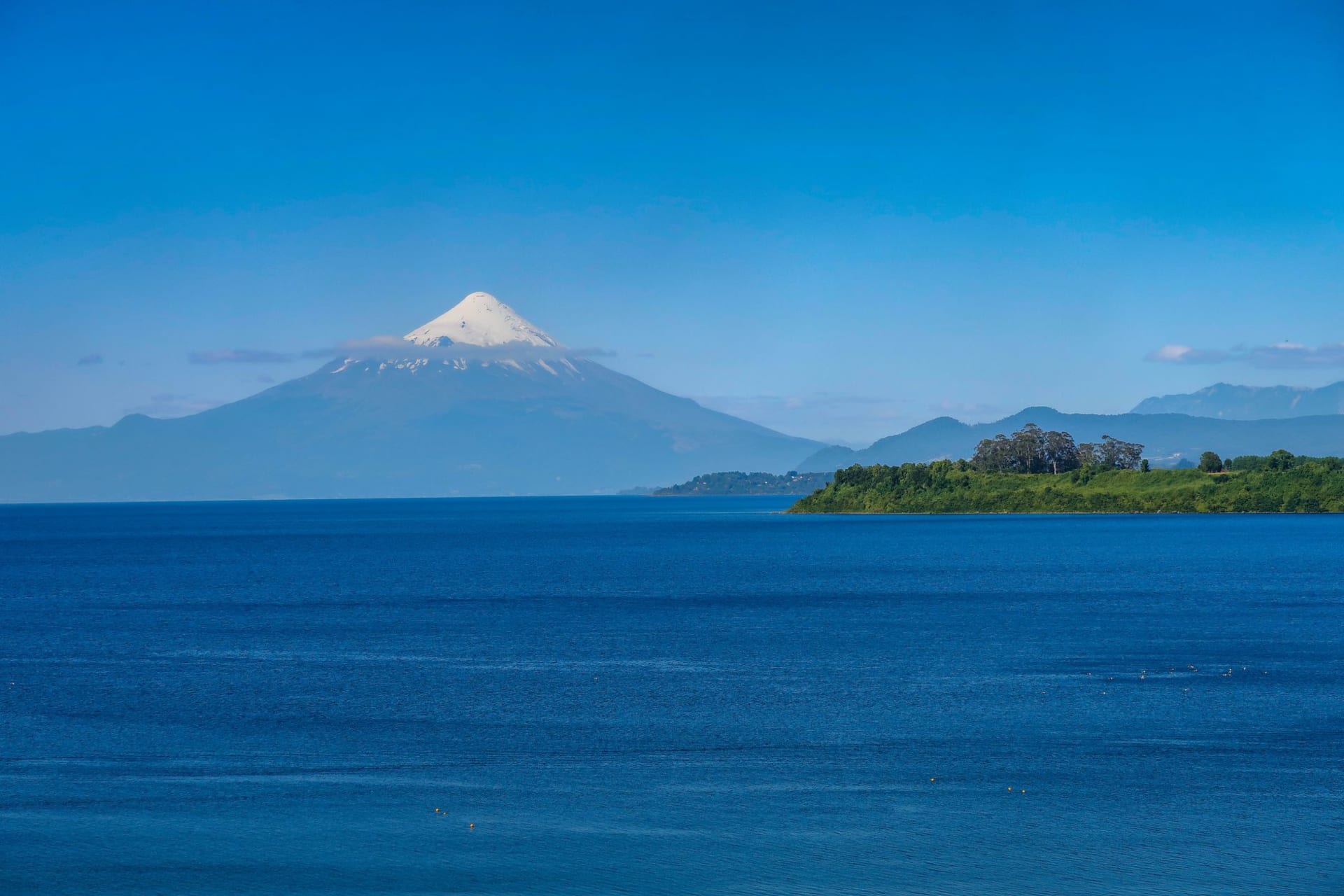
Cochrane
"At the end of a long drive south, the town where the road gets serious about ending."
Arriving at the Deep South
Cochrane is not on the way to anywhere. It’s 340 kilometers south of Coyhaique on the Carretera Austral, and reaching it requires a full day of driving on roads that test your patience with river crossings, dust clouds from the rare passing truck, and distances between fuel stops that require advance planning. Most travelers on the Carretera skip it, pushed by time pressures toward the more famous stops north and south. This is, from the perspective of anyone who’s spent time there, a significant mistake.
The town sits in the Baker River valley at about 180 meters elevation, backed immediately by Andean ridges that climb to the snowline in less than an hour’s hiking. The Baker — Chile’s largest river by volume — runs through the valley in a turbulent torrent the color of glacial green, fed by Lake Cochrane to the east and ultimately the drainage of the Northern Patagonian Ice Field. The river was the site of a long and eventually successful campaign to prevent a series of hydroelectric dams that would have flooded sections of the valley; the Patagonia Sin Represas movement, largely organized by Doug Tompkins’ foundation, won its case in 2014. The river remains undammed and the valley retains a wild quality that feels precarious in a way that makes it more rather than less valuable.
The Town at Its Own Pace
Cochrane has about 3,000 residents, a main street with a couple of restaurants and a grocery store, a plaza with a church, and a social life organized around the rhythms of the agricultural and seasonal economy. I arrived on a weekday afternoon and sat in the plaza for an hour, and in that time passed: one horse, three trucks, several dogs moving with purposeful autonomy, and a group of schoolchildren who treated my presence with benign curiosity. The temperature at that altitude in early November was cool enough for a jacket even at midday.
The people here have a specifically frontier quality — not unfriendly, but direct in a way that suggests they haven’t spent much time performing hospitality. The woman at the grocery store explained the local trail conditions with the same tone she might use to explain that they were out of pasta. Factual, sufficient, no embellishment. I found this refreshing.
Caleta Tortel and the Ice Field
About 130 kilometers southwest of Cochrane, reachable via a gravel side road that branches off the Carretera, is Caleta Tortel: a coastal village of about 500 people built entirely on wooden boardwalks because it has no streets — it sits on a fjord with no flat ground to build roads on. The houses are connected by elevated wooden walkways, and the whole settlement moves at a pace dictated by the tides. You arrive by road and then navigate on foot, listening to your footsteps on wood and the water below. It’s deeply strange and exceptionally beautiful.
The Southern Patagonian Ice Field begins its drainage within hiking distance of Cochrane. The Reserva Nacional Lago Cochrane has trails into the lake margins and into terrain that puts you within visible range of glaciated peaks. The lack of crowds here compared to Torres del Paine — a function of difficulty of access rather than any inferiority of landscape — gives the experience a quality of solitude that’s become difficult to find in the more established parts of Patagonia.
Why It Matters That You’re Here
There’s a version of Patagonian travel that consists entirely of the famous viewpoints, the organized treks, the places that have been photographed so many times that your own experience of them is partially a reenactment of images you’ve already seen. Cochrane is the alternative: a place that exists for its own reasons, where your presence is neither expected nor particularly catered to, and where the landscape is encountered without interpretive infrastructure. I found this clarifying in a way I hadn’t expected to need.
When to go: November through March for reliable road access and viable hiking. The gravel roads around Cochrane can be badly affected by rain in any season, so check conditions before driving the side roads south. Winter months are cold and services are minimal, but the landscape in snow has a quality that the summer photos don’t capture.