Jeonju
"Come for the bibimbap, stay for the village -- and then come back for more bibimbap."
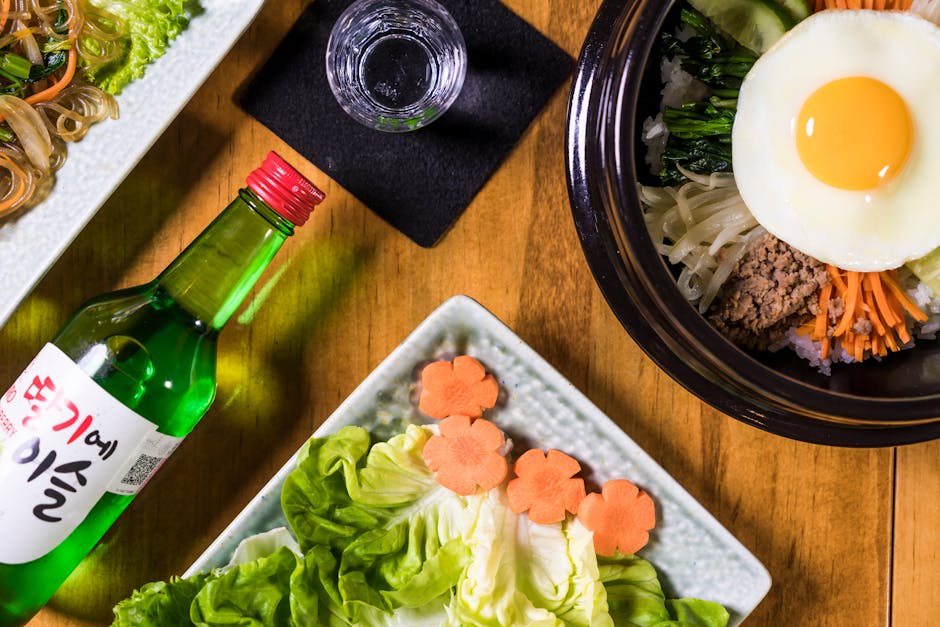
Jeonju is where Korea eats. The city claims to be the birthplace of bibimbap, and having eaten it here — a stone bowl of perfectly seasoned rice topped with fresh vegetables, gochujang, and a raw egg yolk that cooks on contact — I believe the claim. But more than believing it, I understand why it matters. Bibimbap at its best is not a dish but a philosophy: every ingredient distinct, every flavour separate until you mix them together with the back of your spoon and the whole becomes something greater than the parts. In Jeonju, where the rice is local and the gochujang is house-made and the bean sprouts are the fat, crunchy kind that other cities cannot replicate, the philosophy becomes physical.
But Jeonju is more than a single dish. The food culture here runs deep: makgeolli bars serve the milky rice wine alongside endless plates of anju — the snack-course tradition that turns drinking into a meal and a meal into a marathon. I went to a makgeolli bar near the Hanok Village with a Korean friend who ordered for us, and the table filled with dishes I had never seen: acorn jelly, kimchi pancakes, seasoned fern bracken, and a pig’s trotter preparation that was tender and spiced and gone before I thought to photograph it. The makgeolli was fresh, slightly fizzy, and dangerously drinkable. We stayed three hours.
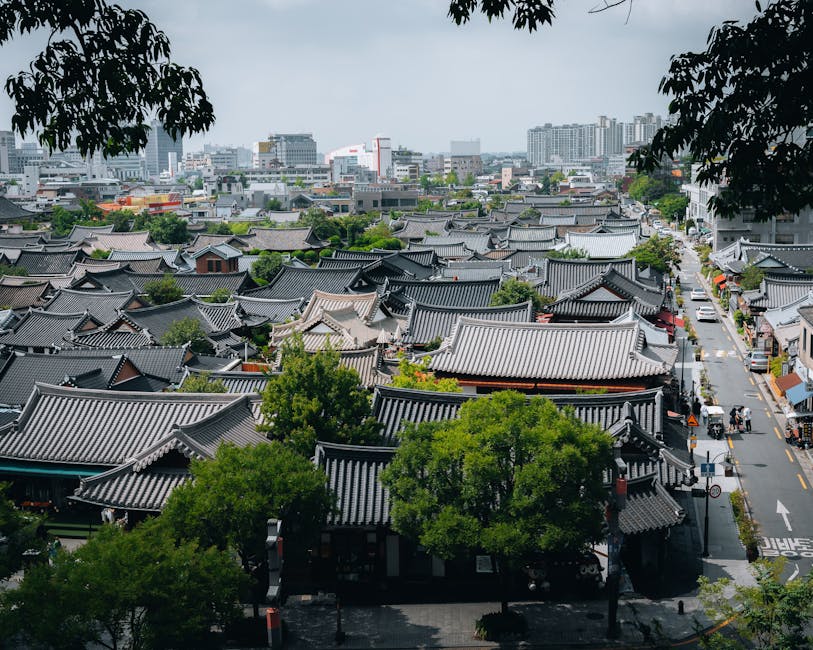
The Jeonju Hanok Village is the visual centrepiece — over seven hundred traditional houses with curved tile roofs clustered around a hillside in the city centre. It is touristy, yes, but the architecture is genuine and the atmosphere, particularly in the early morning before the crowds arrive, is genuinely transportive. I walked the lanes at seven in the morning, when the only sounds were a broom sweeping a courtyard and the call of a bird I could not identify, and the village felt like what it is: a place where people live, not just a place where tourists visit. The Jeondong Catholic Church anchors one end of the village, its Romanesque facade incongruously beautiful against the Korean rooflines — a reminder that Korea’s relationship with the West is longer and more complex than most visitors assume.
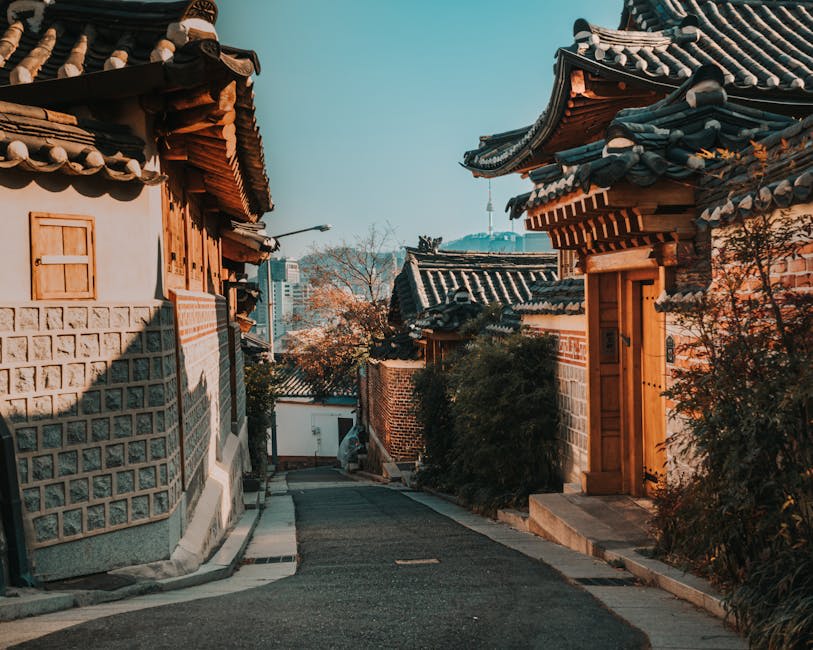
Hanbok rental shops let you walk the village in traditional dress, which is less gimmicky than it sounds. The hanbok changes how you move, how you stand, how you experience the architecture around you, and for a few hours the village becomes not a historical site but a living context for the clothing you are wearing. Lia wore a blue and white hanbok with embroidered sleeves and looked so beautiful against the tile rooftops that I took forty photographs and still feel I did not capture it.
The street food market offers hotteok filled with seeds and brown sugar, grilled skewers of every description, and the choco pie variations that Jeonju has turned into a local art form. But the meal I remember most clearly is breakfast at a small restaurant that served a full Jeonju-style Korean breakfast — rice, soup, grilled fish, multiple kimchis, seasoned spinach, and a fermented soybean stew that was pungent and deep and tasted like the culinary equivalent of a conversation with someone who has lived a long time and has things to say.
When to go: April to May for spring warmth and the Jeonju International Film Festival, or September to November for pleasant autumn weather. The Jeonju Bibimbap Festival in October is exactly what it sounds like and entirely worthwhile.