
Jeju Island
"An island shaped by fire and softened by wind -- Korea's most beautiful escape."
Jeju is South Korea in miniature and in exaggeration. The island rose from the sea through volcanic eruption, and the geology dominates everything — Hallasan, the dormant volcano at the centre, is the highest point in the country, and the lava tubes that riddle the coastline are a UNESCO World Heritage Site. Manjanggul Cave stretches for over seven kilometres underground, its walls sculpted by molten rock into formations that look deliberately artistic. Walking through it in the damp silence, the ceiling arching above like a cathedral carved by a force that did not care about aesthetics but produced them anyway, I understood why Jeju feels different from the rest of Korea. The island was made by something violent, and the beauty that resulted is inseparable from that violence.
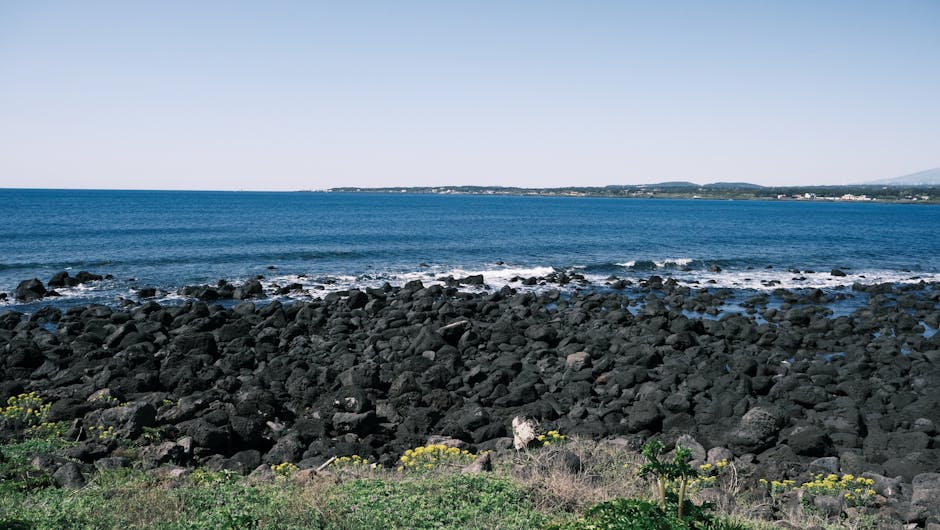
Above ground, Jeju has a personality distinct from the mainland. The haenyeo — female free-divers who harvest seafood without breathing equipment, some of them in their eighties — are a living cultural treasure. I watched them work from the rocks at Seongsan, emerging from the cold water with nets full of abalone and sea urchin, their faces weathered and their movements efficient and their refusal to use modern equipment not a performance but a practice — a way of being in relationship with the ocean that predates everything we now call progress. The fresh catch they sell at the shoreline stalls is the best seafood I have eaten in Korea, and the competition for that title is fierce.
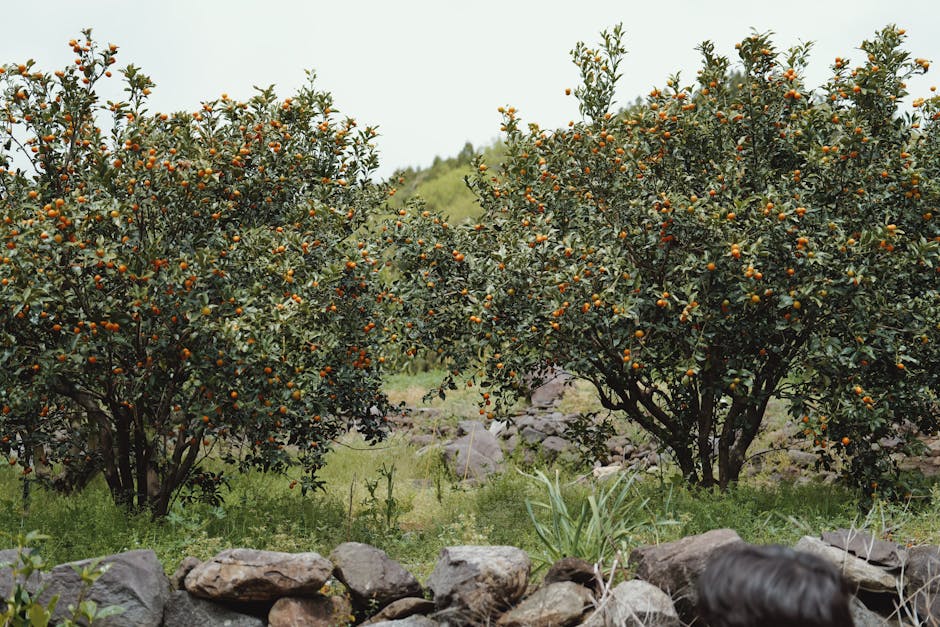
The coastal Olle walking trails circle the entire island in twenty-six stages, each one offering clifftop views, black lava beaches, and the kind of wind that clears your head of everything. I walked stage seven, from Jungmun to Seogwipo, and the landscape shifted every twenty minutes — tangerine orchards giving way to volcanic rock giving way to forest giving way to a coastline where the basalt columns of Jusangjeolli stood like organ pipes, the waves crashing against them in a rhythm that felt timed.
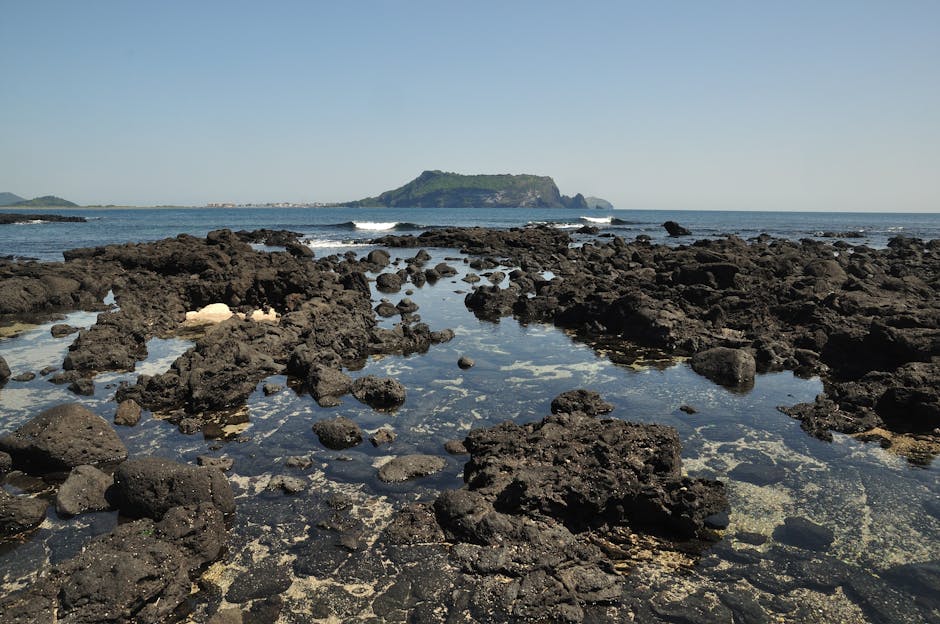
Seongsan Ilchulbong, the sunrise peak formed by an underwater eruption, rewards an early morning climb with a crater view and a horizon that glows orange. I went at five-thirty, joined by a stream of Korean hikers who were better equipped and faster than me, and reached the rim just as the sun broke the horizon. The crater below was green and bowl-shaped and impossibly perfect, and the sea stretched in every direction, and the wind was cold enough to make my eyes water, and I stayed until my fingers went numb because leaving felt like a failure of nerve.
The island’s interior is gentler — green tea fields in Osulloc that stretch in perfect rows toward the mountain, the Jeju Stone Park where the dol hareubang grandfather statues stand guard, and the small restaurants in Seogwipo where black pork barbecue is grilled over charcoal and served with Hallabong tangerine soju, which is exactly as good as it sounds and possibly better.
When to go: April to June for mild weather and wildflowers, or September to November for clear skies. Summer is warm but crowded with Korean holidaymakers. Winters are mild by Korean standards but windy.