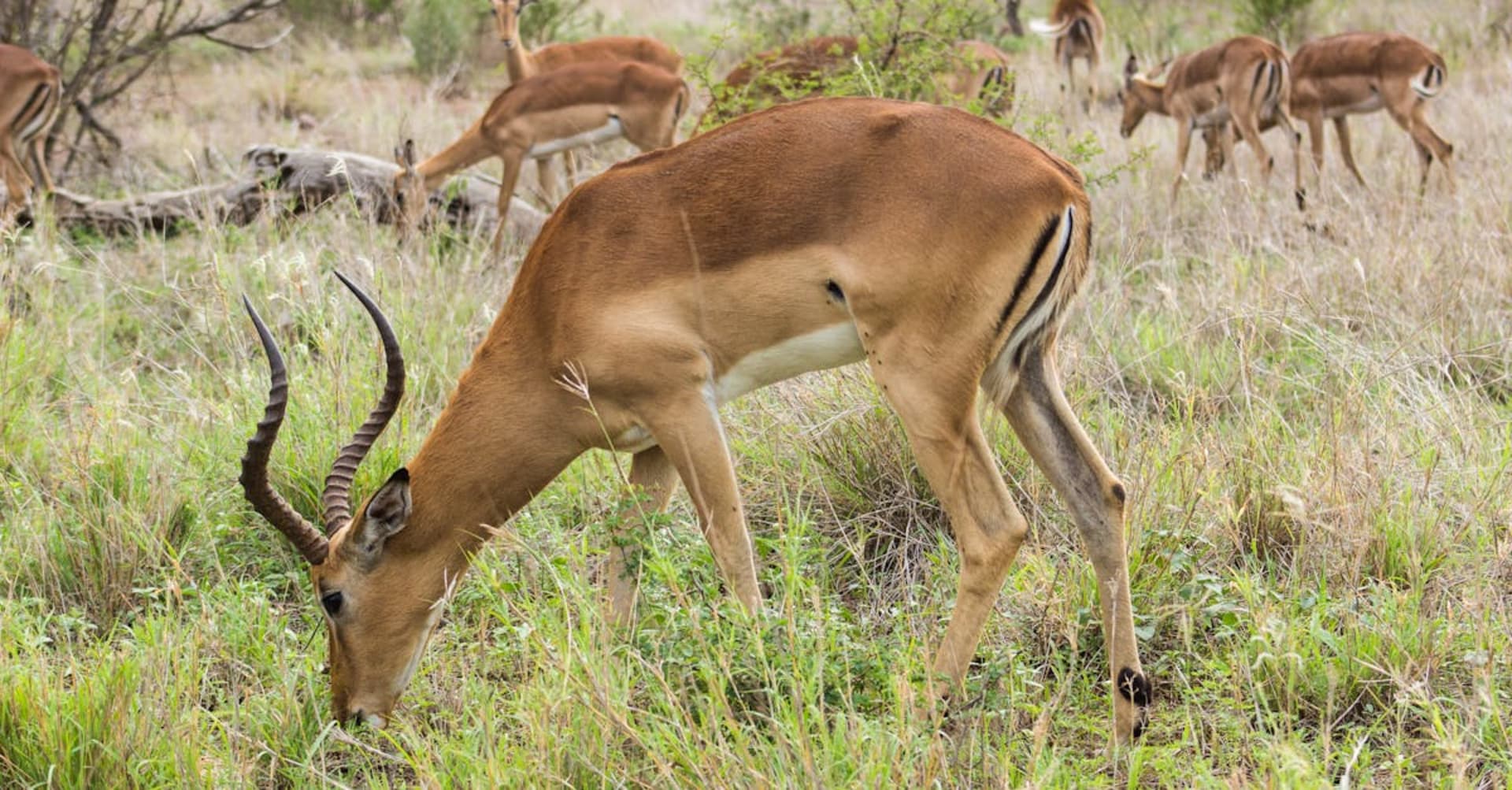
The alarm sounds at four-thirty in the morning and you dress in the dark, pulling on layers against a cold that seems impossible for Africa. By the time the camp gate lifts at dawn, the eastern sky has cracked open in bands of copper and rose, and the bushveld — that immense, flat, thorn-studded landscape that defines Kruger — is already alive with the day’s first movements. A francolin scurries across the road. Impala drift through the mopane scrub like tawny ghosts. Somewhere out there, in the tall grass or along a dry riverbed, the predators are finishing their night’s work. This is the promise that pulls you from sleep: not certainty, but possibility. Kruger National Park is nearly two million hectares of that promise, a wilderness so vast it could swallow Belgium and still have room for the Serengeti.
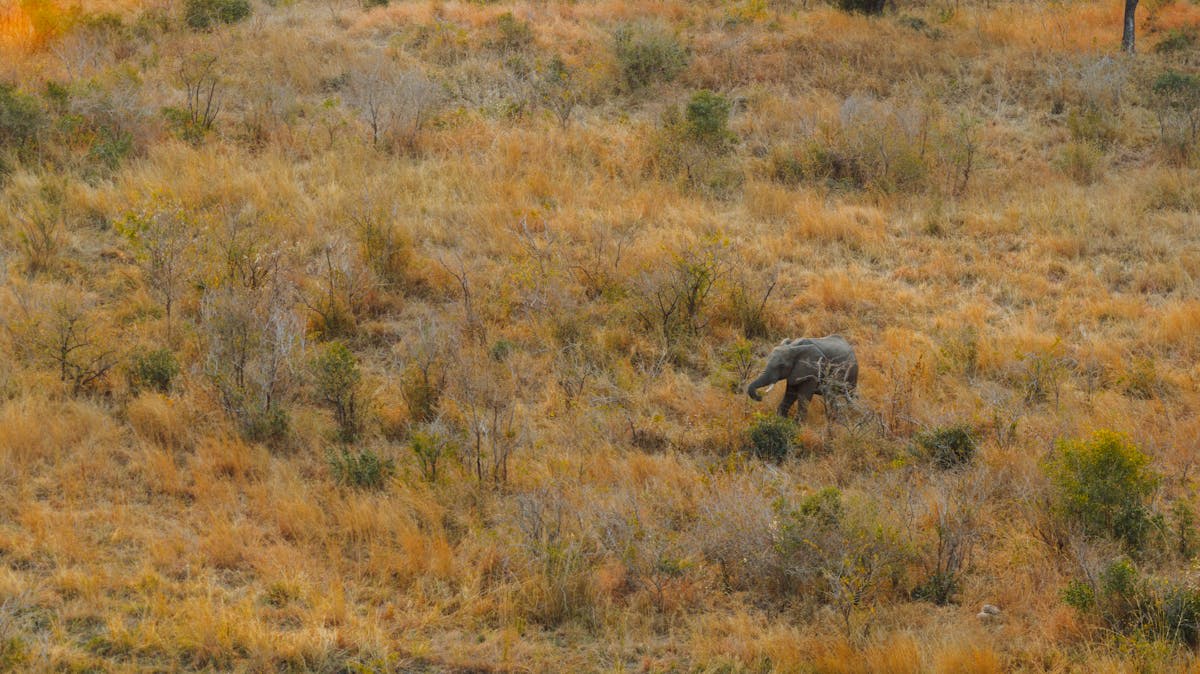
The Big Five are here — lion, leopard, elephant, rhino, and buffalo — a term coined not for their size but for the difficulty of hunting them on foot, now repurposed for the more benign pursuit of spotting them from a vehicle. But Kruger is far more than a checklist. It is an ecosystem of staggering completeness: over 500 bird species, 150 mammal species, and a web of predator-prey relationships that plays out in real time along every watercourse and at every watering hole. The southern section around Skukuza and Lower Sabie offers the densest concentrations. Here the Sabie River draws everything to its banks — hippos submerged to their ears, crocodiles so still they might be logs, and elephants that emerge from the tree line in silent procession, their presence announced only by the crack of a branch underfoot.
What distinguishes Kruger from East Africa’s great reserves is its accessibility. The self-drive safari is a Kruger institution — your own car, your own pace, a good map, and the discipline to drive slowly enough that you notice the flick of a leopard’s tail in a sausage tree. The paved and gravel roads are well-maintained, and the joy of self-driving is in the autonomy: you choose when to stop, how long to linger at a sighting, and whether to take the unpaved detour that might deliver nothing or everything. There is a particular thrill in rounding a bend and finding a pride of lions sprawled across the warm tarmac, utterly indifferent to your presence, close enough that you can hear them breathe.
The rest camps are Kruger’s other great democratic achievement. Satara, set in the lion-rich central grasslands, hums with the energy of a small town at dusk as visitors compare sightings over braai fires. Olifants perches on a cliff above the river, its viewpoint one of the great vistas in southern Africa. Letaba offers an elephant museum and a quietude that the busier camps lack. These are not luxury lodges — the rondavels are simple, the communal kitchens functional — but they place you inside the park, behind the fence, where the sounds of the bush replace the sounds of the world you left behind. Hyenas whooping in the dark. The distant rumble of a lion’s territorial call. The absolute, ringing silence between.
For those seeking something more exclusive, the private reserves along Kruger’s unfenced western boundary deliver a different experience entirely. Sabi Sands is legendary among safari cognoscenti — its leopard sightings are the most reliable on the continent, its lodges among the most refined, and its rangers among the most skilled. Guided drives here leave the roads entirely, tracking animals through the bush in open Land Rovers with a tracker perched on the front seat reading spoor in the dust. Walking safaris strip away even the vehicle, placing you on foot in the domain of animals that outweigh, outrun, and outfight you in every conceivable way. The fear is real. So is the aliveness.
The dawn game drive remains Kruger’s defining ritual. You return to camp by mid-morning, sun-warmed and dust-covered, with a mental catalogue of what the bush offered that day — a cheetah on a termite mound, a bataleur eagle riding a thermal, a herd of buffalo so vast they darkened the plain. You eat breakfast. You rest in the heat of midday. And then, as the shadows lengthen and the light turns gold, you go out again, because the bush does not perform on schedule, and neither do you want it to.
When to go: May to September (dry season) for the finest game viewing, as receding water forces animals to congregate at rivers and waterholes. June to August mornings are bitterly cold — bring layers and a warm hat. October offers dramatic thunderstorm skies and newborn animals.