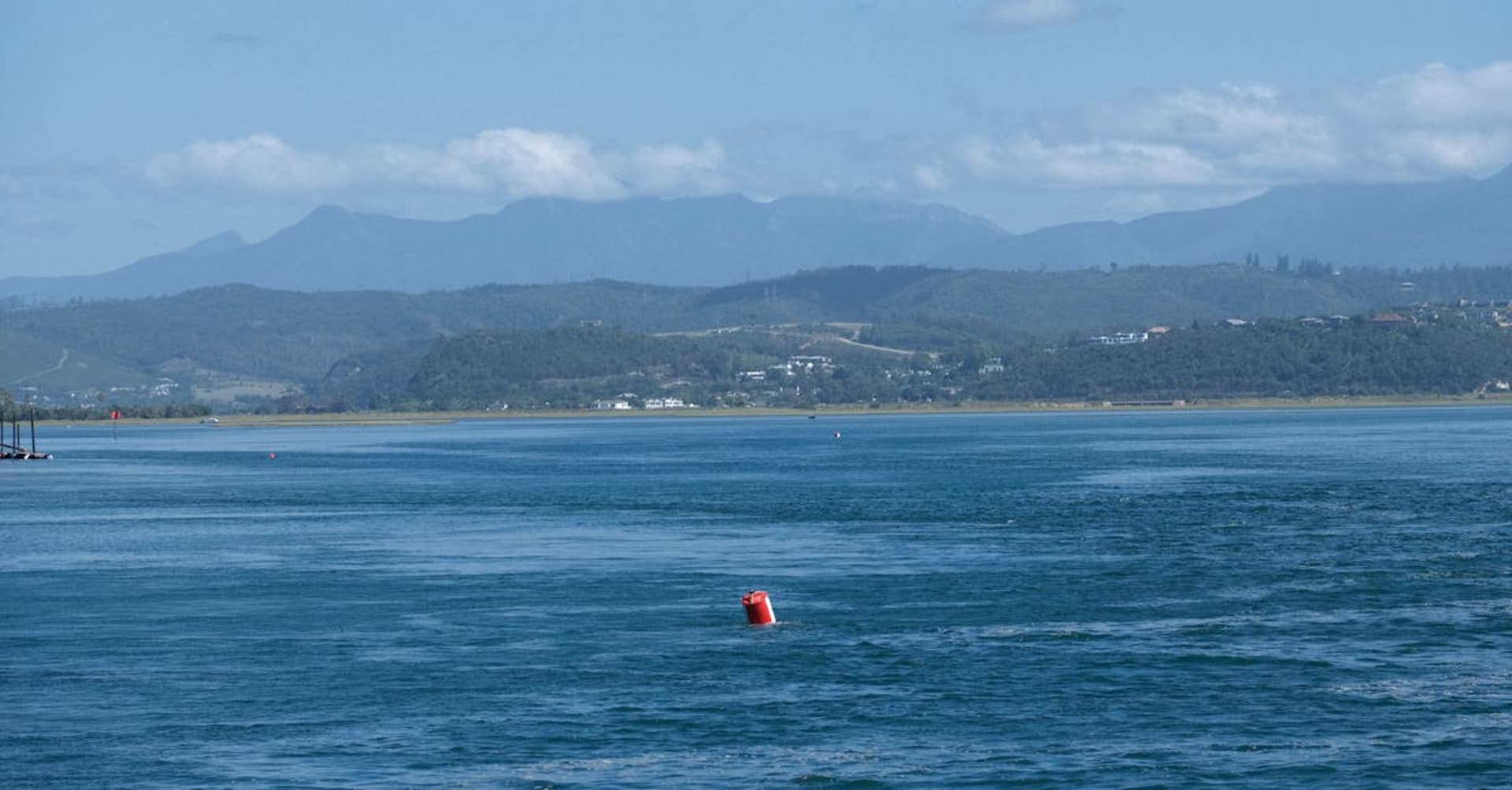
From the air, Knysna looks like a secret the landscape is trying to keep. The lagoon lies cupped between forested hills and the Indian Ocean, its entrance guarded by the Heads — two massive sandstone cliffs that rise like sentinels on either side of a narrow, turbulent channel. The ocean pushes through this gap twice a day with a force that has swallowed boats and rearranged sandbars, a reminder that beauty and danger have always shared an address along this coast. Stand on the eastern Head at sunset and watch the water below churn from jade to indigo, the foam lines tracing the collision of tidal forces, and you will understand why the Khoikhoi people who lived here long before European settlement regarded this place with reverence.
The lagoon itself is the antithesis of the channel that feeds it. Calm, warm, and impossibly turquoise, it stretches inland like a flooded valley, its shallows stippled with the beds where Knysna’s famous oysters grow fat on the mixing of fresh river water and salt sea. The oyster industry here is not a marketing invention — the conditions are genuinely, scientifically ideal, the nutrient-rich estuary producing a bivalve that is briny, creamy, and faintly sweet in a way that makes you suspicious of every oyster you have eaten elsewhere. Order a dozen at one of the restaurants along Thesen Island’s boardwalk, squeeze a lemon, and eat them with the lagoon glinting in front of you. This is not complicated. It does not need to be.
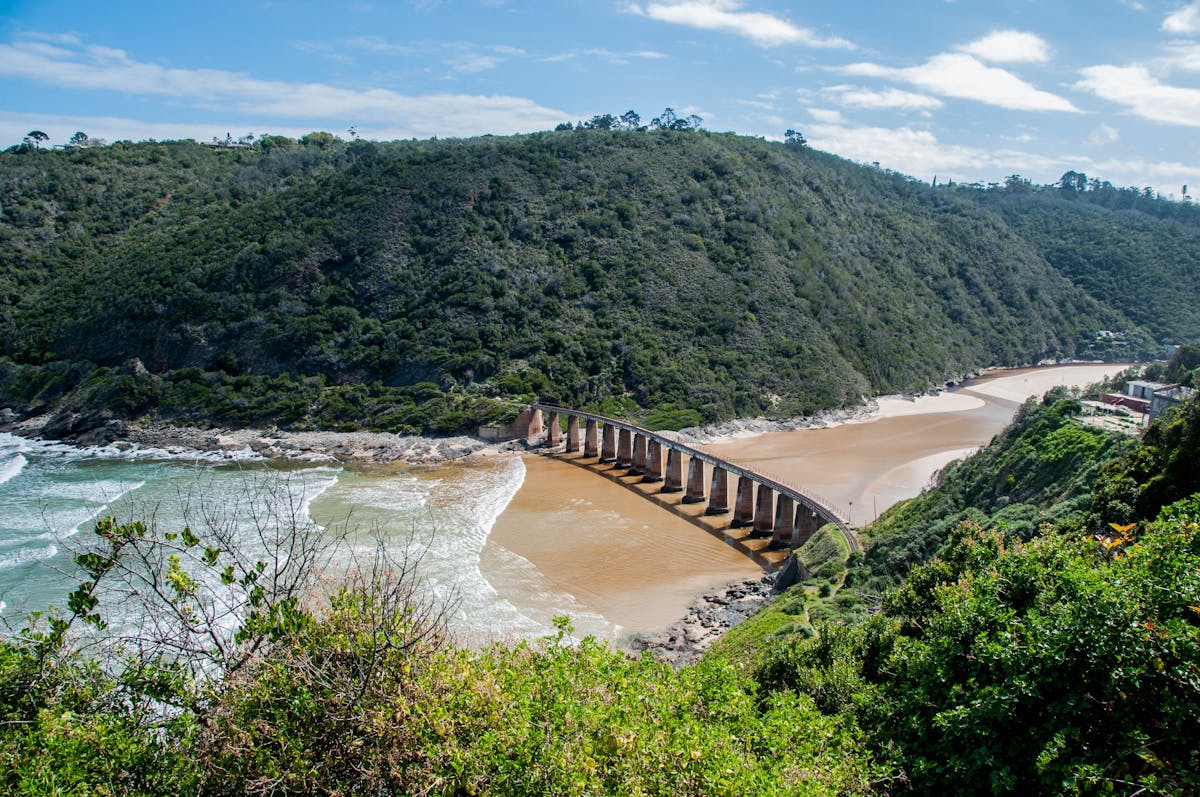
Beyond the waterfront, Knysna’s true cathedral waits. The Knysna Forest is one of the last great stands of Afromontane indigenous forest in southern Africa, a remnant of the vast woodland that once blanketed the region before logging and settlement reduced it to fragments. Walking beneath its canopy is like entering a different century. Outeniqua yellowwoods rise thirty meters, their trunks mossed and buttressed like columns in a Gothic nave. Stinkwood and ironwood crowd the understory. The light that reaches the forest floor is green, diffuse, ecclesiastical. Loeries flash crimson between branches. The air smells of damp earth and decomposing leaves and something older, something fungal and ancient that you cannot name but recognize immediately as the smell of time.
The Elephant Walk trail threads through this forest, named for the great herds that once moved through these trees in numbers that shook the ground. The Knysna elephants are now reduced to a mere handful — perhaps only one confirmed individual — their near-disappearance a quiet tragedy that the forest itself seems to mourn. You will not see them. Almost nobody does. But you will see their paths, worn smooth by generations of passage, and you will feel the particular melancholy of walking through a landscape shaped by creatures that are essentially gone.
The Featherbed Nature Reserve occupies the western Head and is accessible only by ferry, a short crossing that deposits you in a pristine pocket of coastal fynbos and milkwood forest. A guided walk or 4x4 trail leads to viewpoints where the lagoon, the Heads, and the open ocean arrange themselves into one of those views that makes the word “scenic” feel embarrassingly inadequate. Below the cliffs, the Featherbed Cave holds midden deposits left by the Khoikhoi, a reminder that humans have been stopping to admire this view for thousands of years.
Knysna sits at the heart of the Garden Route, and it functions as both the region’s jewel and its natural resting point — the place where travellers who intended to pass through find themselves staying an extra night, then two, then rearranging their itinerary entirely. The town itself is unhurried, its waterfront lined with craft breweries and art galleries, its restaurants serving the lagoon’s bounty with a simplicity that reflects confidence rather than laziness. In July, the Knysna Oyster Festival turns the town into a ten-day celebration of food, sport, and the kind of convivial excess that small towns do better than cities ever will.
When to go: Knysna’s mild, maritime climate makes it a year-round destination. December to February brings the warmest lagoon swimming and the longest days. July delivers the Oyster Festival and winter greenery. October is peak whale watching season from the Heads, when southern right whales pass through the bay close enough to hear them breathe.