
There is a moment — it might come on your first morning, or it might come on your third — when you are walking the cliff path above Walker Bay, coffee in hand, thinking about nothing in particular, and the ocean forty meters below you simply detonates. A forty-ton southern right whale launches from the water in a full breach, hangs for an impossible instant against the sky, and crashes back in an explosion of white spray that you can feel on your face. No boat. No binoculars. No guide tapping you on the shoulder. Just you, the cliff, and a creature the size of a bus reminding you what awe actually feels like.
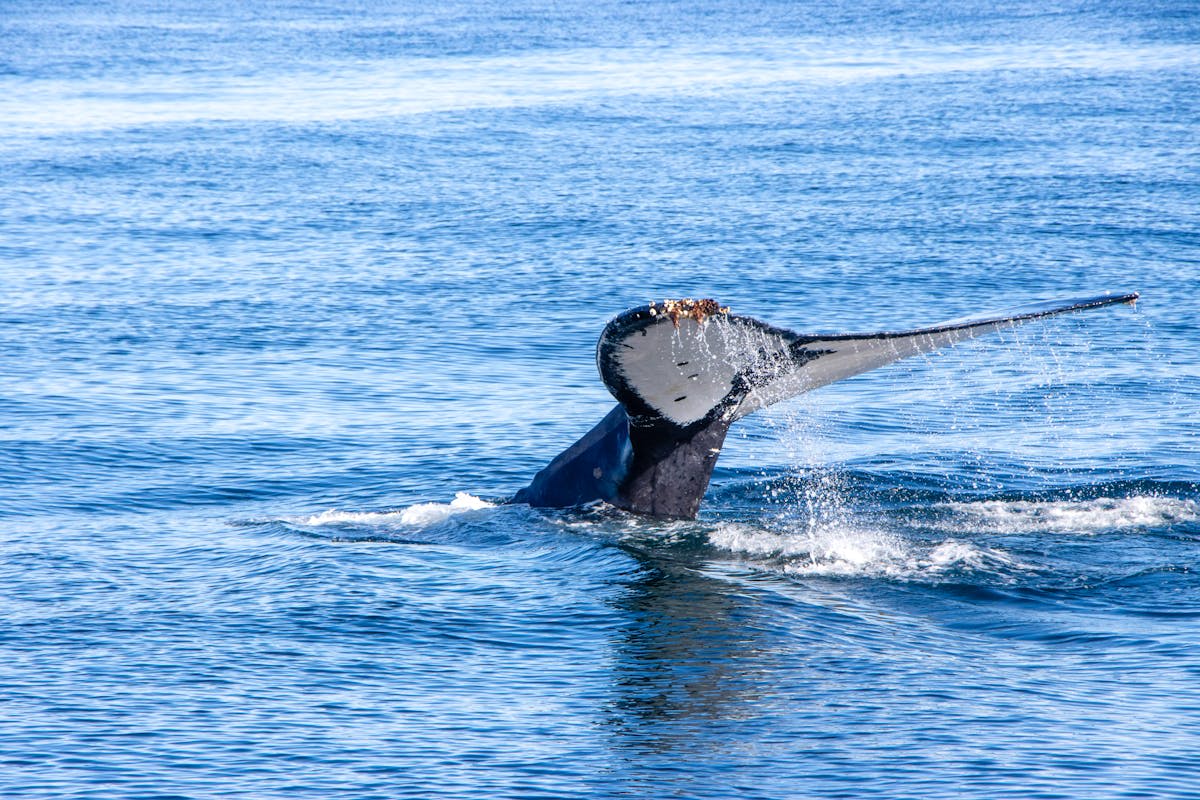
This is Hermanus, and this is why it exists in the global imagination. From June to November, southern right whales migrate from their Antarctic feeding grounds to the sheltered waters of Walker Bay to calve and nurse, and they come so close to shore that the town has become, without exaggeration, the finest land-based whale watching destination on earth. The cliff-top walking path becomes a grandstand. Mothers roll on their backs while calves practice their first tentative breaches. Males compete in slow-motion displays of power. The town employs the world’s only whale crier — a man who patrols the streets blowing a kelp horn to announce sightings, a job description that sounds absurd until you find yourself running toward the cliffs at his signal, along with half the town.
But to reduce Hermanus to its whales would be to miss the quieter marvels that sustain the town between migrations. The Cliff Path itself is a twelve-kilometer walk of extraordinary beauty, winding above rocky coves where the sea churns turquoise and cobalt, past natural tidal pools and through patches of fynbos — that impossibly diverse shrubland unique to the Western Cape, part of the Cape Floral Kingdom, the smallest yet richest of the world’s six floral kingdoms. In spring, the fynbos erupts in proteas, ericas, and restios, a botanical riot that makes the cliff walk feel like traversing a living gallery.
Behind the town, the mountains part to reveal the Hemel-en-Aarde Valley — the name means “Heaven and Earth,” and for once the hyperbole is earned. This cool-climate valley, fed by ocean breezes funneling through the gap in the hills, has emerged as one of South Africa’s most celebrated wine regions. The pinot noirs are luminous, the chardonnays are taut and mineral, and the winemakers speak of terroir with the quiet confidence of people who know they are making something that will be talked about for decades. A tasting at Hamilton Russell, Bouchard Finlayson, or Creation is not merely a wine experience but a lesson in how landscape becomes flavor.
Grotto Beach unfolds east of town, a long crescent of white sand backed by milkwood thickets, its waters cold enough to remind you that the Atlantic and Indian Oceans are arguing about jurisdiction somewhere nearby. The Fernkloof Nature Reserve rises above Hermanus into the Kleinrivier Mountains, its hiking trails threading through over 1,600 plant species in an area smaller than a mid-sized farm — a density of botanical life that defies comprehension.
There is a rhythm to Hermanus that rewards slowness. Morning coffee on the cliff path. A long lunch in the Hemel-en-Aarde with a glass of something pale and crisp. An afternoon walk through the fynbos, identifying proteas with a field guide borrowed from the guesthouse. And then, as the light turns gold and the bay goes glassy, a final check from the cliffs — because the whales are still there, still breaching, still indifferent to their audience, still magnificent.
When to go: July to November for whale season, with September and October the undisputed peak — the bay fills with mothers, calves, and competing males. December to February brings warm beach days and the wine harvest in Hemel-en-Aarde, a different but equally compelling reason to visit.