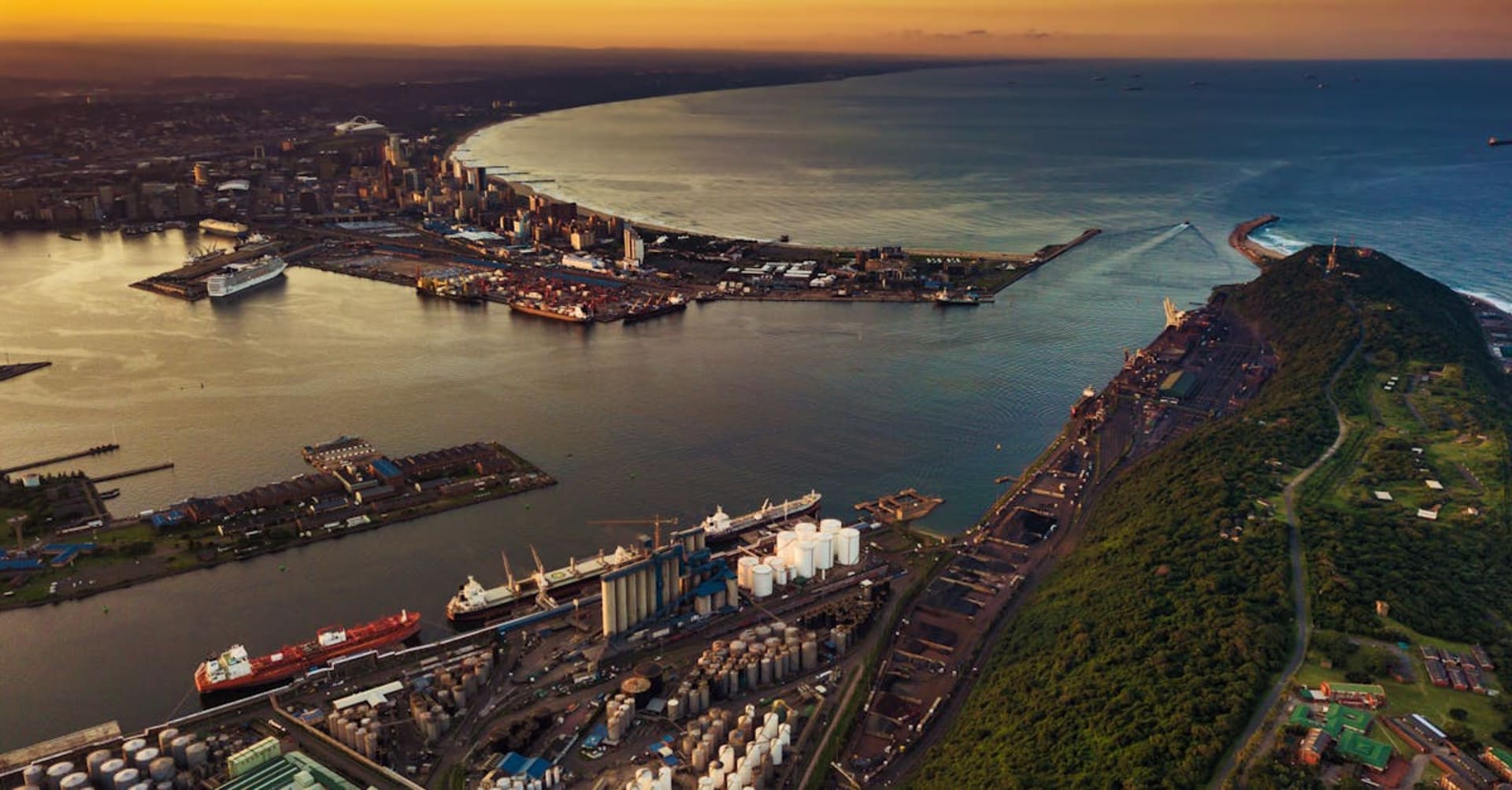
There is a warmth to Durban that has nothing to do with latitude, though latitude certainly helps. The Mozambique Current sweeps down from the tropics and wraps this city in bathwater-warm seas, the kind that let you wade in at dawn in midwinter without a wetsuit, without a second thought. It is this current — ancient, reliable, indifferent to the political dramas playing out on shore — that sets Durban apart from every other city on the South African coast. Where Cape Town shivers in the Benguela’s cold grip, Durban perspires, loosens its collar, and orders another round.
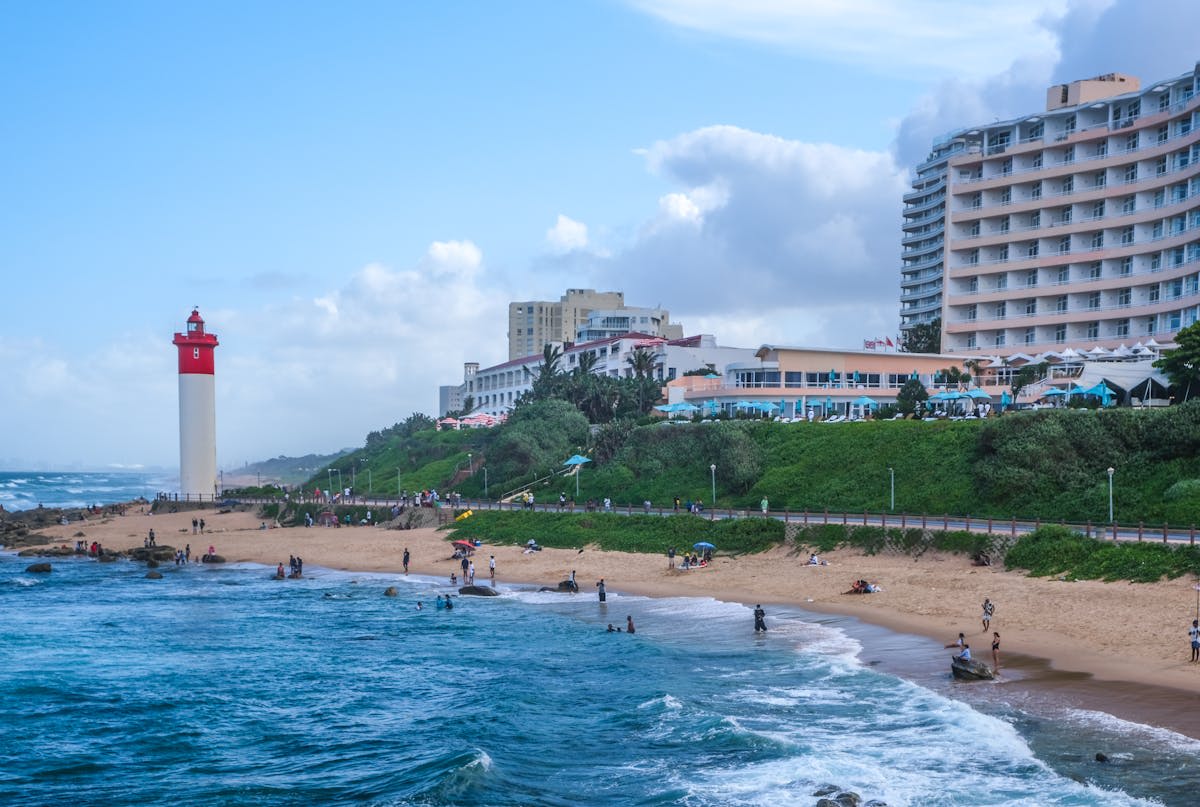
The Golden Mile is the city’s signature gesture: a long, generous sweep of beachfront promenade stretching from the Suncoast precinct south to uShaka Marine World, its art deco architecture fading gracefully into the subtropical haze. Surfers paddle out at dawn beneath the pier at North Beach, riding swells that have traveled uninterrupted from the Mascarene Islands. Rickshaw pullers in elaborate beaded headdresses pose for photographs near the beachfront hotels, a tradition that dates to the 1890s and now exists in that ambiguous space between cultural preservation and tourist theatre. Along the promenade, joggers and fishermen share the concrete path, and the smell of salt air mingles with something spicier drifting from the streets behind.
That spice is the key to Durban’s soul. The city is home to the largest Indian diaspora community in Africa, descendants of indentured laborers brought to work the sugar cane fields in the nineteenth century, and they have built a culinary tradition that rivals anything on the subcontinent. Bunny chow — a hollowed-out quarter loaf of white bread filled with fragrant curry, its soft interior soaking up the gravy — was born here, invented by Indian shopkeepers who needed a way to serve takeaway food to Black workers denied entry to their restaurants under apartheid law. A dish born of injustice, now beloved by everyone. The best versions are found not in restaurants with tablecloths but in the unassuming takeaways around Victoria Street Market, where the curry is fierce and the bread is fresh and nobody asks how you are eating it. With your hands, obviously.
uShaka Marine World anchors the southern end of the beachfront, its aquarium built into the hull of a replica shipwreck, a fittingly theatrical home for the dolphins, sharks, and sea turtles of the Indian Ocean. Children press their faces to the glass. Adults do the same but pretend they are reading the informational placards.
Beyond the beach, Durban’s cultural strata reveal themselves slowly. The KwaMuhle Museum occupies the former offices of the Native Administration Department, the very building where the bureaucratic machinery of apartheid ground against Durban’s Black population, and its exhibitions are as uncomfortable as they are essential. In Chatsworth, the Hare Krishna Temple of Understanding rises like an improbable lotus, one of the largest such temples outside India, testament to the spiritual life the Indian community sustained through decades of displacement. The Valley of a Thousand Hills unfolds west of the city, its green ridges tumbling toward the Umgeni River gorge, dotted with traditional Zulu homesteads where the rhythms of song, dance, and storytelling predate the port city by centuries. This is KwaZulu-Natal, after all — the heartland of the Zulu nation — and Durban is merely its most cosmopolitan expression.
The city does not compete with Cape Town for beauty or with Johannesburg for ambition. It competes with neither. It simply exists in its own humid, generous, curry-scented register, a place where Africa and Asia have been talking to each other for so long they have forgotten this was ever unusual.
When to go: Year-round warmth makes Durban a perennial destination, but April to September brings drier days and gentler humidity. July delivers the Durban July horse race — less a sporting event than the country’s biggest social spectacle, where the hats matter more than the horses.