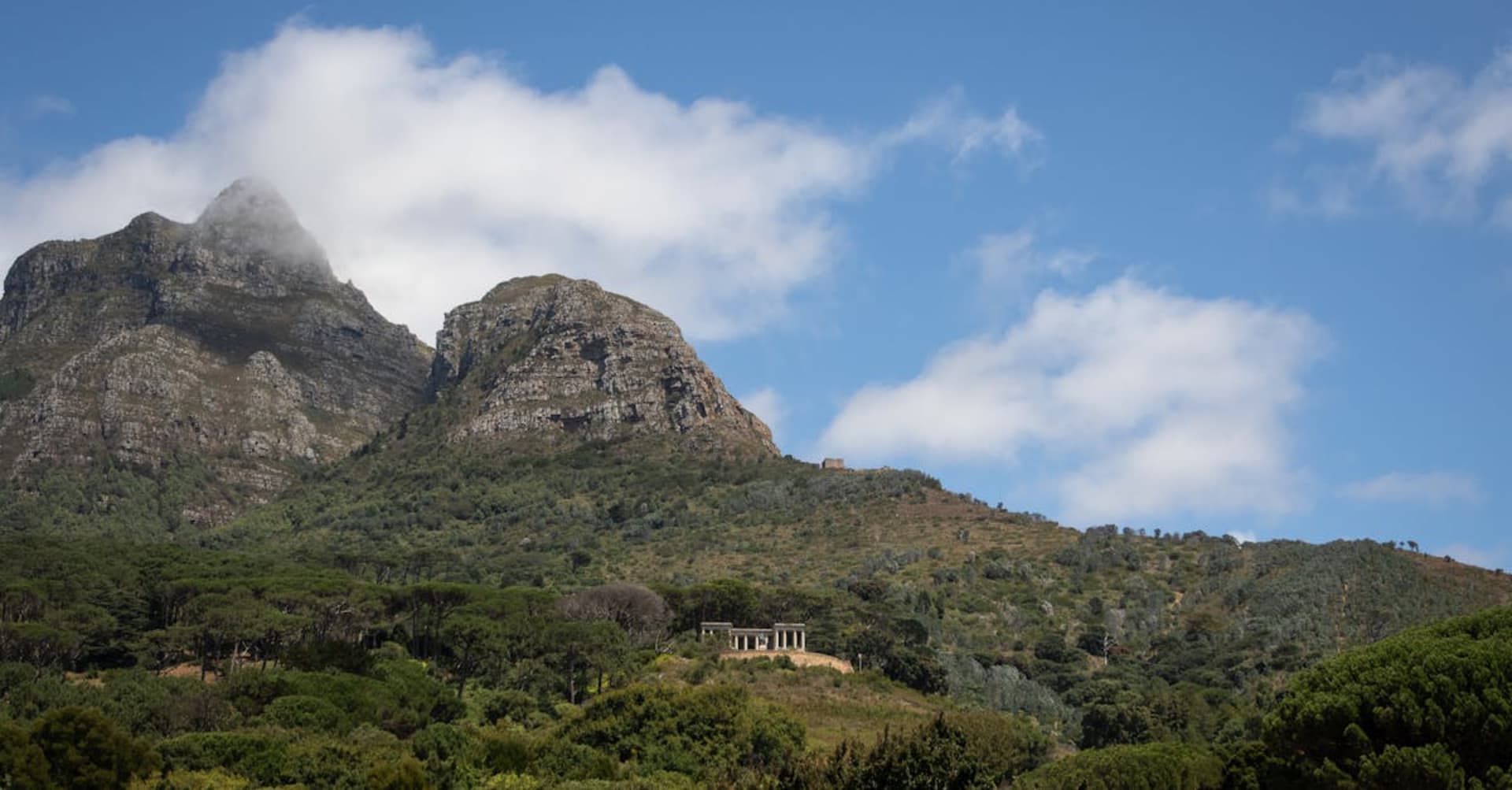
The Zulu called them uKhahlamba — the barrier of spears — and standing beneath them for the first time, the name feels less like metaphor than description. The Drakensberg rise from the green midlands of KwaZulu-Natal in a wall of basalt so sheer, so abrupt, that they seem less formed by erosion than placed there by force. The escarpment runs for two hundred kilometers along the border with Lesotho, its peaks exceeding three thousand meters, its cliff faces dropping into valleys where rivers have spent millennia carving gorges of extraordinary depth and beauty. This is not the gentle topography of a national park designed for casual enjoyment. This is a mountain range that demands something of you — stamina, respect, proper boots — and gives back more than you thought a landscape could.
The Amphitheatre in the Royal Natal National Park is the formation that stops you speaking. A crescent cliff face five kilometers long and five hundred meters high, it catches the first light of morning in a display of color that moves through ash, gold, copper, and finally a blazing white that makes the rock appear to generate its own illumination. The Tugela Falls drop from its lip in five cascading steps totaling 948 meters — the second-highest waterfall on earth — though in the dry season they thin to silver threads that the wind tears apart before they reach the valley floor. In summer, after the rains, they roar.
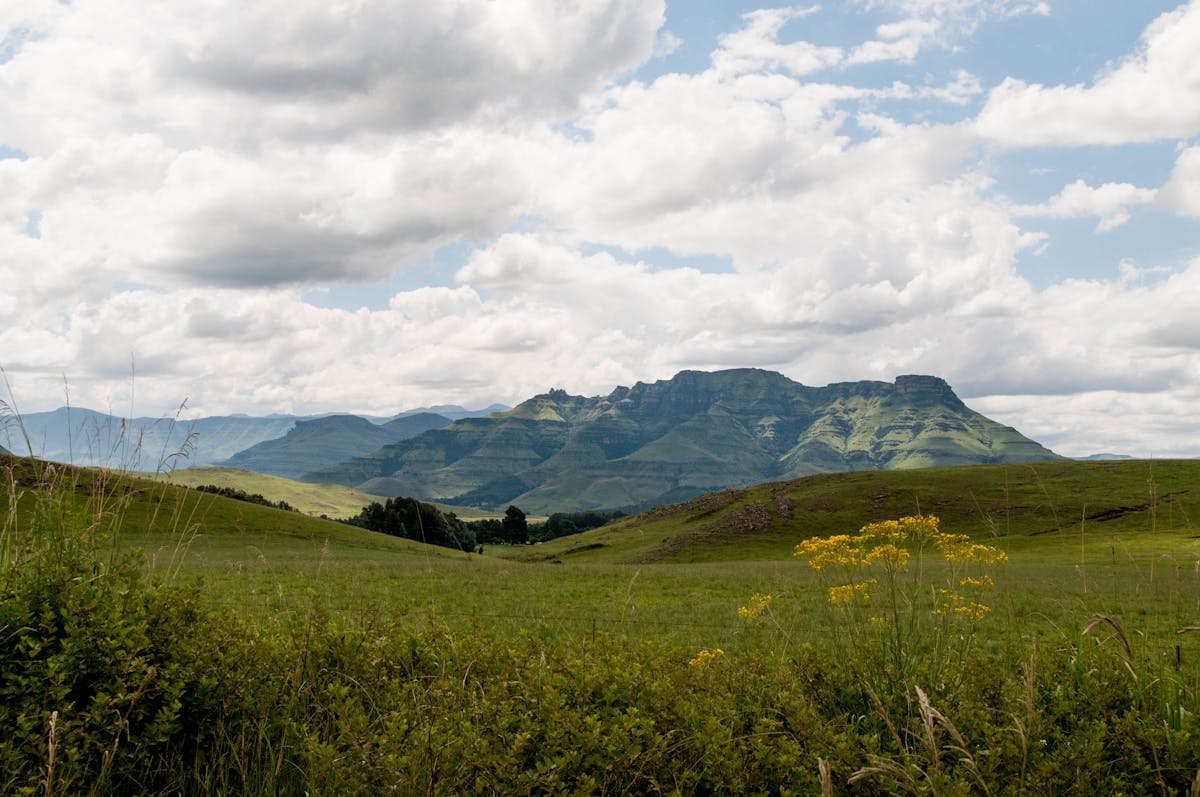
The hiking is why most people come, and the range offers it at every level of ambition. The Tugela Gorge trail from Royal Natal winds along the river through boulder fields and indigenous forest before delivering you to the base of the falls, where the spray creates its own weather and the scale of the Amphitheatre above reduces you to a speck against stone. Cathedral Peak, a freestanding pinnacle that requires a scramble to summit, rewards with a three-hundred-and-sixty-degree panorama of the entire northern Drakensberg — ridge upon ridge receding into a blue haze that might be Lesotho or might be the edge of the visible world.
Giant’s Castle in the central Berg offers gentler terrain and a different reward. The grasslands here are the domain of the endangered bearded vulture — the lammergeier — and a hide near the summit provides one of the continent’s great birding experiences, the massive birds arriving on thermals with a wingspan that blocks the sun. The reserve’s valleys are also home to some of the finest San rock art in existence. The paintings — of eland hunts, of rain dances, of figures in trance — are scattered across sheltered overhangs throughout the Drakensberg, some dating back three thousand years. At Main Caves in Giant’s Castle, a guided walk brings you face to face with a gallery of over five hundred individual images, their ochre and white pigments still vivid against the sandstone, the delicacy of their execution suggesting artists who observed the natural world with an attention that modern eyes struggle to match.
For the truly committed, the Grand Traverse represents one of Africa’s great multi-day expeditions — a week-long route along the escarpment top, sleeping in caves and crossing passes above three thousand meters, where the weather can shift from sunburn to snow in the space of an afternoon. The isolation is total. The terrain is unforgiving. And the views — of the KwaZulu-Natal lowlands shimmering in heat below, of Lesotho’s highland plateaus stretching west, of thunderstorms building in columns of purple and black — belong to a scale that only altitude and remoteness can provide.
But the Drakensberg is not only for the hardy. The foothills offer horse riding through valleys of protea and grassland. The trout streams that descend from the escarpment are among the finest fly-fishing waters in southern Africa. And the mountain resorts — some dating to the 1930s, with their wood-paneled lounges and their fireplaces and their views of peaks that have not changed since the San painted them — provide a comfort that earns its keep after a day on the trails.
What stays with you, leaving the Drakensberg, is the silence. Not the absence of sound — the birds call, the rivers run, the wind moves through the grass — but the absence of the human noise that fills every other landscape. Here the mountains are too large, too ancient, too indifferent to human activity to permit the illusion that we are anything other than visitors. The barrier of spears does not invite. It permits. And in that permission is a kind of freedom that flatter, gentler places cannot offer.
When to go: March to May for clear autumn skies, golden grasslands, and fewer hikers on the trails. Winter (June to August) brings snow on the peaks and crystalline visibility that makes the escarpment look close enough to touch. Summer (October to February) is warmest for hiking but brings powerful afternoon thunderstorms — start early and be off exposed ridges by noon.