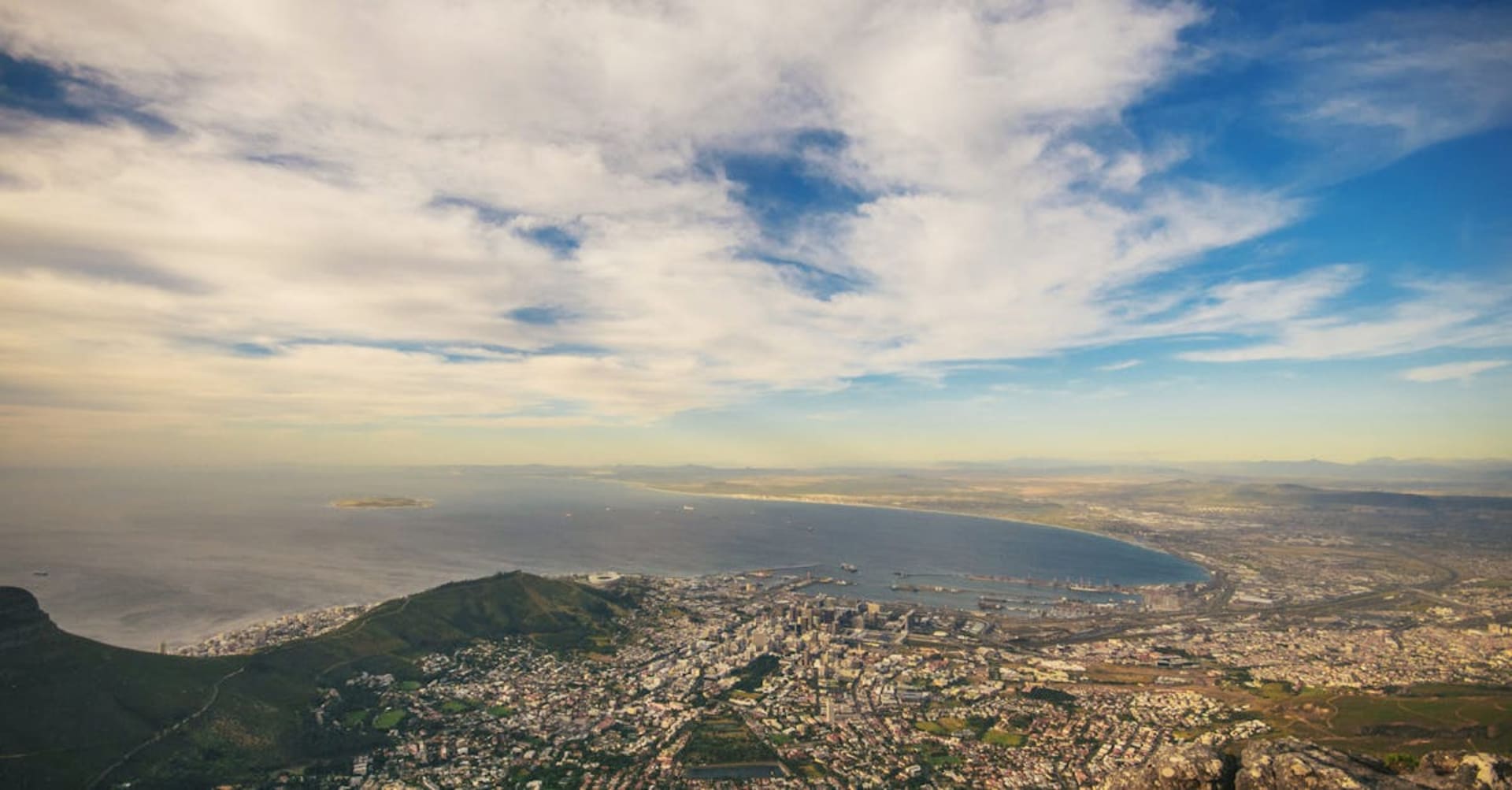
There is a moment, arriving in Cape Town by air, when the plane banks and Table Mountain fills the window — not as a distant landmark but as a geological fact, a three-kilometer wall of sandstone older than the Himalayas, its summit shorn flat as though some ancient hand took a blade to the continent’s edge. It presides over everything here. The city does not exist beside the mountain; it exists because of it. The cable car ascends through shifting clouds and deposits you on a plateau of wind-sculpted fynbos, where dassies sun themselves on warm rock and the view unspools in every direction — the Atlantic to the west burning silver, the Indian Ocean to the east a deeper shade of blue, and between them a city that has learned to build its life in the shadow of something far older than itself.
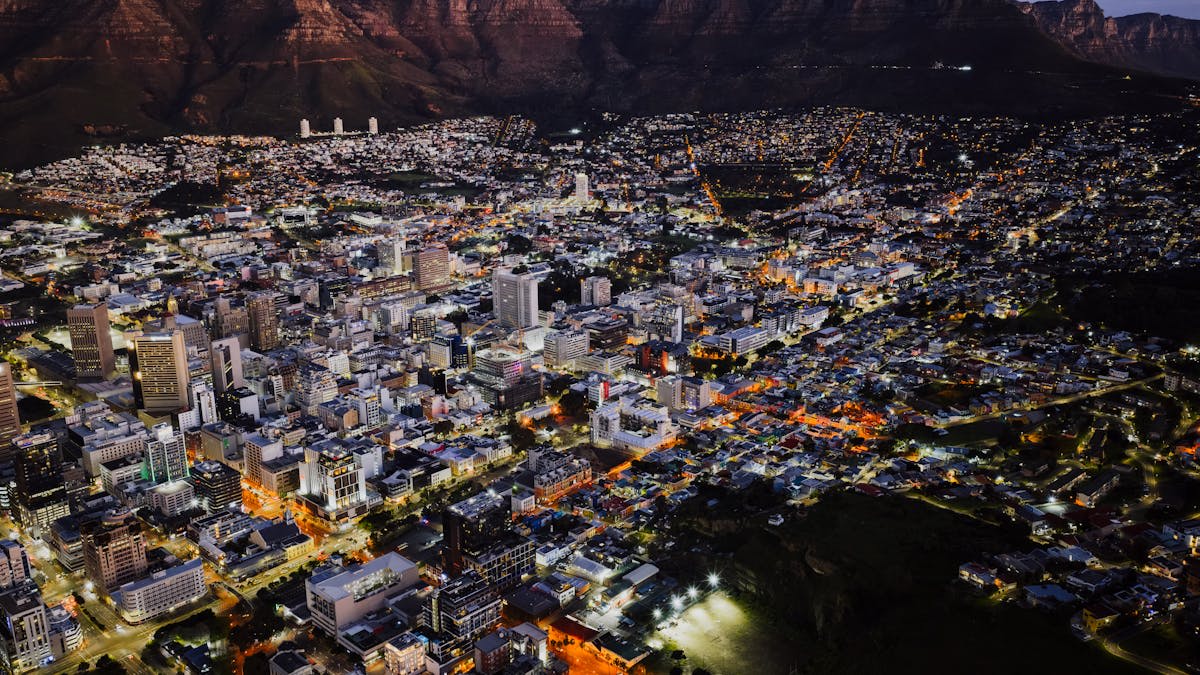
Descend into the city and the mountain recedes, replaced by the human stories layered into every street. Bo-Kaap climbs the lower slopes of Signal Hill in a cascade of color — lime green, cobalt blue, saffron yellow — each house a quiet act of reclamation by the Cape Malay community whose ancestors were brought here as slaves and who painted their homes in defiance of colonial uniformity. The call to prayer drifts from the Auwal Mosque, the oldest in South Africa, and the air carries the scent of bobotie and koesisters from kitchens where recipes have survived three centuries intact. Walking these steep cobblestone lanes in the early morning, before the tour buses arrive, is to feel the weight of a history that Cape Town neither hides nor has fully reconciled.
The V&A Waterfront offers a different register entirely. Built around a working harbor where seals bark on the docks and fishing boats still unload their catch, it houses the extraordinary Zeitz MOCAA — a contemporary African art museum carved from the concrete cylinders of a decommissioned grain silo, its interior cathedral-like and luminous. Ferries depart from here to Robben Island, where the limestone quarry still glares white under the sun and Mandela’s cell measures precisely the length of a man lying down. The contrast is deliberate and unavoidable: Cape Town has always been a city of proximity, where opulence and suffering share the same postcode.
South along the peninsula, the city gives way to wildness. Camps Bay stretches its white sand beneath the Twelve Apostles, a row of granite buttresses that catch the last light of afternoon and hold it until the beach bars fill. The coastal road winds past Llandudno, hidden and windswept, to Hout Bay, where the fish market sells snoek so fresh it still smells of the Atlantic. Further still, at Boulders Beach near Simon’s Town, African penguins waddle between sunbathers with the oblivious confidence of creatures who were here first — which, in fairness, they were. The colony thrives in this improbable suburban setting, their braying calls carrying over the warm granite boulders that give the beach its name.
The road ends, or rather the continent does, at Cape Point. Here the Cape of Good Hope juts into the convergence of two oceans, and the old lighthouse perches on a cliff where baboons patrol the parking lot with the proprietary air of toll collectors. The wind at the point is an adversary — relentless, salt-laden, strong enough to lean into. Below, the sea churns in colors that shift from jade to ink depending on the clouds, and somewhere in the distance, though you cannot see it, Antarctica waits.
Back in the city, Long Street pulses with a different energy — backpacker bars and vintage shops, live jazz leaking from upstairs venues, the smell of bunny chow and craft beer mingling on the evening air. Cape Town’s food scene has evolved into one of the continent’s finest, driven by chefs who draw on Malay, Indian, and indigenous traditions while raiding the extraordinary local larder: Karoo lamb, West Coast oysters, line-caught yellowtail, wine from estates twenty minutes away in Constantia, the oldest wine-producing region in the Southern Hemisphere. A meal here is never just a meal. It is an argument for the city’s future, made in flavors.
When to go: November to March for summer warmth and long golden days. February to April for calmer winds, harvest season in the winelands, and the particular quality of autumn light that turns Table Mountain amber at dusk.