Most na Soči
"Two rivers meet here and somehow argue their way into an even more improbable color."
A small town where two rivers meet in a Y-shaped turquoise lake, holding one of the oldest prehistoric burial sites in Europe on the hill above it.
I’d driven past the turnoff for Most na Soči twice before actually stopping, mostly because the name — “bridge on the Soča” — sounded too literal to promise anything interesting. Then a Slovenian friend in Ljubljana told me it was where the Soča and the Idrijca rivers meet, forming a lake shaped like the letter Y, and that the color where the two currents mix is somehow more intense than either river alone. That was enough to turn the car around on my next pass through the valley.
Where Two Rivers Refuse to Blend Quietly
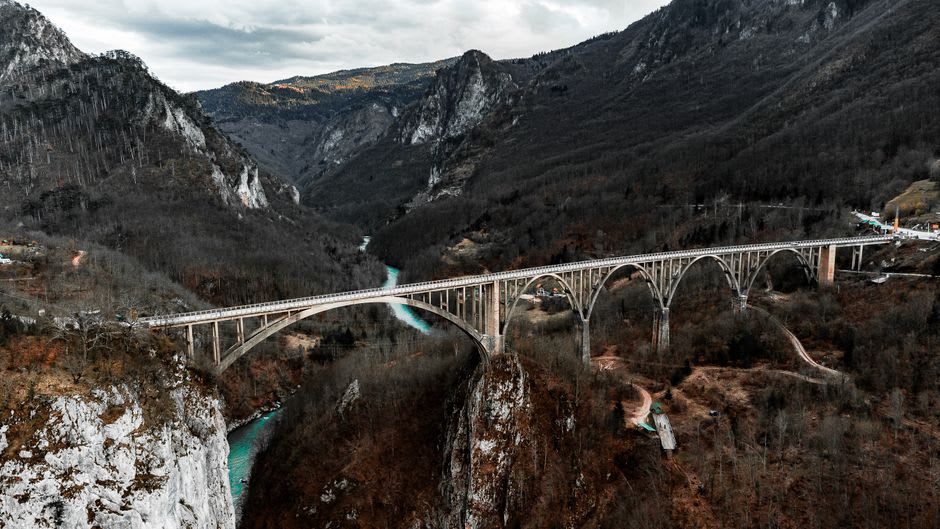
Standing on the old railway bridge above the confluence, you can actually see the seam between the two waters for a moment before they merge — the Soča slightly paler, the Idrijca a touch darker green, running side by side in the same lakebed like two lanes of traffic before finally mixing a hundred meters downstream. It’s a small thing, geologically speaking, but it’s the kind of detail that makes you stand on a bridge for twenty minutes longer than planned, waiting for the light to shift and show you the line again.
A Graveyard Older Than Most Countries
On the hill above town sits Most na Soči’s less obvious draw: an Iron Age necropolis, one of the largest and oldest prehistoric burial grounds uncovered in this part of Europe, with graves dating back nearly three thousand years. There’s a small museum with bronze jewelry and pottery pulled from the site, laid out without much fanfare in glass cases that a local caretaker unlocked for us despite it technically being past closing time. Lia spent longer than I expected studying a case of tiny bronze fibulae — cloak pins, essentially — turning to me and saying that someone three thousand years ago cared exactly as much about how their clothes looked as we do now.
An Afternoon by the Water
We ended up renting two paddleboards from a stand near the bridge and spent an hour drifting on the lake itself, which is calmer and warmer than the river sections further upstream since the confluence slows the current into something closer to a proper lake. Kids from the village were jumping off the old bridge into the water while their parents watched from café tables nearby, entirely unbothered, the whole scene feeling like a summer afternoon that had been happening in exactly this way for decades.
When to go: May through September for swimming and paddleboarding on the lake. The museum keeps modest hours, so confirm opening times in the shoulder season before making the detour.
Keep exploring
More from Slovenia
 slovenia
 Mostnica Gorge
A narrow limestone slot carved by a glacial stream at the gateway to the Voje Valley, quiet enough that the loudest thing in it is the water.
Explore slovenia
 Nova Gorica
A planned socialist-era border town built to answer Italy's Gorizia across the frontier, now with a shared central square that erases the line between the two countries entirely.
Explore slovenia
 Novo Mesto
Dolenjska's low-key regional capital wraps around a horseshoe bend of the Krka River beneath a baroque cathedral, functioning as an unpretentious working town rather than a tourist set piece.
Explore slovenia
 National and University Library
Jože Plečnik's masterpiece, a brooding brick-and-stone building where dark reading rooms and a theatrical staircase turn a library into architecture worth a detour.
Explore slovenia
 Ojstrica Viewpoint
A narrow rock ledge above Lake Bled that delivers the single most photographed angle in Slovenia, reached by a scramble steep enough to keep most of the crowd at the bottom.
Explore slovenia
 Okrešelj
A glacial cirque high beneath the Kamnik-Savinja Alps' sheer south wall, reached only on foot, where a small mountain hut sits surrounded by some of the most dramatic rock faces in the range.
Explore