The Island That Refused to Hurry
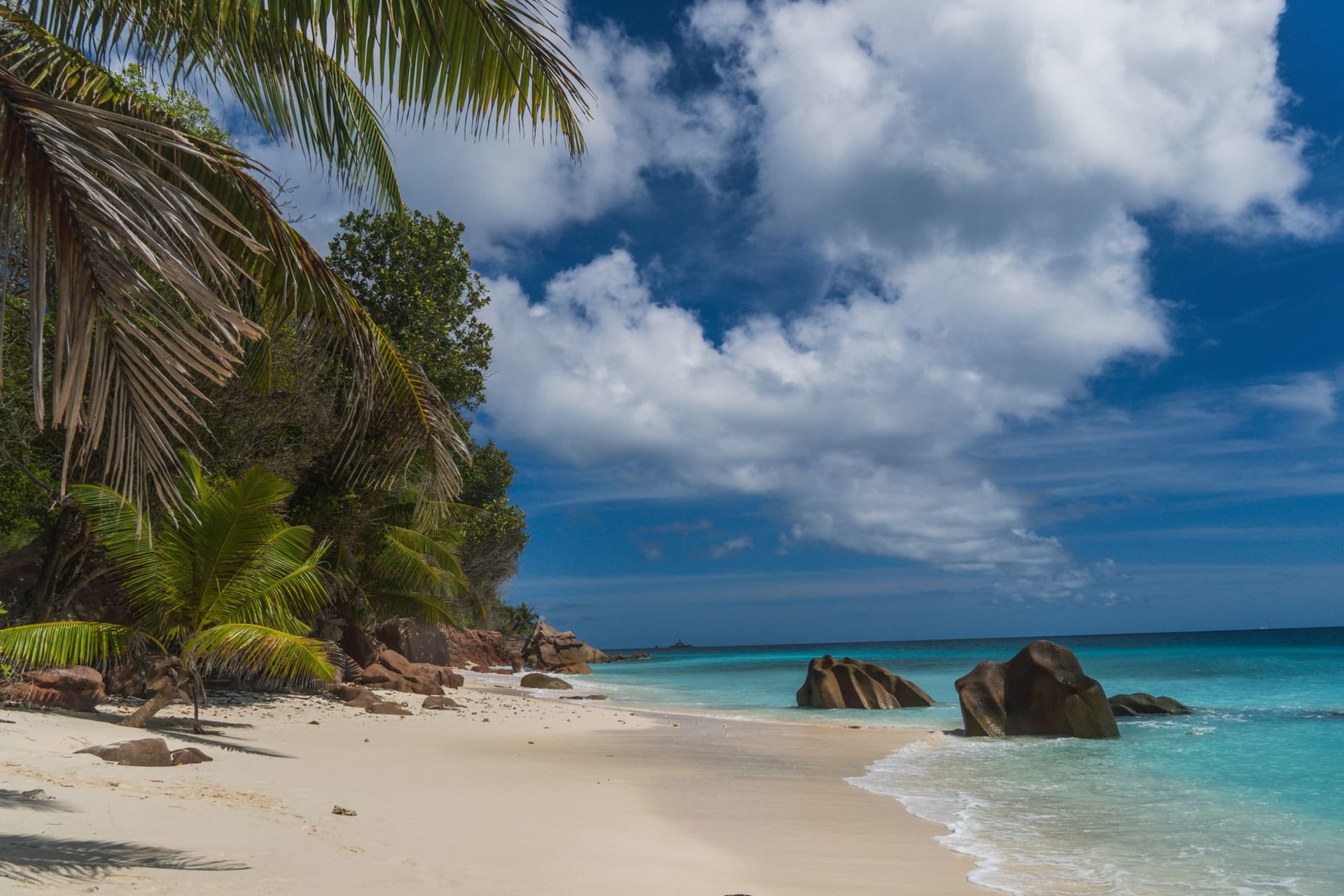
The ferry from Praslin takes about fifteen minutes, which is enough time to watch the silhouette of La Digue grow from a dark smudge into something that looks genuinely prehistoric — granite boulders stacked like a giant’s abandoned game, palm crowns spilling over them in all directions. When you step off at La Passe, the first thing you notice is the quiet. Not silence exactly, but an absence of combustion engines that your nervous system registers before your brain catches up.
There are almost no private cars on La Digue. People get around by bicycle, on foot, or in ox-carts — actual wooden carts pulled by actual Zebu cattle, used mostly for hauling goods rather than tourists. I rented a bicycle for three euros from a woman who seemed personally offended that I wanted a lock. “Nobody steals bicycles here,” she said, with the tone of someone explaining why you don’t need an umbrella inside.
Cycling Toward the Far End
The island is small enough to cross end to end in under an hour on a bike, which sounds manageable until you hit the unpaved tracks that switchback toward the south. The road to Grand Anse passes through vanilla-scented forest, chickens wandering across the path with absolute indifference, and the occasional dog who trots alongside you for a hundred meters before losing interest. There’s no real traffic to navigate — just the odd bicycle coming the other way and the need to steer around coconuts that have fallen in the night.
Grand Anse itself is a long wild beach with no facilities and serious surf. The water isn’t always swimmable, but that’s almost beside the point. The scale of it — no one else in sight, boulders the size of houses at either end, the Indian Ocean doing what it wants — has a quality that’s hard to find anywhere the infrastructure has caught up.
Anse Cocos and the Walk That Earns It
The beach that makes La Digue appear on every shortlist is Anse Source d’Argent on the west side, with its famous photogenic boulders and turquoise shallows. But Anse Cocos, tucked further south past Grand Anse, requires a twenty-minute walk through coastal scrub to reach, and the extra effort empties it almost entirely. Lia and I found it on our second afternoon, threadbare from sun and salt and the particular pleasant exhaustion of a day with no obligations. We had a section of it to ourselves for two hours. The water was warm and shallow over white sand, the boulders threw shade in a long stripe, and nothing was required of us.
L’Union Estate and the Giant Tortoises
At the northern end of the island, L’Union Estate preserves a working copra plantation that feels genuinely functional rather than staged. Giant Aldabra tortoises graze in a pen near the entrance — old animals, slow-moving, almost geological in their patience. You can stand close enough to hear them breathe. There’s also a traditional boatyard where pirogue fishing boats are built the old way. Neither attraction is dressed up with much interpretation, which suits the island’s general reluctance toward effort.
The estate’s beach is where the famous boulder scenes were filmed for the “Pirates of the Caribbean” era of travel brochures. It earns its reputation. The colors are real.
When to go: April through May and October through November are the calmest, driest months for La Digue — seas are flat, the south coast beaches are swimmable, and the island is at its most navigable by bicycle. July and August bring the southeast trade winds and heavier swells at Grand Anse and Anse Cocos, though Anse Source d’Argent stays protected. Avoid the peak December–January period if you want any sense of solitude — the island is small enough that a few hundred extra visitors is genuinely noticeable.