Lake Eyasi
"Lia and I sat in the dust with men who still speak in clicks, and I felt how young my own idea of survival really was."
A shallow soda lake beneath the Eyasi Escarpment, where the Hadza still hunt with bows and Datoga blacksmiths work their forges.
We left the main Serengeti circuit behind and drove nearly three hours south, the road dropping off the Ngorongoro Highlands and into the flat, dry basin of the Great Rift Valley. I remember the moment the escarpment came into view — a long, dark wall of rock running for miles along the horizon, with the lake itself a pale, shimmering smear at its base. Our guide, a young man named Elirehema who’d grown up near Karatu, told us Eyasi was barely a third full that year. It didn’t matter. What we’d come for wasn’t the water.
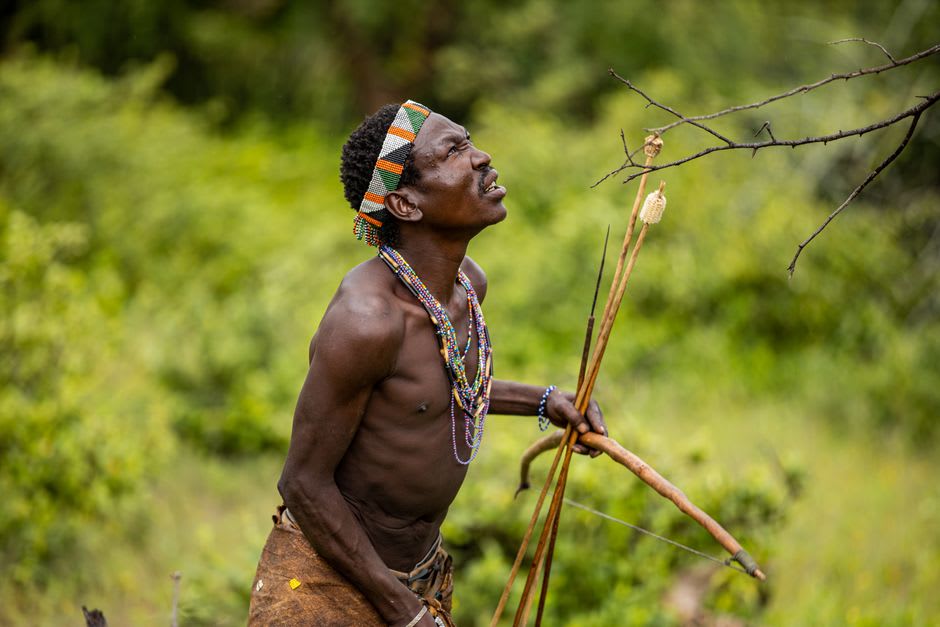
We spent the morning with a small group of Hadza, one of the last true hunter-gatherer communities left in Africa. I’d read about their click-consonant language before the trip, but hearing it in person — that rapid percussion of sound punctuating ordinary conversation — stopped me cold. A man named Gonga showed us how he strings a bow from giraffe tendon, then led us on a short hunt through the scrub, moving in total silence until he dropped to one knee and loosed an arrow at a hyrax I hadn’t even seen. Lia caught the whole thing on camera, hands shaking a little.
Afterward we drove to a Datoga homestead on the lake’s northern margin, where an old blacksmith was hammering scrap metal into arrowheads over a charcoal fire, his bellows made from goat skin. He barely looked up as he worked, and I found myself just watching his hands, thinking about how many generations of exactly this motion had happened on this same patch of ground. His wife, wrapped in beaded leather, showed Lia the brass coils she wore around her ankles — a mark of status, passed down rather than bought.
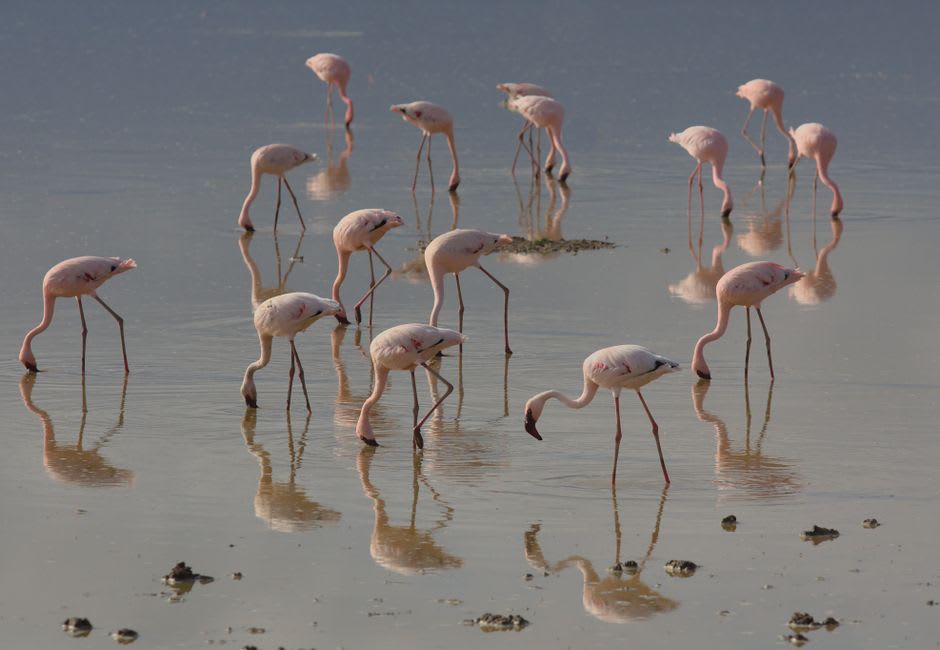
By late afternoon the light turned the whole basin gold, and a handful of flamingos had gathered on a shallow, milky patch of the lake, wading through water too alkaline for almost anything else to survive in. We stood at the edge of the escarpment as the sun dropped, and I remember thinking that Eyasi was the first place in Tanzania that felt less like a destination and more like a threshold — into something far older than any itinerary I’d planned.
When to go: Aim for the dry season, June to October, when the tracks out to the Hadza camps are actually passable and the hunting demonstrations feel less staged, more like a real morning out with the men.