
Merzouga
"The dunes don't look real until you're standing in them, and then they look more real than anything."
I arrived at Merzouga in the wrong way — from Erfoud, in a cramped shared taxi that smelled of diesel and someone’s tajine lunch, deposited at the edge of a town I could not yet see past because of the dunes. They were simply there, without warning, at the end of the last street: a wall of orange sand rising 150 meters into a sky the color of old brass. I stood with my bag and tried to think of something intelligent to say to myself, and couldn’t.
Merzouga sits at the edge of Erg Chebbi, the defining dune sea of the Moroccan Sahara — not the largest erg on the continent, but the most concentrated, the most photogenic, the one that delivers the full dune experience before you’ve even gone looking for it. The sand here is ferrous and fine, and it takes the light personally. In the hour before sunset it turns from orange to rust to an almost blood red, and then the shadows in the ridgelines go a deep purple that looks like a bruise. The dunes do not stay still. Even on windless days, the sand moves at the surface level, streaming in tiny rivers along the crests.
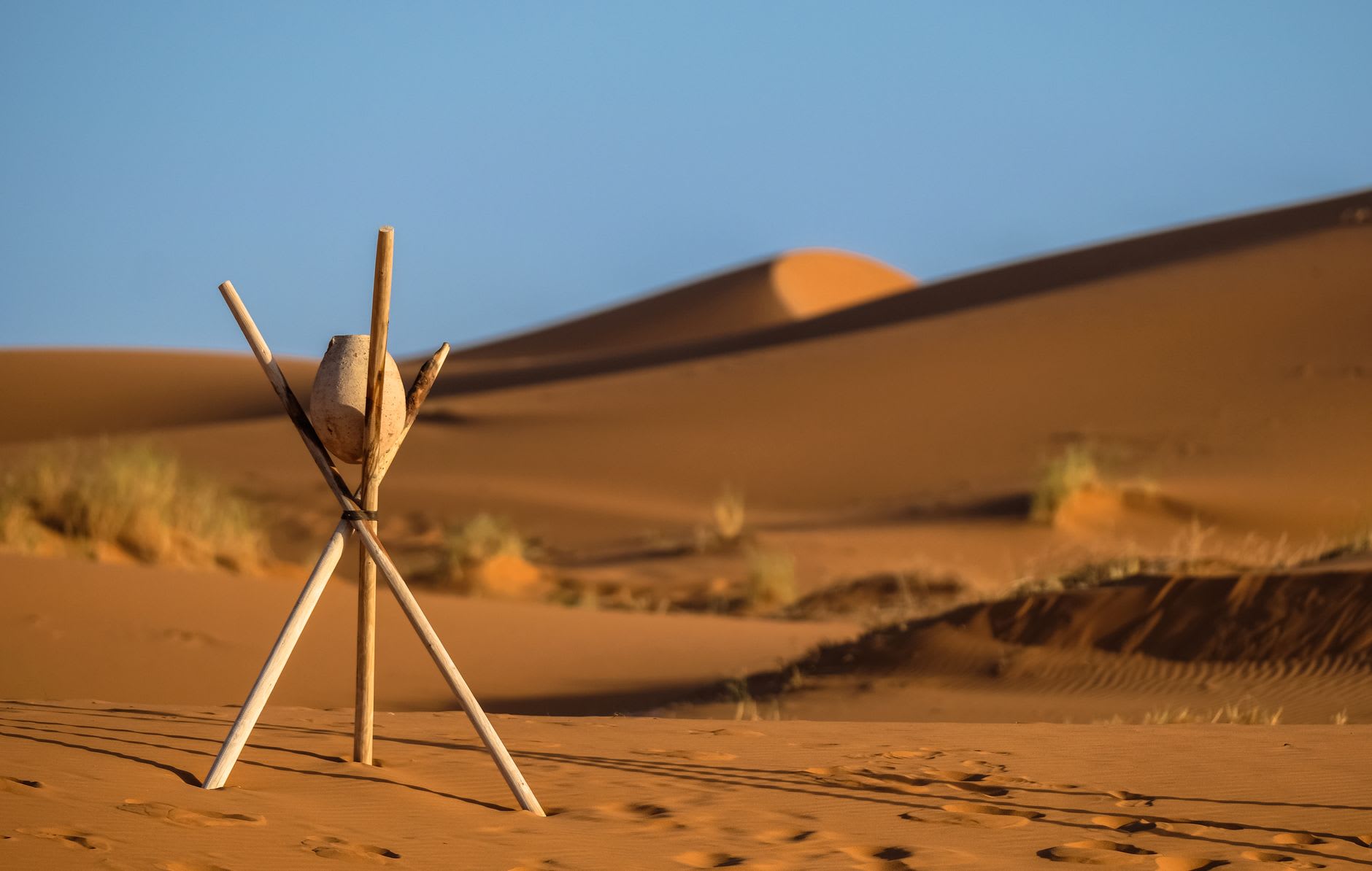
The village itself is built around the tourism infrastructure that the dunes generate — camel tour operators, desert camps, guesthouses with rooftop terraces facing the erg. Most of this is perfectly fine. What you need to do is go further than most tourists manage: wake at 4 a.m. and walk into the dunes alone before the camel lines begin, or stay a second night after the day-trippers from Marrakech have gone. The desert shows you different things at different hours. At dawn, the sand is smooth from the night’s wind, and the ridgelines cut like blades against a sky turning from black to deep blue to the precise color of an old photograph developing. The silence at this hour is complete. Even the camels don’t move.
The Gnawa music sessions at some of the village cafés are a genuine part of local culture — not a show put on for outsiders but a living tradition. The low, hypnotic string-and-drum patterns fill the dark, and the tea comes sugared and mint-heavy in small glasses that scorch the fingers. People in these villages have been managing the heat and the sand and the distances for so long that the practical knowledge shows everywhere: how buildings angle away from the prevailing wind, how the coolest rooms face north, how food is timed to the light rather than the clock.
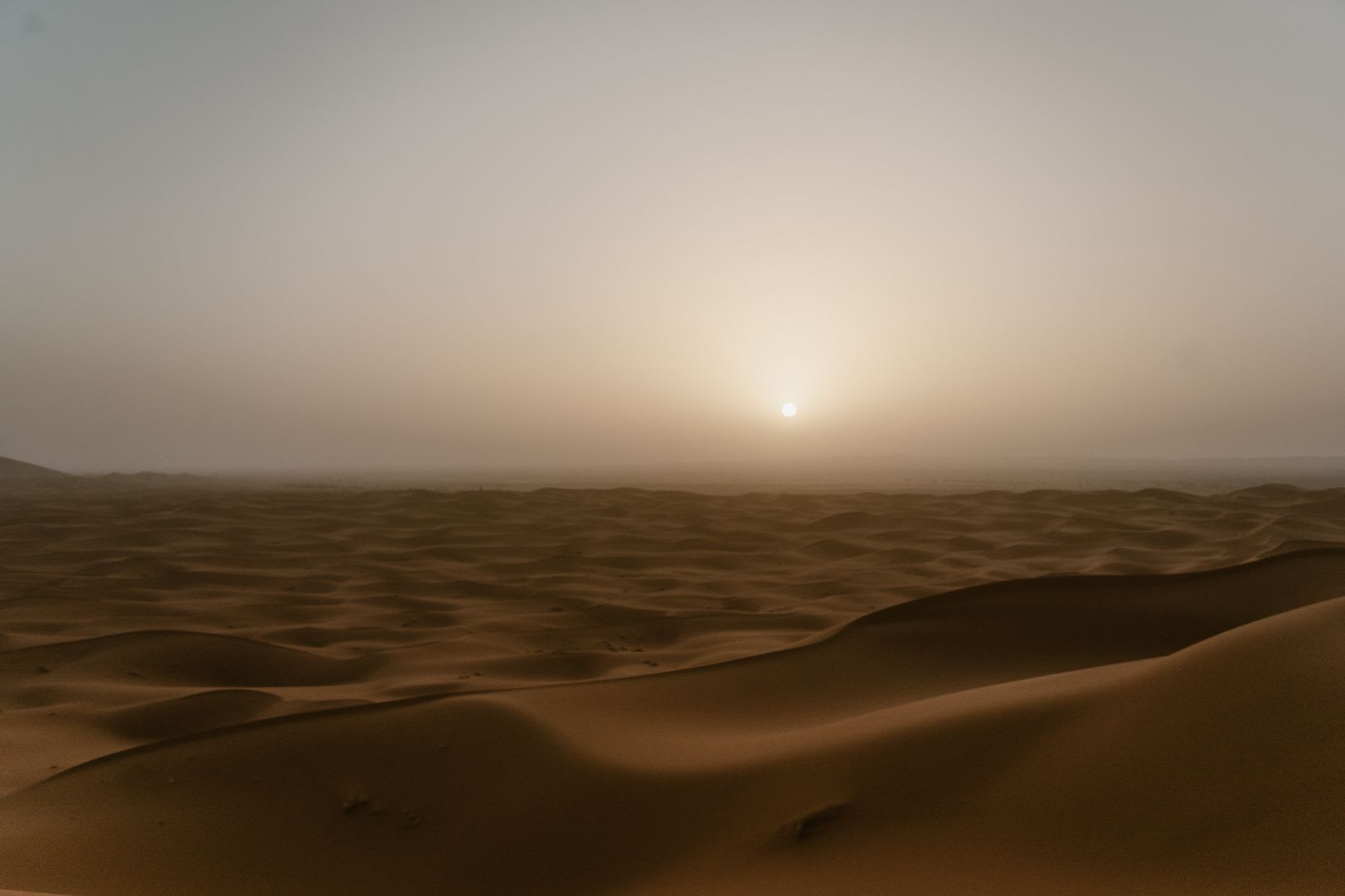
The fossil market at Erfoud, 55 kilometers north, is worth the round trip. The whole pre-Saharan region sits on ancient seabed, and the ammonites and orthoceras that turn up in the limestone are genuine, abundant, and sold everywhere from large polished slabs to tiny pendants. The relationship between this marine fossil landscape and the current desert is its own kind of strangeness — looking at the curled shell of something that lived in warm shallow water 400 million years ago, standing in the largest hot desert on earth.
When to go: October through April. November and March are the sweet spots — warm days, cold nights, and thinner crowds than the December holiday peak. The dunes between June and August are not a place for casual visitors; 45°C sand holds heat like a pan, and the experience is not the one you came for.