
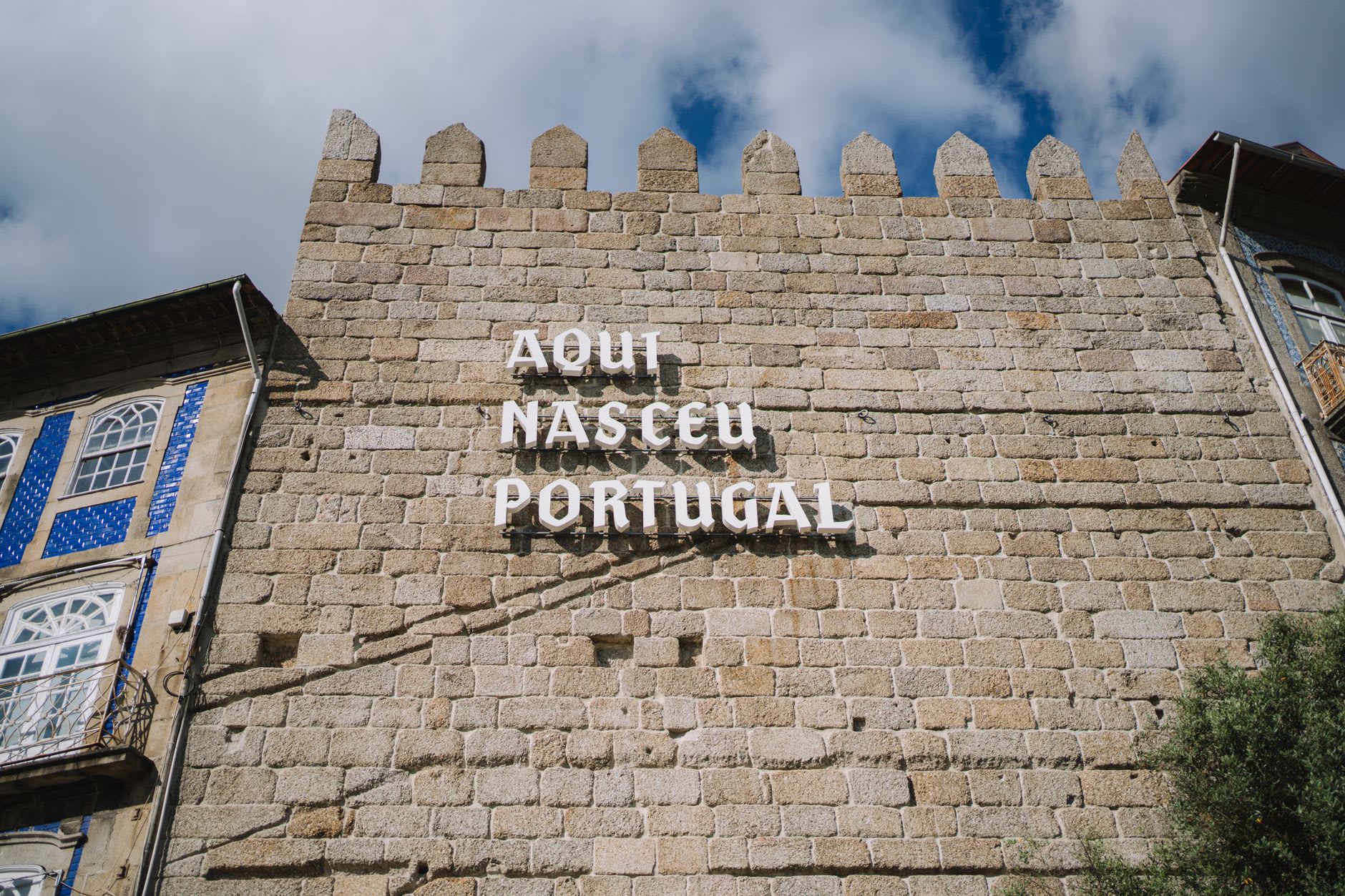
Portugal was born here — its first king, its founding castle, and a medieval center so intact it feels like the nation's origin story is still playing out.
I arrived in Guimarães on a Tuesday morning, stepping off the train into a light that felt older than most things I know — that flat northern Portuguese grey that turns granite into something almost silver. The city doesn’t ease you in. Within two minutes of leaving the station, the medieval center swallows you whole, and the twenty-first century simply stops.
The Weight of the Castle
The Castle of Guimarães sits on its hill the way a founding myth should: with absolute calm. I climbed the Rua de Santa Maria, cobblestones so worn they’ve been polished smooth by centuries of feet, and reached the Largo da Oliveira just as the weekly market was folding up. A woman was packing unsold cabbages into a cloth bag. She glanced at me without curiosity. I was the tourist. She was the continuity.
The castle itself — where Afonso Henriques, the first king of Portugal, was allegedly born in 1109 — is brutally plain. No ornamentation, no softening. Just dark stone and wind. Standing on the battlements, looking north toward Braga, I felt the strange vertigo of a place that genuinely is what it claims to be.
Unexpected in the Old Town
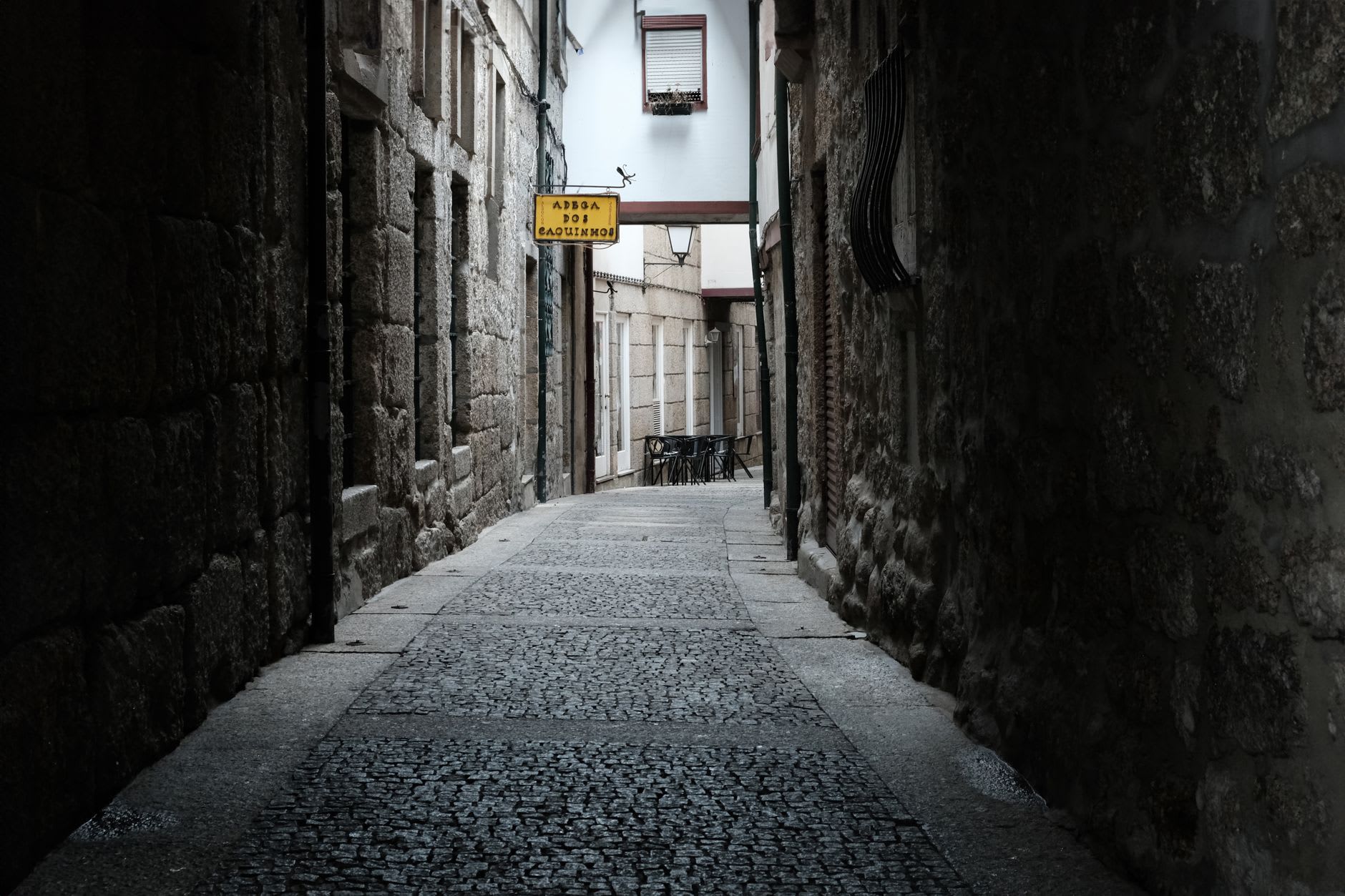
Lia found the detail that undid me. We were walking the Rua de Santo António, ducking under the arch of the Paço dos Duques de Bragança — the fifteenth-century ducal palace, all Flemish-style chimneys and Persian rugs — when she pointed up at the ceiling of one of the halls. The tapestries there depict the Portuguese conquest of Ceuta in 1415, and woven into the background of the battle scenes are figures so small and unhurried they looked like bystanders at a traffic accident. History rendered with irony, seven hundred years ago. Neither of us spoke for a long moment.
Eating on the Largo do Toural
By evening we found a table on the Largo do Toural, the main square, and ordered rojões à moda do Minho — braised pork with cumin and lard, the kind of dish that insists on the cold and the altitude. We split a carafe of vinho verde so young it was still fizzing faintly. The square filled with students from the university, pigeons reorganized themselves around a spilled bag of bread, and the old city did what it does best: absorbed the present without blinking.

When to go: Late spring — May and early June — when the Minho region is green and the festival crowds haven’t yet arrived. The city’s medieval festival, Guimarães 1128, usually runs in June and turns the streets into a living history scene worth timing your trip around.