
Nazca
"Someone drew a hummingbird the size of a football field — and we still do not know why."
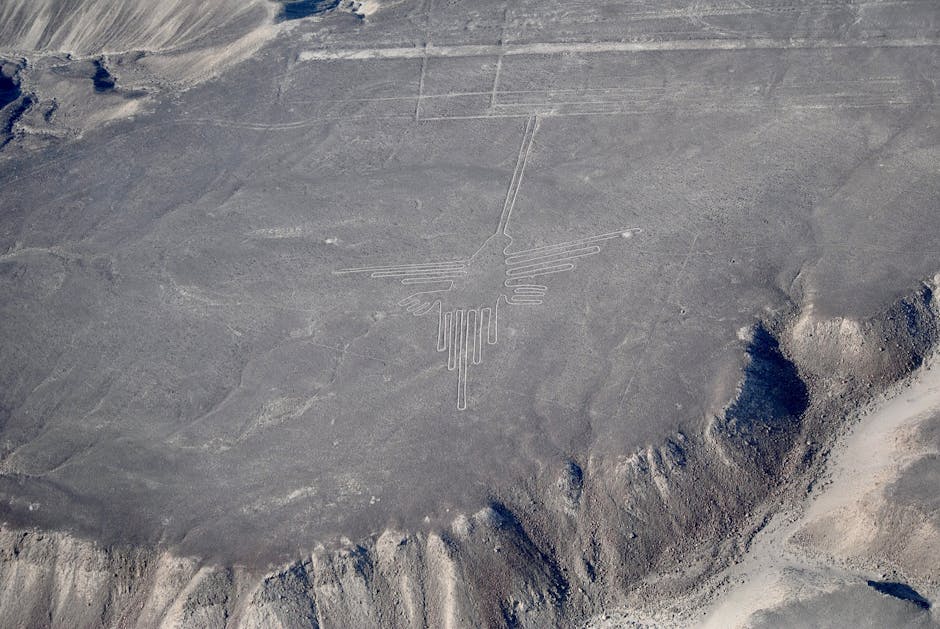
The Nazca Lines are one of archaeology’s greatest mysteries, and flying over them produces a feeling I can only describe as vertigo-plus-wonder. Etched into the arid desert plateau over 1,500 years ago, these enormous geoglyphs — a hummingbird, a monkey, a spider, a condor — stretch hundreds of feet across and are fully visible only from the air. Who made them, how, and why remain debated by archaeologists who have spent careers on the question and arrived at answers that range from astronomical calendars to ceremonial pathways to offerings to gods who could only see them from above. None of the explanations diminishes the experience of seeing them.
The small-plane flyover is the essential experience, and I should warn you: it is not for the motion-sensitive. The Cessna banks and circles above each figure, tilting so the passengers on each side can see, and the combination of desert heat, banking turns, and looking straight down through a small window has ended many a traveller’s dignity. I took a motion sickness pill an hour before, gripped the armrest, and it was worth every moment of queasiness. The hummingbird appeared first — a single continuous line drawn in the desert floor, its wings outstretched, its beak pointed at the sunrise, and the scale was impossible to reconcile with the idea that this was made by people without aircraft.
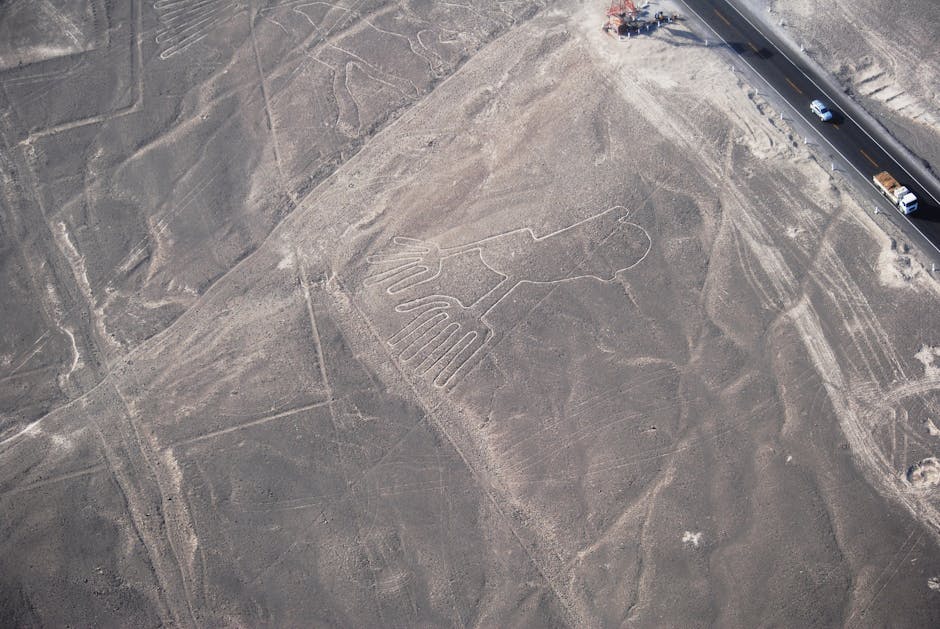
The monkey followed, then the spider, then the condor with a wingspan that covers the desert like a shadow. The pilot narrated in a Spanish that moved too fast for my comprehension, but the pointing was universal. Each figure emerged from the brown landscape like a secret the desert had been keeping — visible only from this angle, invisible from the ground, created by a civilization that could not fly and yet built something that only flight reveals. The paradox is the point. The Nazca people made art for an audience that did not yet exist, and fifteen hundred years later, here I was, the audience they imagined, looking down from a machine they could not have conceived.
The town of Nazca is modest, but the surrounding area holds more than the famous lines. The Chauchilla Cemetery reveals mummified remains in open desert tombs — skulls and bones and hair and textile fragments sitting in sandy pits under the open sky, preserved by the extreme aridity. It is sobering and strange and oddly peaceful, the dead resting in the desert that preserved them better than any tomb could.
The Cantalloc Aqueducts are the sleeper attraction. Underground water channels still functioning after 1,500 years — spiral openings in the ground that access subterranean irrigation channels built by the Nazca to bring water from the mountains to the desert floor. I walked down into one, the temperature dropping as I descended, and stood in a stone-lined tunnel where water still flowed, cool and clear, through a system engineered before the fall of Rome. The Nazca were not just artists. They were engineers of remarkable sophistication, and the aqueducts, unlike the lines, have a function that has never been mysterious: they made life possible in a desert, and they still do.
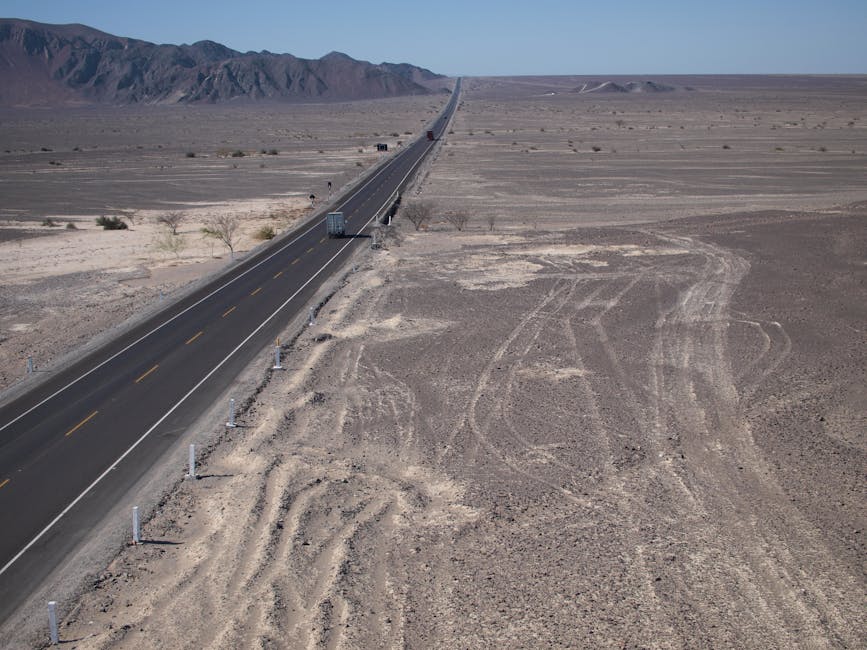
The desert landscape itself, stark and vast, is part of the fascination. Driving through the pampas between Ica and Nazca, the landscape is so empty it becomes its own kind of beauty — a canvas that the Nazca people looked at and decided to fill with meaning. Standing on the observation tower alongside the Pan-American Highway, squinting at the tree and the hands drawn in the gravel below, I understood why this place attracts mystics and scientists in equal measure. It asks a question that neither group has fully answered.
When to go: Year-round — Nazca is desert and rarely rains. Mornings offer the calmest air for flights — book the earliest slot available. Avoid midday heat for ground-level explorations, and bring a hat that takes its job seriously.