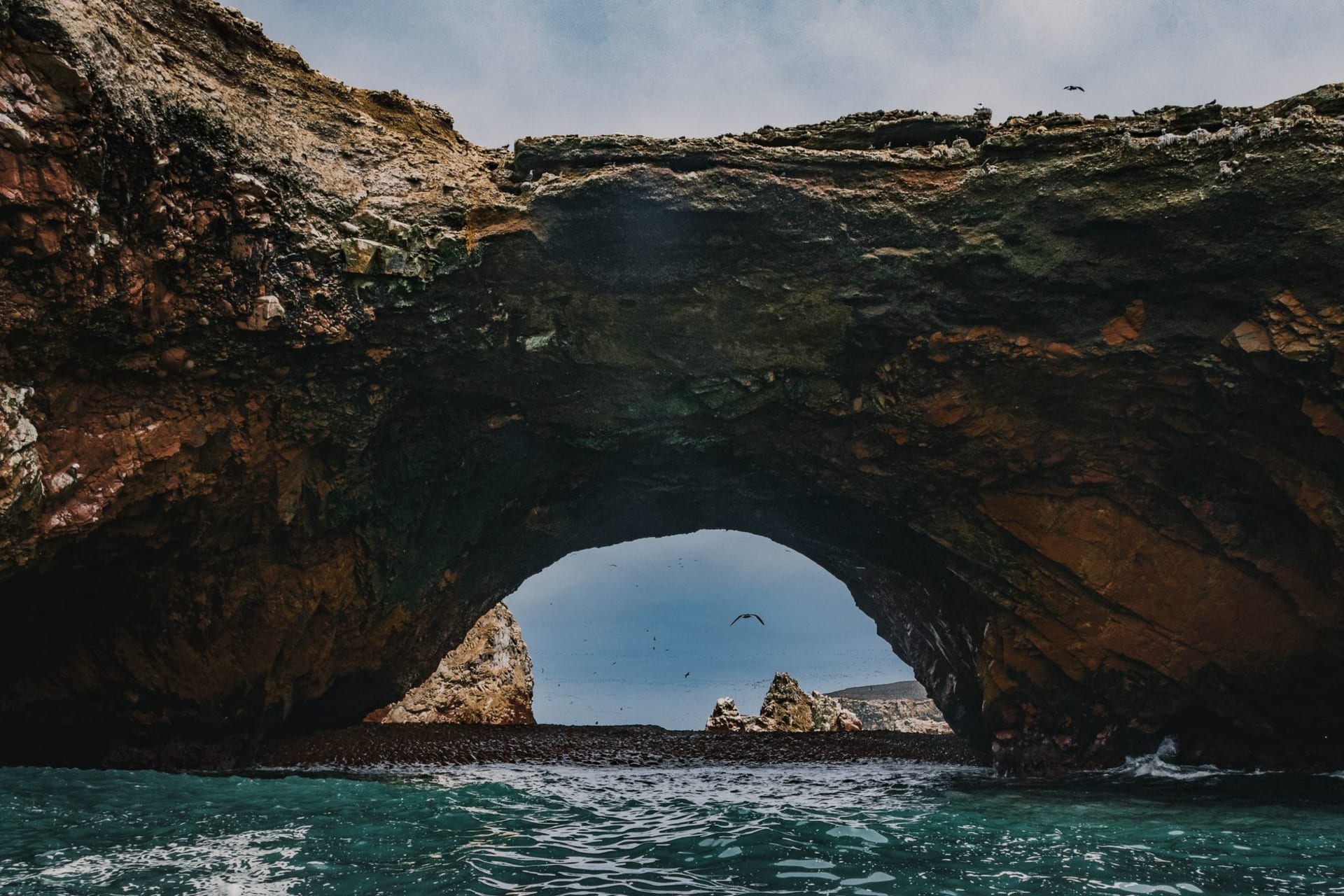
A stark desert peninsula where sea lions, flamingos, and the Humboldt Current share the Peruvian coast.
The bus from Lima drops you at the edge of something that barely feels like Peru — no jungle, no mountains, no colonial plazas. Just a strip of town along the bay and then, beyond the gate, the Reserva Nacional de Paracas spreading out like a wound in the earth: ochre desert meeting turquoise sea under a sky the color of bleached bone.
We arrived in early afternoon when the light was still brutal, the kind that flattens everything and makes distances impossible to judge. Lia put on her sunglasses and said it looked like Mars. She wasn’t wrong.
The Color of the Peninsula
The palette of Paracas is not subtle. The cliffs at El Candelabro are the color of dried blood. The sea below churns an improbable green-blue, cold with the Humboldt Current pushing up from Antarctica. Pink flamingos stand in the shallows of the lagoon near the reserve entrance with the casual indifference of creatures that have been here long enough to stop being impressed by any of it. I had not expected flamingos in a desert. I stood and watched them longer than made rational sense.
The Candelabra geoglyph itself — carved into the hillside above the bay, two hundred and fifty meters tall — faces the ocean as though waiting for something. Nobody knows exactly why it was made or by whom. Standing beneath it in the wind felt like interrupting a very long thought.
Ceviche at the Malecón
The town of Paracas is small, its malecón lined with restaurants that all serve essentially the same menu: ceviche, tiradito, causa, cold Cristal beer. We sat at one without a name I could read, pointed at what the next table had, and received a bowl of leche de tigre so bright with lime and ají amarillo it made my eyes water. The shellfish were harvested that morning. In the bay behind us, sea lions lounged on the dock pilings without apology, barking at the pelicans who ignored them entirely.
What surprised me: the silence out on the peninsula itself. Once the tourist boats leave the bay in the morning, by mid-afternoon the reserve is nearly empty. We drove a rented bicycle out past the Playa Roja — its sand genuinely red from volcanic minerals — and sat for an hour without seeing another person. The wind came off the Pacific in long, cold gusts. Nothing moved except the birds.
When to go: The driest, clearest months are June through October, when the Humboldt Current is at its most active and wildlife concentrations peak. Avoid the brief wet season in January and February when dust storms can close the reserve roads.