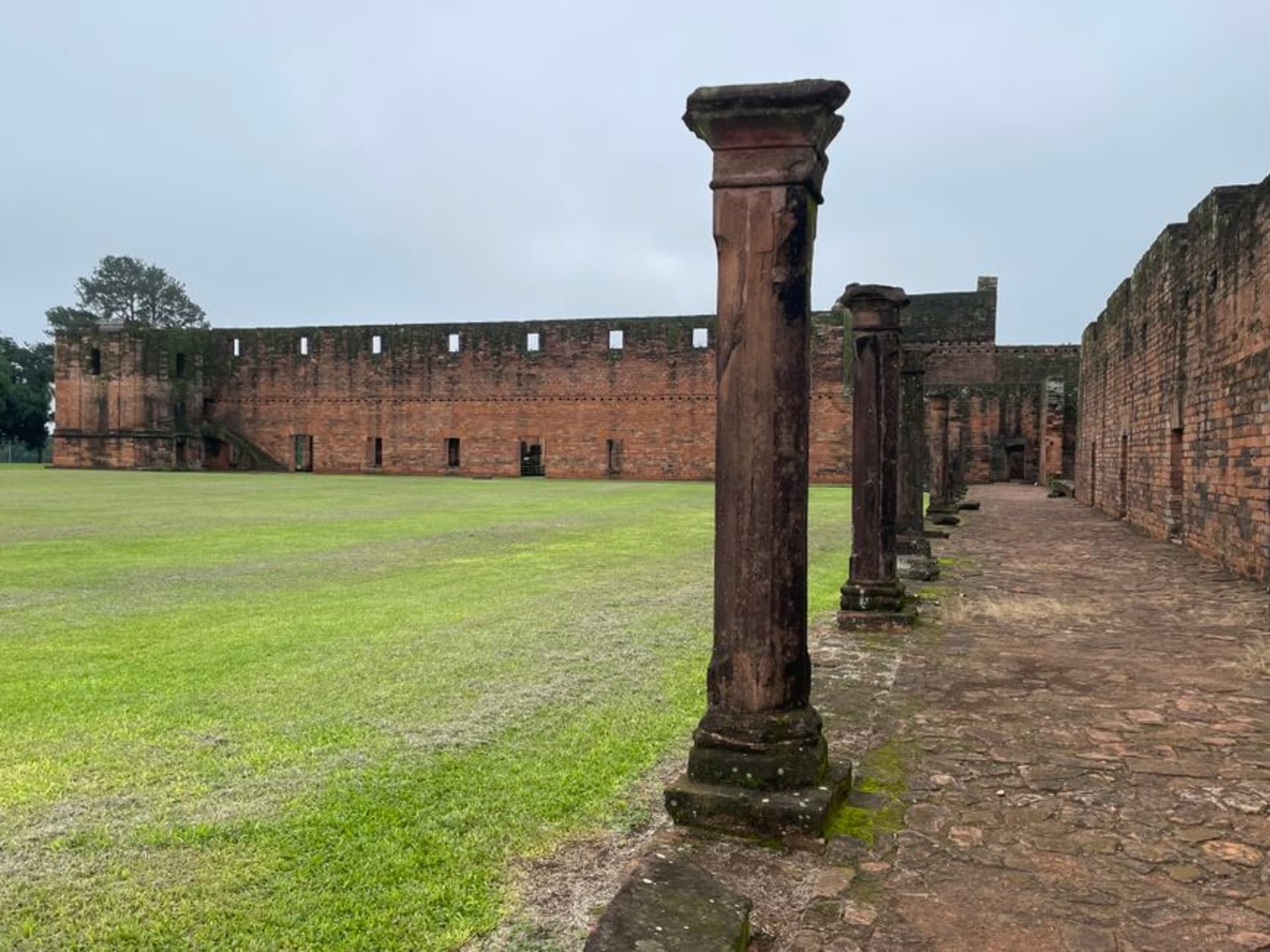
Trinidad Jesuit Ruins
"For a hundred years, this field was the closest thing to Eden anyone here had tried to build."
The best-preserved Jesuit mission in Paraguay, its red sandstone church and workshops standing in grassy fields as a UNESCO World Heritage monument to a vanished utopian experiment.
Trinidad, formally La Santísima Trinidad de Paraná, is the largest and best preserved of the thirty Jesuit reductions once scattered across this region, and walking into it for the first time genuinely stopped me — a red sandstone church, roofless now but with its walls and carved facade almost entirely intact, standing alone in a field of cropped grass with cattle grazing indifferently at the edges. UNESCO listed it as a World Heritage Site in 1993, and it is easy to see why the moment you’re standing inside what remains of the nave, looking up at sky where a vaulted ceiling used to be.
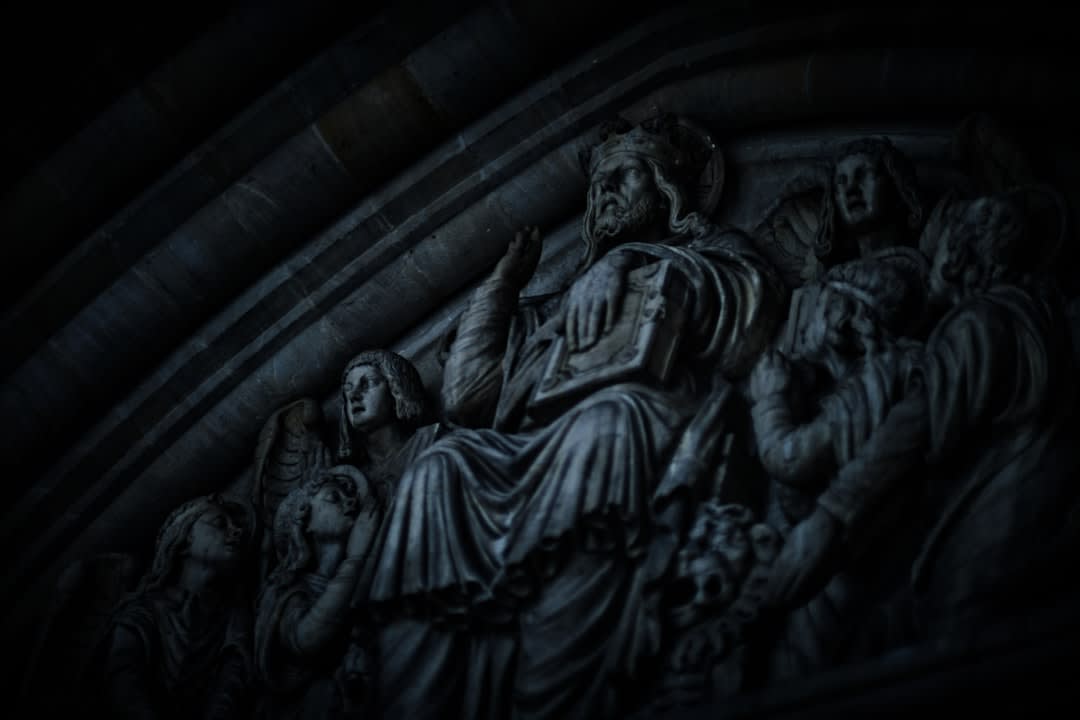
These missions, built by Jesuit priests together with Guaraní communities between 1609 and 1767, were an extraordinary and deeply contested social experiment — self-governing indigenous towns organized around agriculture, craft workshops, and communal life, intentionally isolated from the slave-raiding and exploitation happening elsewhere on the continent, until the Jesuits were expelled by royal decree and the whole system collapsed within a generation. Our guide, a young Paraguayan historian named Marcela who clearly loved this material with an intensity that made the two-hour tour feel like twenty minutes, showed me carved reliefs of angels playing indigenous instruments — a detail that captures the strange cultural fusion of the whole project better than any explanation could.
I climbed the bell tower stairs, worn smooth by three centuries of feet, and from the top the layout of the whole reduction became clear — the central plaza, the rows of what had been workshop buildings and living quarters, the cemetery, all of it slowly being reclaimed by grass at the edges where restoration hasn’t reached. Lia found a stretch of stone wall carved with musical notation, a detail from the mission’s famous choir schools, and we stood there a long while trying and failing to hum out the melody from what survived of the carving.
When to go: Early morning visits avoid both the tour bus crowds and the worst heat, and give the red stone its best light; Trinidad pairs naturally with the nearby Jesus de Tavarangue ruins in a single day trip.