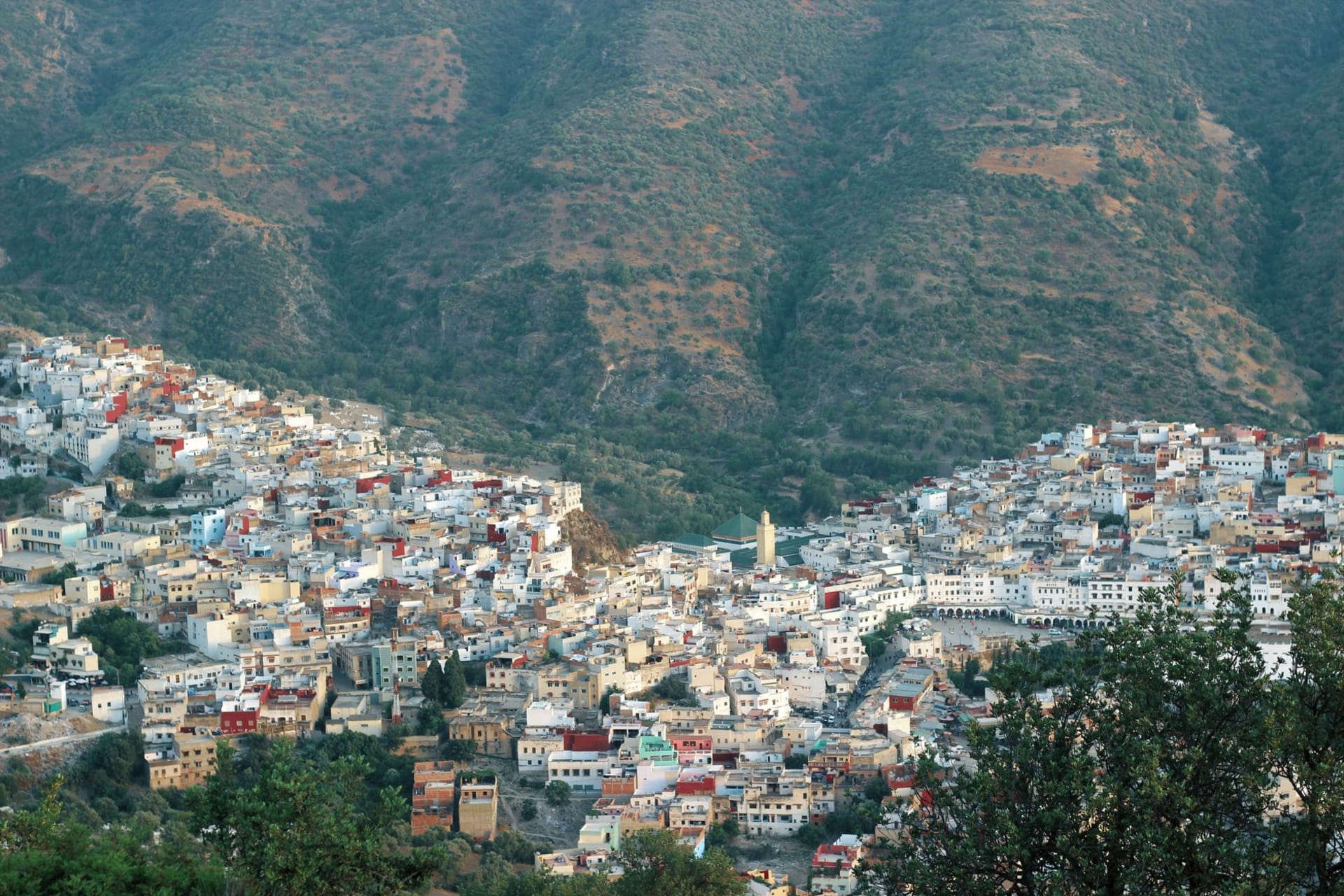
The road from Al Hamra climbs into the Al Hajar mountains and then simply stops making sense. One moment you are driving through a lunar landscape of grey scree and bleached limestone; the next, a village materialises on the cliff face ahead — mud-brick towers the same ochre as the rock they grew from, Date palms erupting from terraces that should, by any reasonable assessment, have no business growing anything at all. I had been told Misfat Al Abriyeen was beautiful. I had not been told it looked like someone had tucked a medieval city into a crack in the mountain and forgotten to tell the rest of the world.
The Falaj and the Logic of Water
The village runs on a falaj — an ancient channelled aqueduct that draws water from springs higher in the mountain and threads it down through the terraces in a system of narrow stone gutters. Standing beside it on the main walking path, the Masar Ibrahim Al Khalil trail, I kept watching the water move. It travelled slowly, deliberately, with the confidence of something that had been doing this for a very long time. The Omani falaj systems are UNESCO-listed, and you understand why not from the placard but from the sound: a constant, quiet trickle that makes the whole cliff feel alive.
Lia crouched beside one of the channels near the lower gardens and just listened. The smell at that point was extraordinary — wet earth and overripe banana and something floral I could not identify, underneath all of it a mineral cold coming off the stone.
Climbing Into the Village
The lanes inside Misfat Al Abriyeen are not really lanes. They are the gaps between buildings that have grown together over centuries, so narrow in places that my pack scraped both walls. The mud brick absorbs the morning heat slowly, which means the interior passages stay cool until well past noon. Old men sat on low benches outside their doors with glasses of karak chai, watching us with a mild interest that contained absolutely no urgency. A cat crossed above us on a wall, indifferent.
The surprise came in the upper village, where I found a small bread oven — a traditional tannur — still warm from the morning bake, set into an exterior wall with a neat stack of thin flatbreads beside it and no one apparently watching them. No stall, no sign, no transaction visible. I stood there for a moment genuinely uncertain what the protocol was. A woman appeared from a doorway, gestured at the bread and at me, held up two fingers, and named a price in Omani baisa so small I had to check I had understood. The bread was still warm and tasted of woodsmoke and something just slightly sweet, eaten standing up in the sun with the whole terraced valley falling away below us.
What Stays With You
Misfat is not a destination that performs. It does not have a main square or a restaurant terrace with a view engineered for photographs. What it has is the feeling of a place that continues to exist entirely on its own terms — the falaj still running, the dates still growing, the bread still coming out of the tannur every morning regardless of who walks through. I found that quality rare enough to be worth the drive into the mountains.
When to go: October through March, when temperatures in the Al Hajar highlands sit between 15 and 25 degrees and the terraces are at their most productive. Avoid July and August — the heat at altitude is still punishing, and the hike through the village loses its appeal quickly.