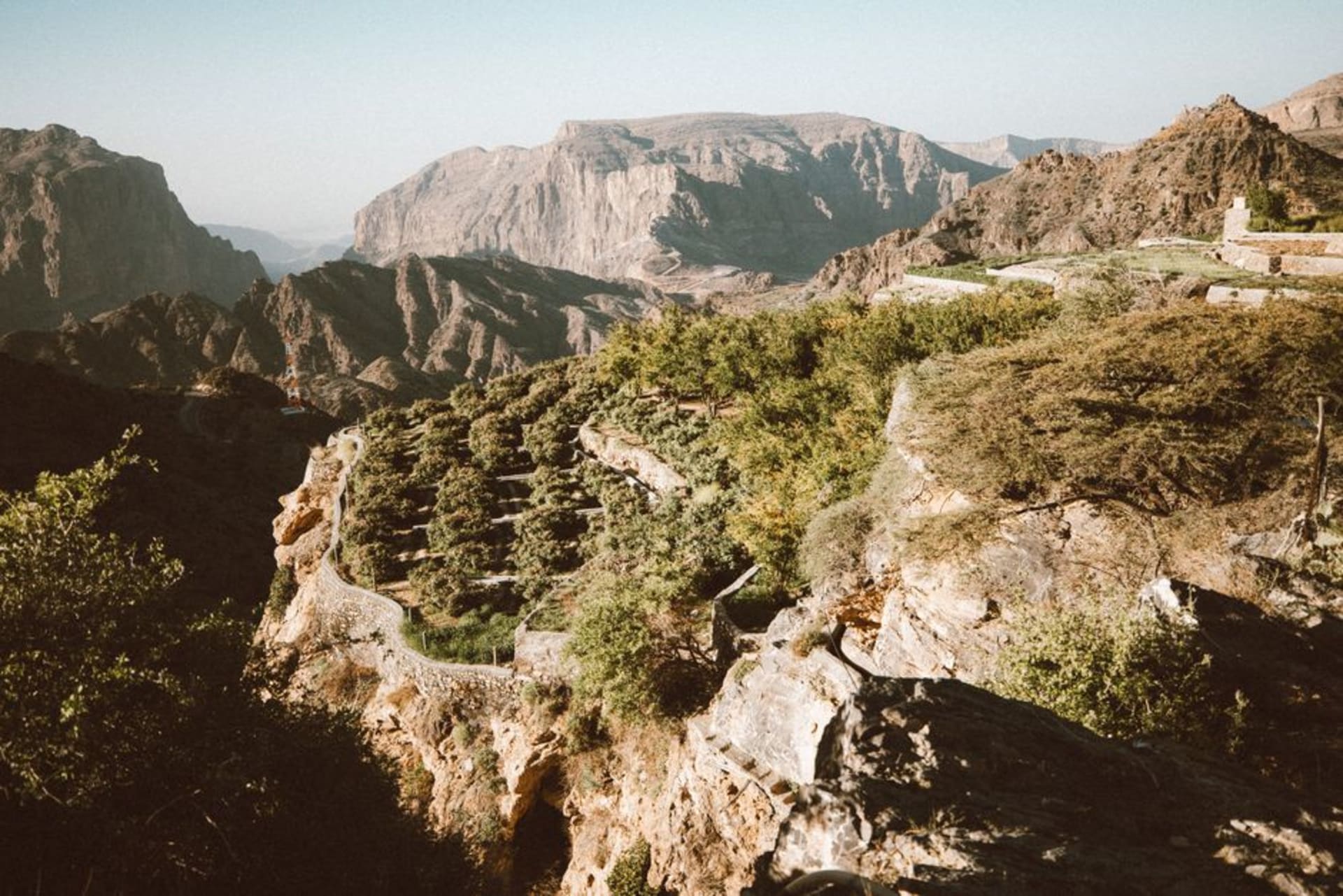
Jebel Misht
"A mountain that looks like it was drawn by someone who'd never seen one, and got it more right than wrong."
A serrated limestone massif rising from the desert plain, uplifted from an ancient seabed and considered one of Oman's great scrambling and climbing objectives.
Jebel Misht announces itself from a startling distance — a jagged limestone ridge rising directly out of the gravel plain near the village of Al Ayn, no foothills, no gradual buildup, just flat desert and then, abruptly, a wall of rock teeth cutting into the sky. The name means “comb mountain” in Arabic, and once you’ve seen the silhouette you understand immediately why nobody bothered looking for a more poetic alternative.
A Reef Turned Inside Out
What makes Jebel Misht geologically strange is its origin: it’s an exposed marine limestone reef, thrust up and rotated into a near-vertical position by tectonic collision millions of years ago, meaning the jagged spires visible today were once coral and sediment lying flat on an ancient seabed. Climbers and geologists both take this mountain seriously for exactly that reason — the rock is famously loose and unpredictable in places, a reef never designed to stand upright, which makes serious routes here a matter for people with real alpine experience rather than casual scramblers.
Walking the Base, Not the Ridge
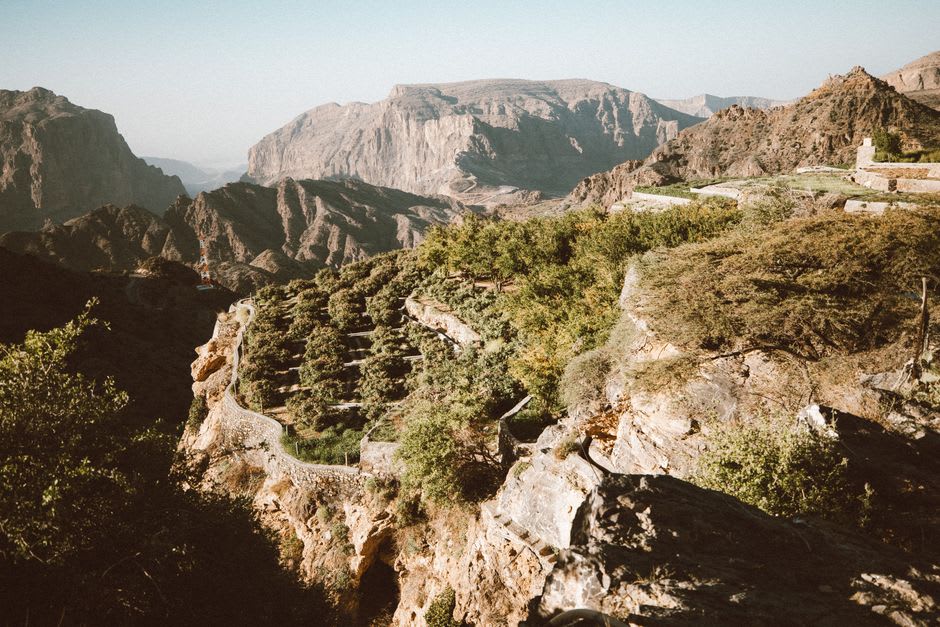
We didn’t attempt the ridge itself — that’s a route for climbers with rope, rack, and considerably more nerve than either of us brought that day — but the walk along the base, skirting the lower talus slopes, was reward enough. Up close, the mountain’s texture reveals itself as fossilized coral and shell fragments compressed into rock, still faintly visible if you know what you’re looking at. Lia found what she was fairly sure was a section of ancient coral head, preserved mid-fossilization in a boulder that had sheared off the main face at some point in the last few centuries. We left it exactly where it was.
The Light Show at Dusk
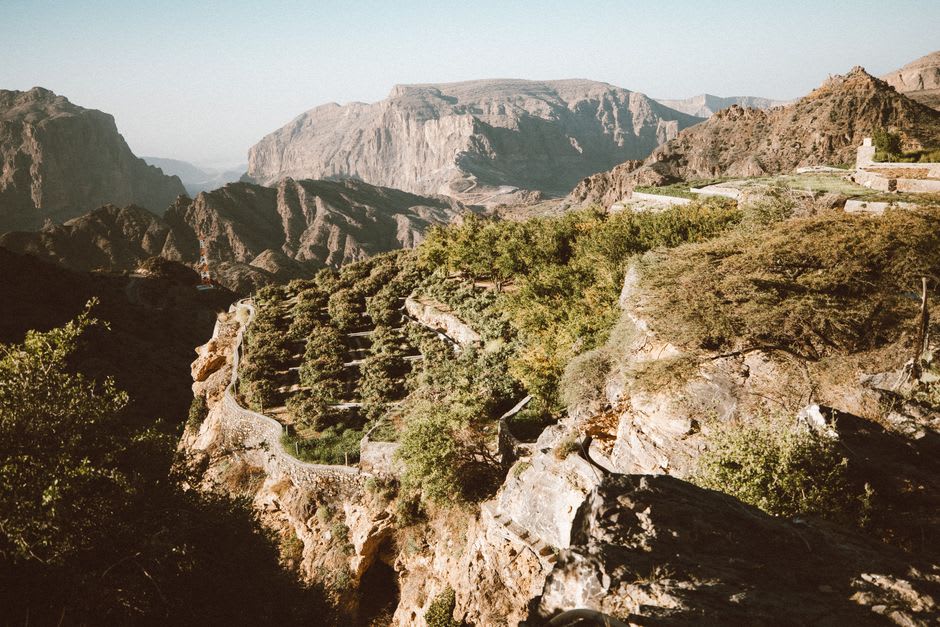
The real reason to make the drive out to Jebel Misht, if climbing isn’t on the agenda, is the light at the end of the day. The ridge catches the last sun long after the plain below has gone into shadow, turning gold, then a deep rust-orange, the serrated silhouette sharpening against a darkening sky in a way that made both of us stop talking and just watch for a solid fifteen minutes before the color finally gave out.
When to go: October through April, arriving in the two hours before sunset for the best light on the ridge. Serious climbing routes require proper alpine experience and local guiding contacts; casual visitors should stick to the base and lower slopes.