
Nærøyfjord
"At the narrowest point I could see goats on a ledge five hundred metres up. They looked unconcerned. I was not unconcerned."
Nærøyfjord does not announce itself gradually. You enter the main Sognefjord, which is already enormous — forty kilometres of open water and mountains that look like they belong in a geological textbook — and then you turn south into a gap in the rock that shouldn’t be there. The cliffs narrow. The water darkens. The sky above becomes a thin strip. I was in a small wooden kayak and I had the precise sensation of entering a room after someone has closed the door behind me — not trapped, exactly, but enclosed in a way that made the air feel different.
The fjord is eighteen kilometres long and in places barely 250 metres wide, which sounds like a measurement and is actually an experience. The water at the base is deep and cold and the colour of old pewter. In early morning the surface is perfectly flat — no wind reaches the bottom of this valley — and the reflections of the cliffs are so precise that for a moment you lose track of which is rock and which is water.
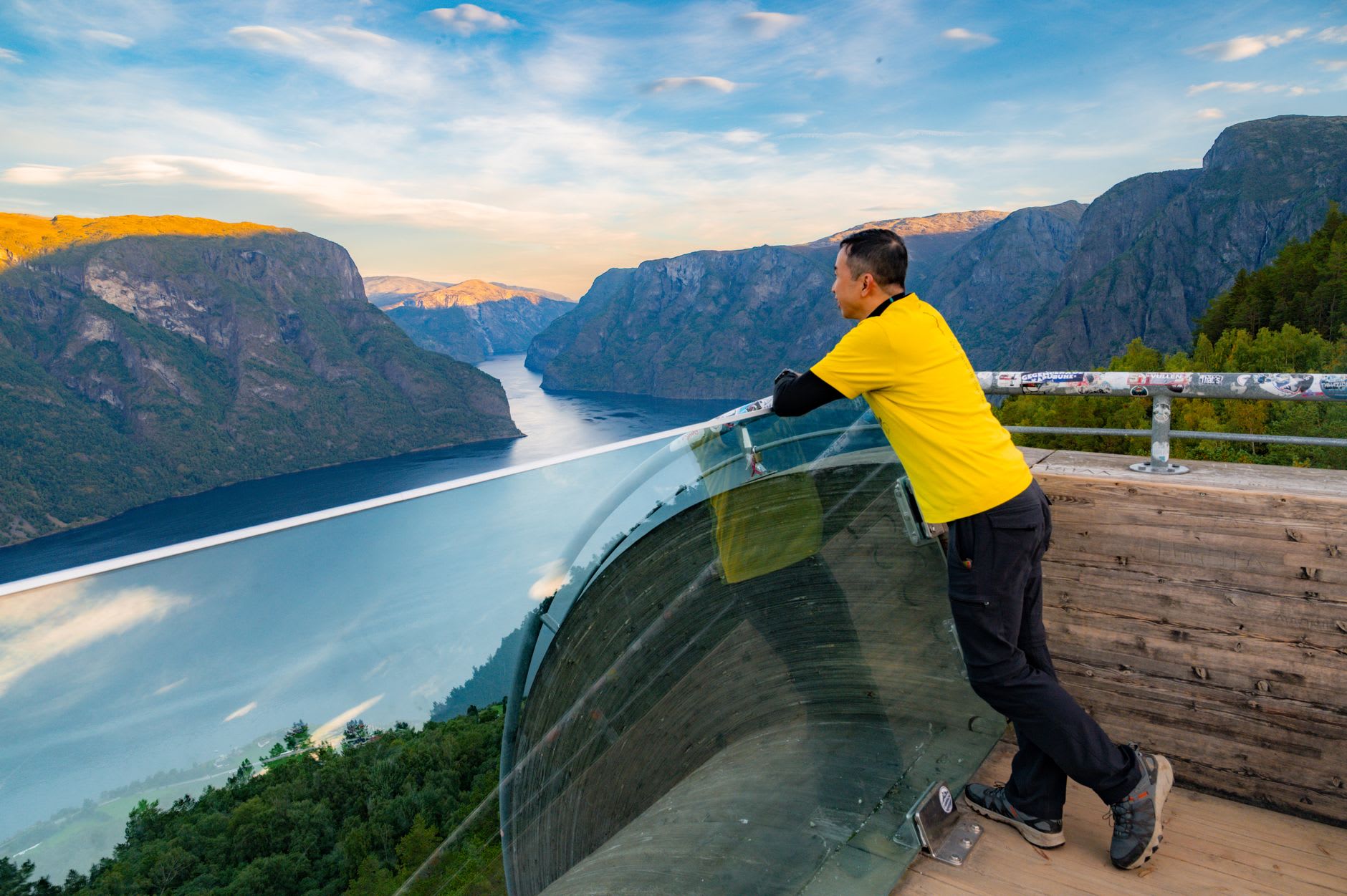
I kayaked the full length over two days, camping one night on a small shingle beach below the abandoned farmstead at Styvi. There is no road to Styvi; it clings to a narrow ledge above the fjord, reachable only by boat or on foot, and for most of the twentieth century it was actually inhabited — a family living through winters so dark and enclosed that the sun doesn’t reach the bottom of the fjord from October to March. The wooden buildings are still standing, dark with age, and I walked through them trying to imagine that darkness. I could not. The September light was too beautiful, slanting amber off the west wall at four in the afternoon.
The tiny hamlet of Bakka sits on the east shore, its white wooden church visible from the water long before anything else. The church dates to the 1859 and has been painted so many times it looks almost luminous against the cliff behind it. There were no other boats when I pulled up to the small dock. A woman came out to her garden and watched me without suspicion, the way people in very small places watch strangers — noting the fact of you without feeling the need to act on it.

What the UNESCO designation doesn’t prepare you for is how alive the fjord is. Eagles nest in the upper cliffs and drop low over the water in the mornings. Porpoises come into the fjord in autumn, rolling slowly in the dark water near the kayak. Once, rounding a bend in the mist, I startled a family of mergansers who scattered in a flat panic across the surface, their feet making a sound like distant applause. The fjord is not a museum. It is a habitat, and it allows you to pass through it on specific terms.
When to go: May to September for full access by kayak and local ferry. Early June for wildflowers on the ledge farms. September for low mist in the mornings and crowds that have thinned to something manageable. Avoid July school holidays on the main tourist ferries — the kayak is always the right answer here regardless of month.