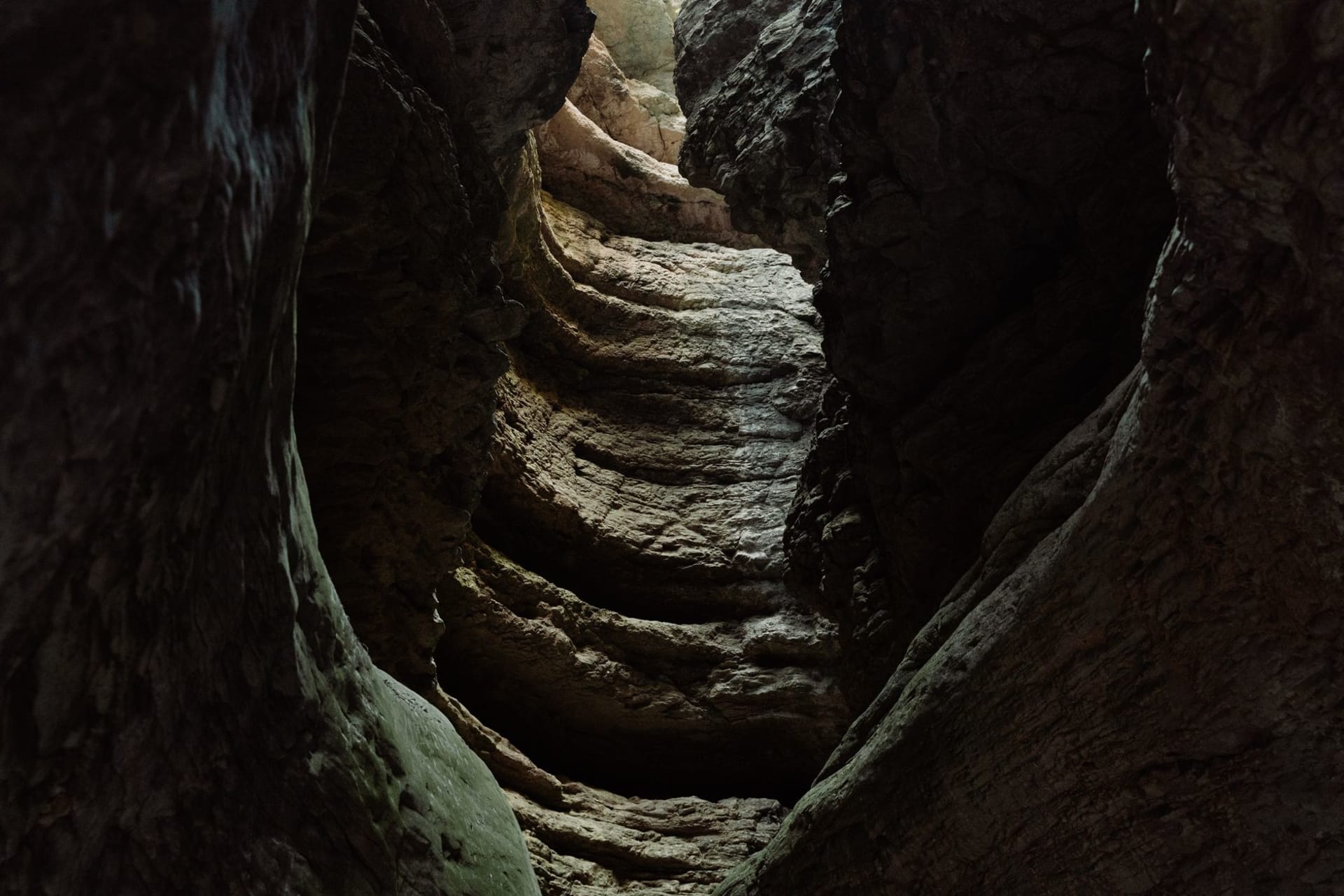
Togo Chasm
"The moment you drop into Togo, you stop being a tourist and start being very small."
The path to Togo Chasm looks like it leads nowhere interesting — a flat trail through low coastal scrub, the same raised coral plateau you walk across everywhere on Niue. Then the ground simply opens. There’s no gradual warning, no slope, just an edge and then a vertical drop of fifteen, twenty metres into a fissure in the limestone that runs inland from the sea. The first time you look down into it, your stomach decides to check in from a different location.
Getting into the chasm requires scrambling down fixed ropes and metal ladders bolted into the limestone, then picking your way along ledges slick with spray and algae. I went on a morning when the swell was moderate and the water at the bottom was still churning in slow circles from the night before. The walls rise straight up on both sides, stippled with coral fossils and small ferns that grow in the moisture. Light comes in from above in long diagonal shafts and turns the pool at the base an impossible turquoise.

But the chasm doesn’t end at the first pool. You wade along the bottom, squeezing through narrower passages where the walls almost touch overhead, and eventually the rock opens up into a hidden interior grove: a natural amphitheatre sheltered from the ocean wind, ringed by the same limestone cliffs, with coconut palms growing at the bottom in the accumulated soil of centuries. Standing in there felt genuinely surreal. There is no other word for it. The palms were swaying gently, completely cut off from any coastal breeze, in some slow internal air current the chasm had generated for itself.
A woman I met at the Alofi market had grown up going to Togo as a child. “We used to dare each other to swim in the pool when the swell came through,” she told me. “The current would pull you toward the sea tunnel.” She smiled at the memory in a way that suggested it had been genuinely dangerous and that this was a point in its favour. The sea tunnel she was describing connects the inner pool to the open ocean — you can see the surge of water coming through it when conditions are rough, a pulse of white and green running beneath the rock.

The whole experience at Togo takes two to three hours if you take your time, which you should. There are no facilities, no signs beyond the basic track markers, no one selling water. Bring your own, bring shoes with grip, and don’t go in the days after a big swell has been running — the ledges get dangerously wet and the water in the lower pools is still churned to murk. On a calm morning with flat seas, the water is cold, clear, and the colour of old glass.
When to go: Togo is most accessible May through October when seas are calmer and the descent is drier. Go early morning — by 9am you’ll often have it entirely to yourself. Check with local operators about swell conditions before you go; the chasm floods from below when the ocean is running hard and the descent can become dangerous.