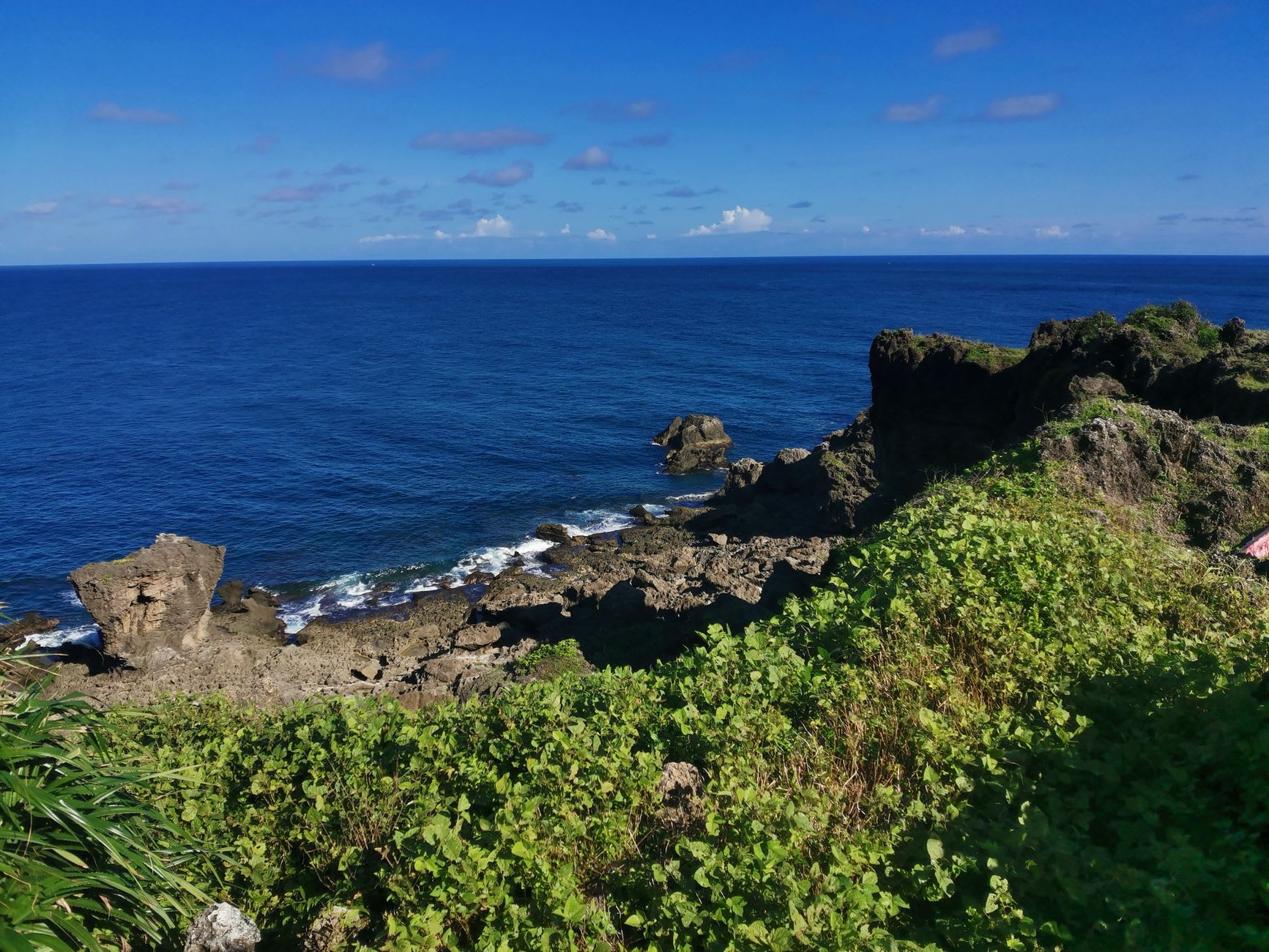
Niue is not a beach island. The coastline is almost entirely raised coral limestone — dramatic, beautiful, and absolutely unforgiving for the kind of barefoot-in-the-sand experience that most people picture when they think South Pacific. Which is why Tamakautoga, tucked into a small sheltered bay on the southern coast, stops you in your tracks the first time you come around the corner of the track and see it. Actual sand. A crescent of dark volcanic sand mixed with coral, maybe eighty metres wide, sheltered by a headland from the main swell, with clear water running over a shallow reef and palm trees doing what palm trees in postcards do.
I sat on the beach for the better part of an afternoon with absolutely nothing to do and found myself grateful for it in a way I hadn’t anticipated. After days of scrambling through chasms and climbing down ropes and reading the swell before committing to a ladder entry, the horizontality of a beach was a physical relief. I lay on my back and stared at the sky and listened to small waves running up the sand with a sound that was more hushed than the open-ocean percussion of the clifftops.
The cove at Tamakautoga is sheltered enough that the snorkelling is genuinely good — the reef along the southern edge of the bay holds coral that’s less dramatic than the deep-water walls off the west coast but more accessible, reachable in a short swim from the beach rather than requiring a ladder and a reef entry read. I spent an hour in the water, watching a pair of hawksbill turtles working the coral unhurriedly, circling back through the same section of reef every few minutes. One of them surfaced to breathe about three metres from me, looked at me with an expression of magnificent indifference, and went back under.
There’s a boat ramp at Tamakautoga and it serves as one of the island’s main fishing departure points. I was there early enough one morning to watch the day’s fishing boats go out — small aluminium tinnies, mostly, with outboards that sounded enormous in the pre-dawn quiet. The men loading them had that efficient, unhurried movement of people doing something they’ve done hundreds of times. By the time I’d bought coffee from the small kiosk that was open for maybe two hours in the morning before closing again, they were already dots on the horizon.

The village itself sits above the cove, small and tidy, with a Sunday stillness that extends into the weekdays. Most of the residents I encountered were older — a pattern across Niue’s villages, where the young have largely moved to New Zealand. One man, probably in his seventies, was tending a garden plot above the beach road that grew taro, sweet potato, and an enormous papaya tree. He said hello in Niuean, then in English, and went back to his work. The beach below him caught the afternoon light and turned gold and then pink and then, quickly, dark.
When to go: Tamakautoga is one of the few places on Niue that’s swimmable without technical skill in almost any swell conditions, making it the best option when seas are rough and cliff entries are inadvisable. The boat ramp and surrounding area are worth seeing in the early morning. The beach itself is small enough to feel private most of the time.